When acquiring a flock of backyard chickens most people are excited about the farm fresh eggs they will be collecting. Not much thought is given to what to do after hens no longer lay regularly. Laying hens only associated with egg production has been drilling into our conscious.
The hens for production spend their entire life in small cages then are slaughtered between 18 months and 2 years, they are deemed unproductive at that point. It has become common knowledge that after the age of 2 hens no longer lay eggs and are worthless. I am here to challenge this presumption.
In this post, I intend to prove that hens are worth much even beyond their laying years. A hen does not lose her wroth just because she no longer lays eggs.
It is of popular opinion that hens will only lay for 2 years. After this point they no longer lay and are nothing more than chicken stock in terms of value. This is not true. The truth is that once a hen starts to lay eggs, she will lay dependably for the first two years. After that point, she still lay, but not to the tune of one egg a day as she did in her earlier years. A hen will lay eggs for as long as she lives.
Every hen is born with approximately 1000 yolk cells. These are all the potential eggs that she will lay during her entire life. The first two years of her life she will lay at the most regular intervals. A productive laying breed such as the Australorp, Orpington or Rhode Island Red will lay about 3-5 eggs a week. That is about 156 to 260 eggs a year. So, for the first 2 years of her life, she will have laid approximately anywhere from 315 to 520 eggs. Assuming that she is born with 1000 yolk cells (as most laying breeds are), this means she has only layed a little more than half of her total egg potential.
Now, just because she is over the age of 2 does not mean that she will no long lay eggs. She will, she may lay 2-4 eggs a week instead of her initial interval of 3-5 eggs a week. She keeps laying eggs but slows down a bit. As she ages, she will slow down even more. If she makes it to 5 years of age you might expect to get 1-3 eggs a week. As she progresses even further in age, you can probably count on 1-2 eggs a week.
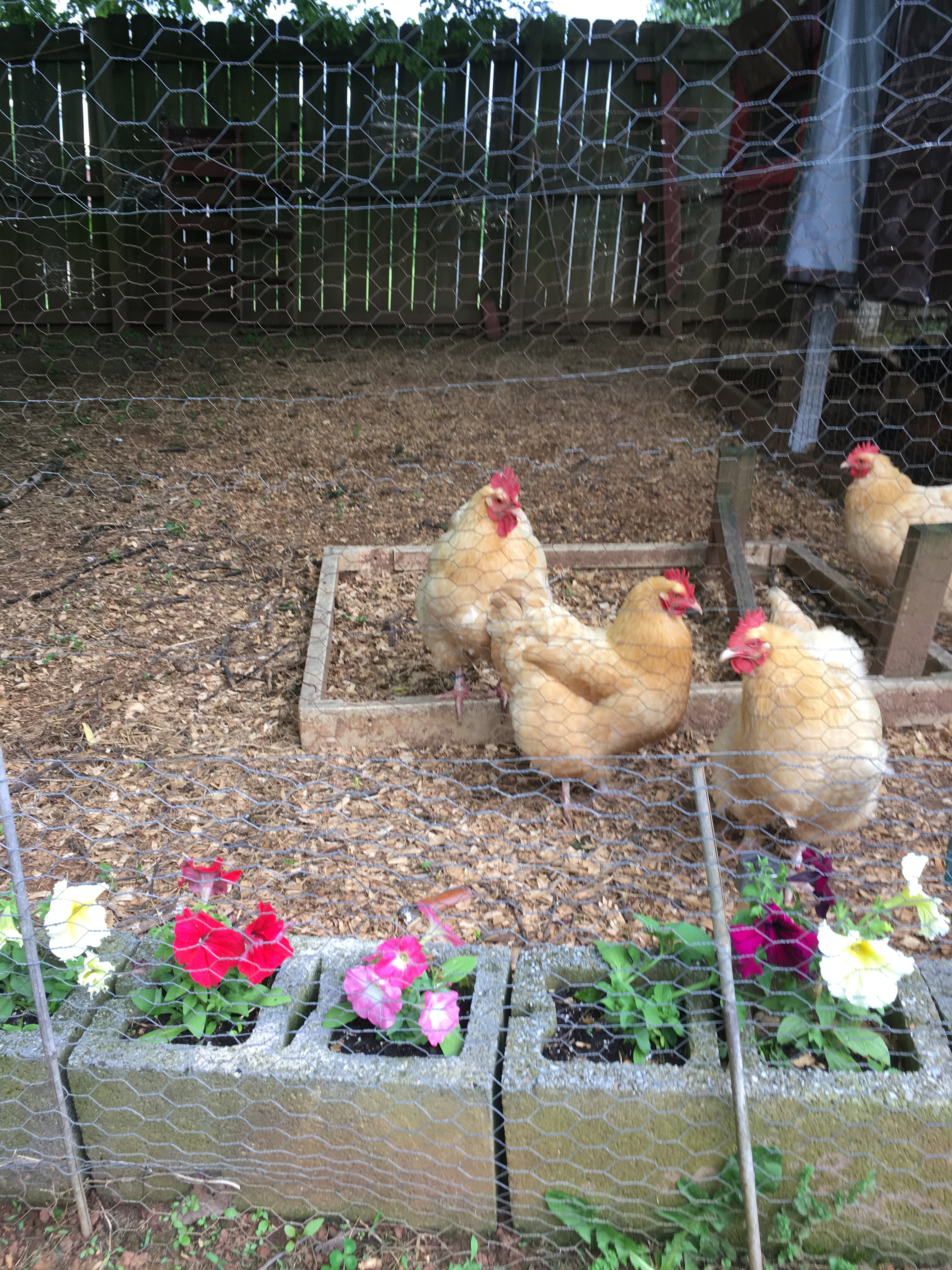
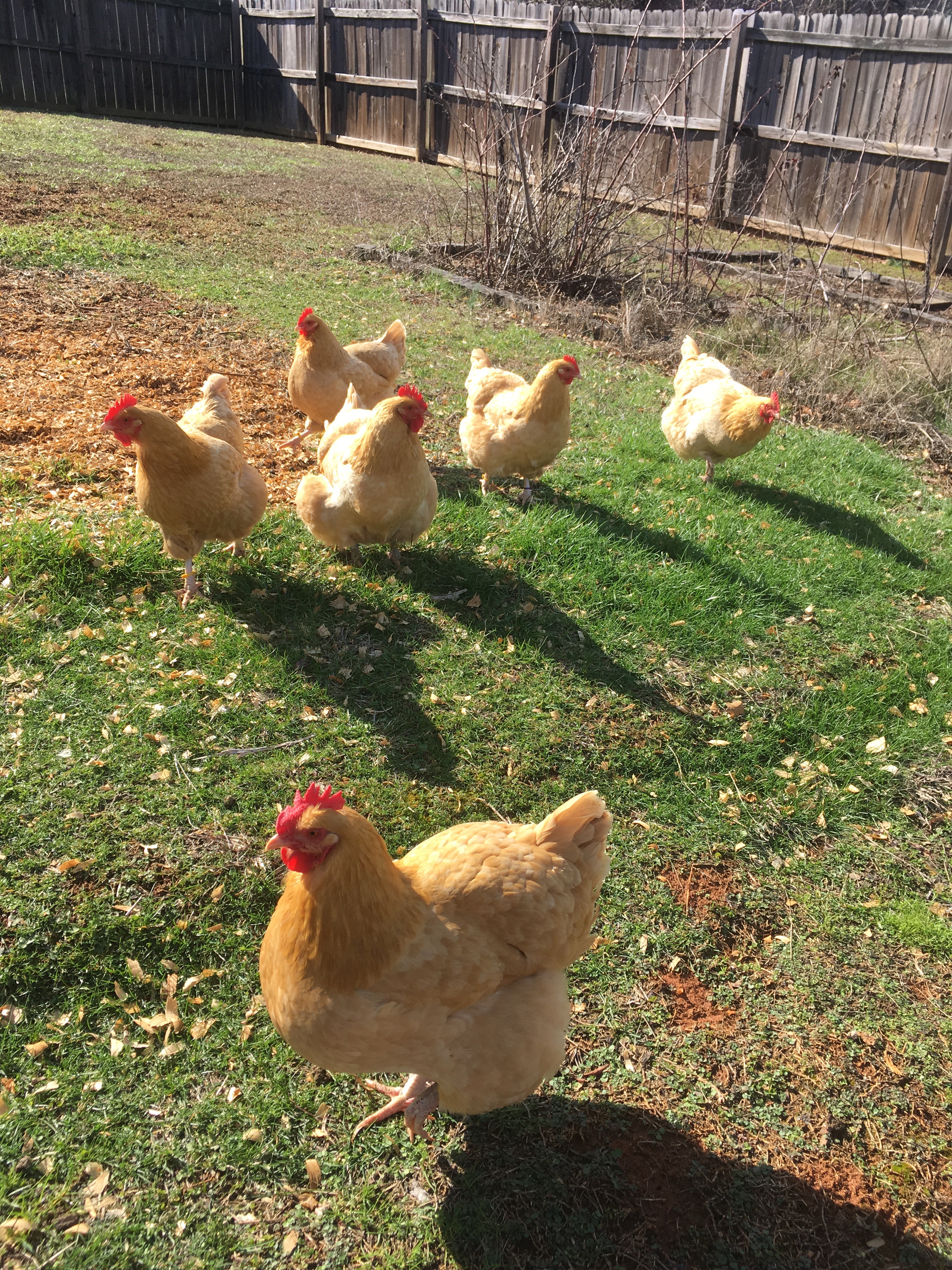
I currently have 5 Buff Orpington 10 years of age. The life expectancy of an average backyard chickens is anywhere between 5-7 years. If well cared for they can reach 10+ years. For a backyard hen to make it past the age of 7 defies most odds. To reach the mile mark of 10 years and beyond is rare. This past May, my 5 “Golden Girls” officially reached this 10-year milestone. Even at this age, my 5 Buff Orpington girls still lay. During the summer when bugs and other delectables are at the most abundant, I can count on about 2-3 eggs a week from my 5 senior ladies. Some will lay on a particular day, others will not. But as a general rule, during the time of the year when the days are long, warm and bugs are plenty, they will lay well. When fall arrives, the days shorten, and the weather cools off. During this cooler part of the year, they typically slow down to maybe 1 egg a day from the 5. During the coldest part of winter, they will cease laying altogether. Their bodies are using egg laying resources to keep warm in the bitter weather. This is just not observed by older hens but all hens. However, in the spring as the days warm again and the sun returns to our sky, they will pick back up the pace to 2-3 eggs a week.
Even at their advanced age, they still lay eggs. The assumption that a hen will only lay for the first 2 years of her life is unfounded. She will lay eggs till the day she dies.
So really, the question is not will they stop laying eggs, but what to do after hens pass their peak laying years. In the factory farm setting, after 2 years of age, the hens are sent to slaughter and a new batch is brought in. Although these girls still have plenty of laying years ahead of them, they are nonetheless considered expired and slaughtered. These ladies’ barley begun their lives when it was abruptly halted. For the backyard chicken keeper this is not the normal proceedings. We tend to hang on to our ladies well beyond two years of age.
The question then becomes, what to do with our hens that are so advanced in age that they no longer lay eggs. My 5 “Golden Girls” are not far from this point. I expect next year I will have collected the last egg from my Buff Orpington ladies. At this point I will consider them officially in “Hentirement”. Hentirement is the time in a hen’s life where she has officially stopped laying but still has much to offer beyond eggs.
Here on The Kuntry Klucker Farm, all may ladies and gents will live out their natural lives under the loving care of their keepers. Just because a hen stops laying eggs does not mean that she is worthless. Hens can contribute in many ways beyond the humble egg.
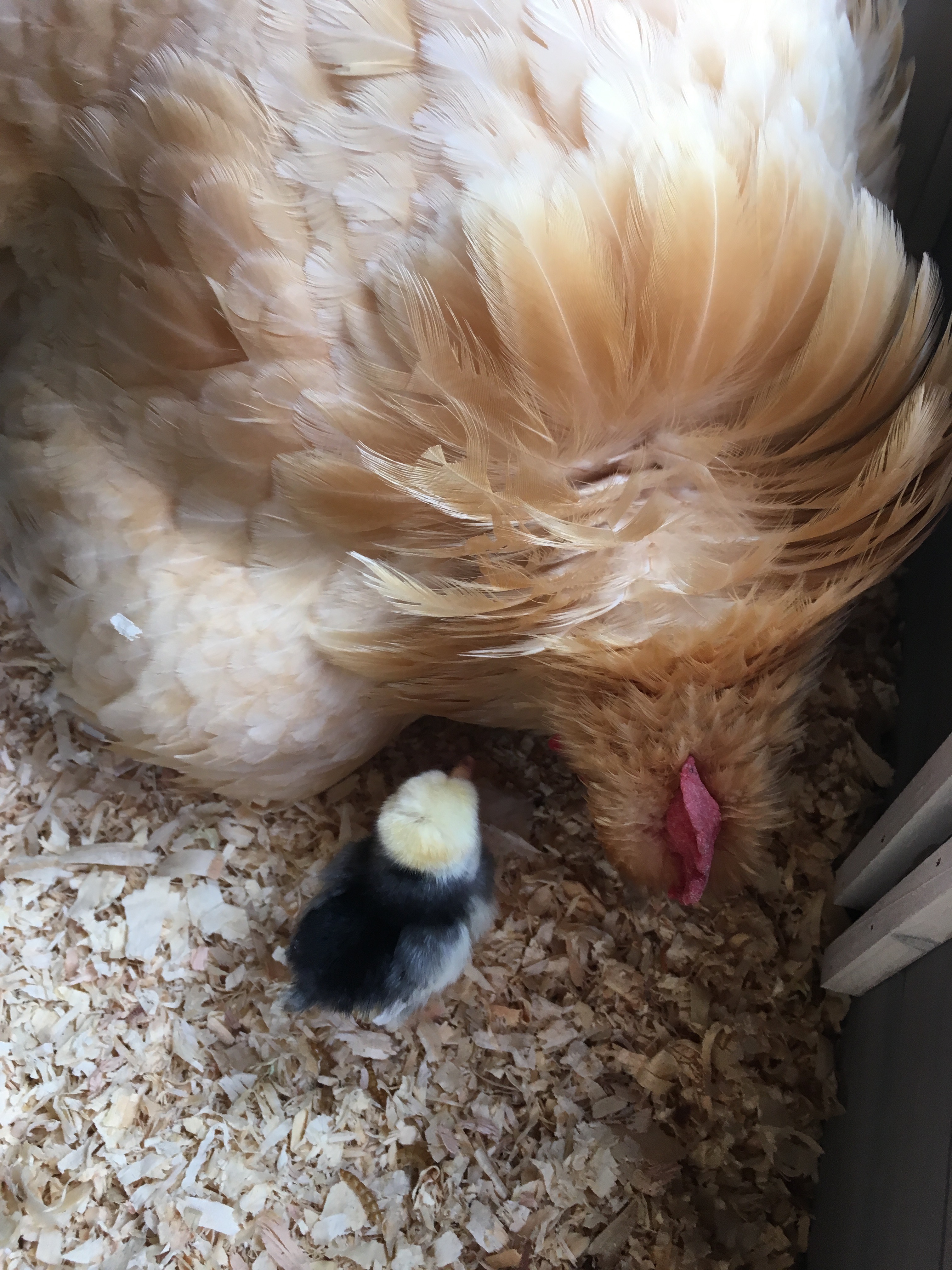
So, what can a hen who has reached “hentirement” offer you may ask. She can produce in many ways. For example, I have found that my older hens make excellent mothers. Since they no longer have to use their energy for laying eggs, they focus their efforts elsewhere. I have found that when I bring a new batch of chicks to the backyard, my older ladies are the first to show them the ropes. Taking them to all the hot spots around the yard, dust bathing holes, water coolers, good sunbathing location, the feed buffet, introducing them to the best roosters and more. My older ladies have even adopted a few chicks and raised them for me. To read this story click here.
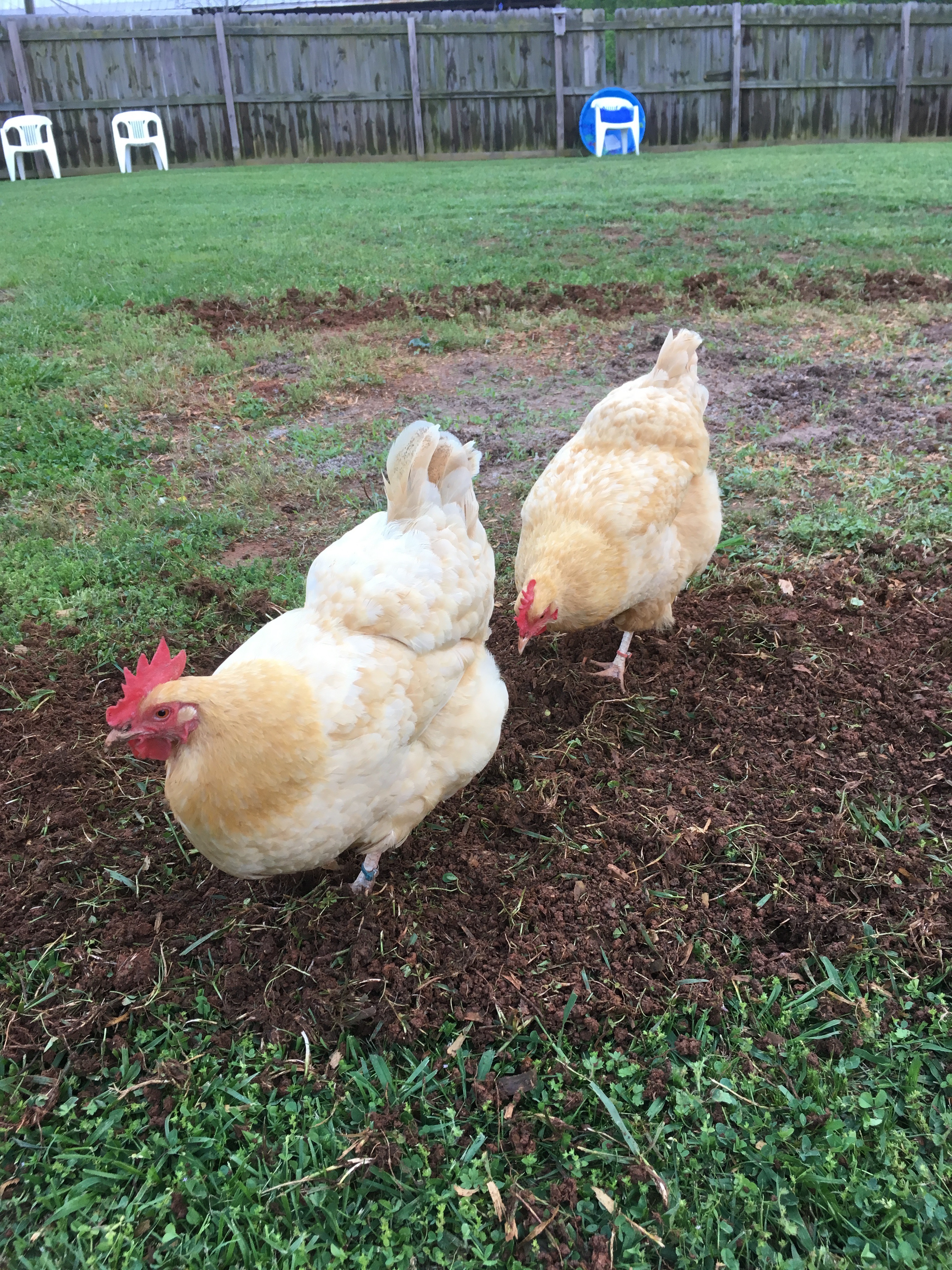
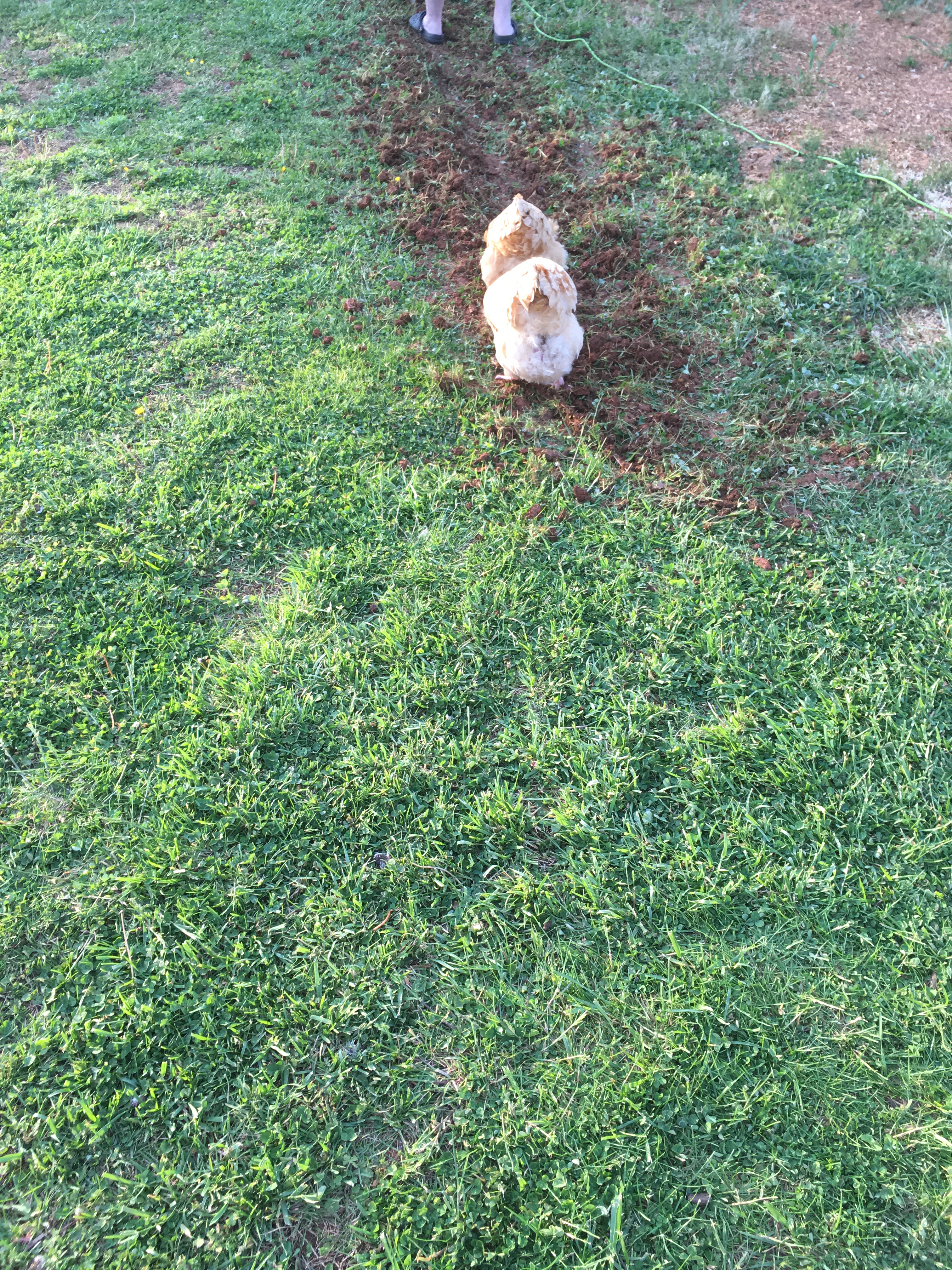
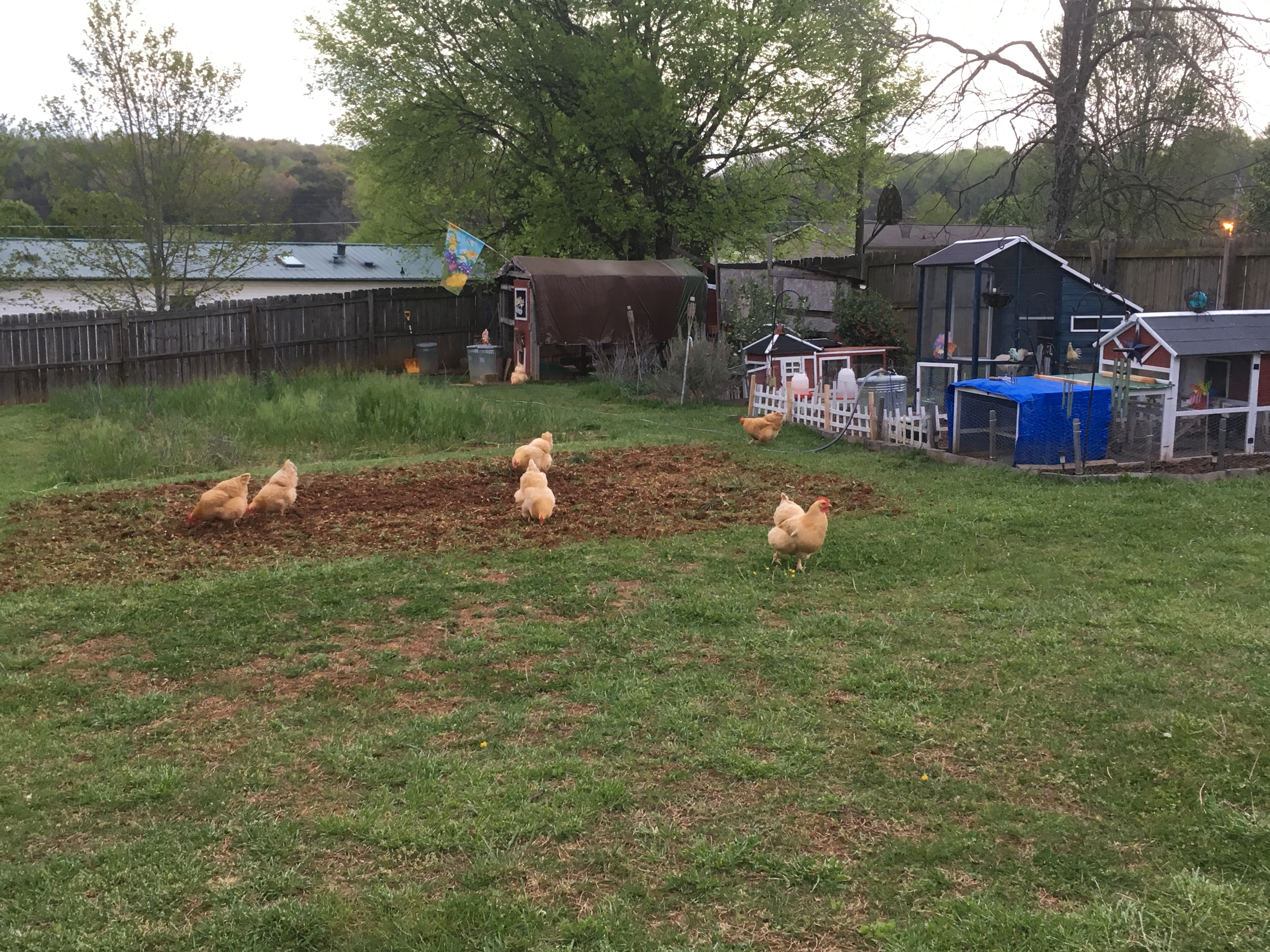
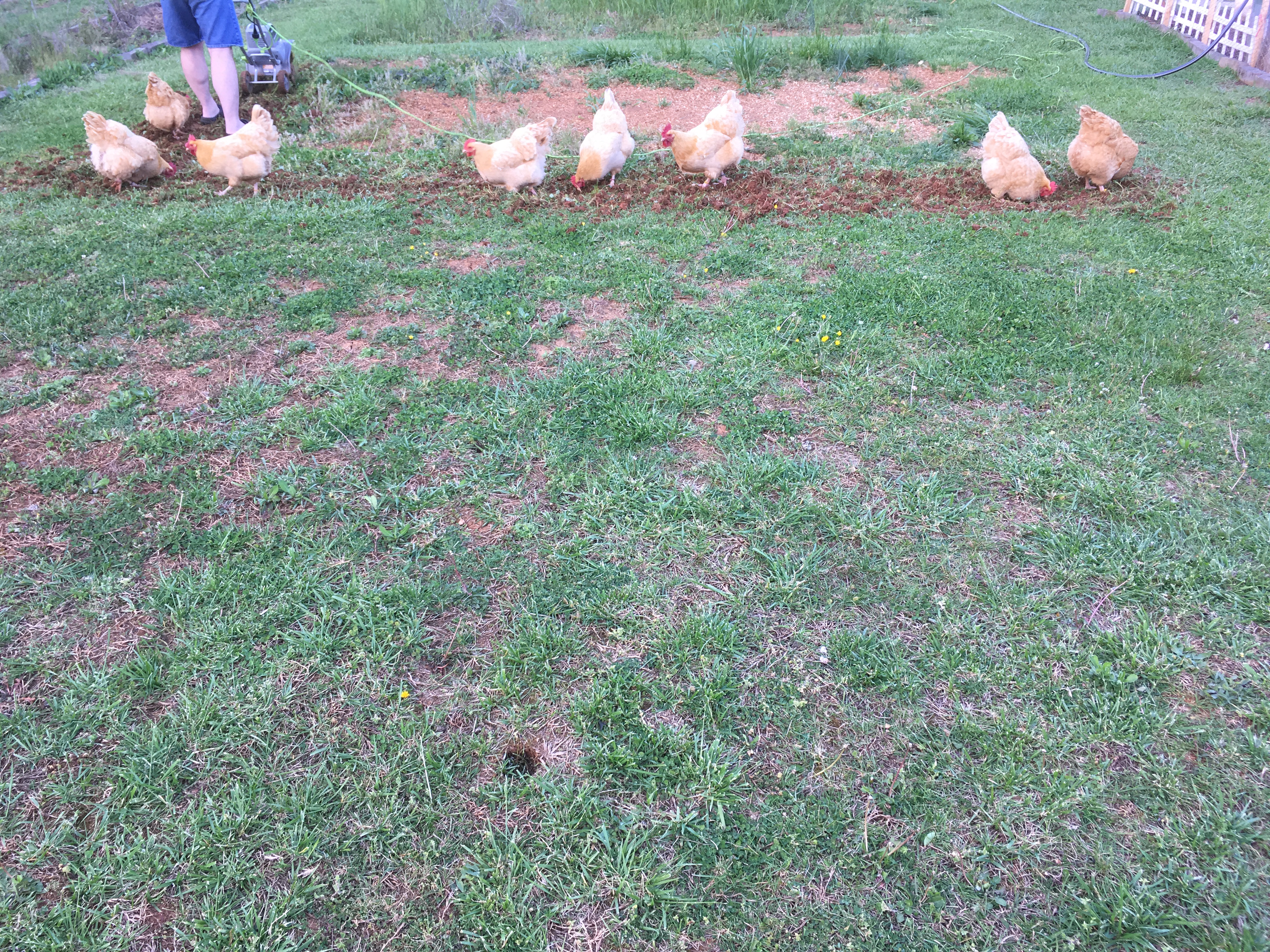
Older hens, although no longer laying, still offer all the benefits of having chickens. Providing compost for the gardens, eating the bugs on garden plants, tilling the soil and ridding the yard of all available weeds.
Additionally, I find that my older girls make the best lap chickens. No longer distracted by the needs of egg laying, they become better companions. Instead of focusing on the necessities that go with egg laying, they have more time to spend and bond with their keeper. Thus, my older ladies are the lap chickens of the flock. Not only is it adorable to be claimed by the hen, but the younger generations also see this and model their behavior. Thus, my subsequent broods are friendlier and more personable towards their keepers.
Finally, an older hen who has seen and lived through it all are the Zen masters of the flock. No longer spring chickens learning the ropes of life, they are the pros of what it means to be a chicken. My older girls are the calmest members of the flock, nothing surprises them. They know the dangers of life and help others avoid them. They know and roll with the changing seasons and weather patterns. They are the wisdom barring members of the flock.
Above all, they deserve all the honor and respect that is due them. They nourished me with their life during their laying years, it is my turn to nourish them during their twilight years. My older girls are the gems of my flock. They shine bright as they have been polished by the trials of life. For a backyard chicken to make it to the ripe old age of 10 is a feat that defies all the odds. I don’t know how much time they have left but I do know this; they will live the rest of their life grazing on bugs and bathing in the sun glistening like the gems they are.
I hope you have enjoyed this post. Hopefully, I offered suggestions on how your hens can be productive past their laying years. It’s a personal decision for each and every chicken keeper. For me, allowing my ladies to live out their post laying years in “hentirement” is the decision I have made for my ladies.
The girls and I want to wish everyone a Merry Kluckmas and an egg-cellant new year!
I am a published author, multi-disciplinary writer and blog contributor. If you like this blog, please visit some of my other sites.
When considering the life expectancy of backyard chickens, several factors come into play. A good amount of these factors are dependent upon their specific breed, parent stock, method of hatch (hatchery vs broody momma) and how they were raise from chickhood. A backyard chicken keeper has control over some of these factors and no control over others.
Some breeds are just more delicate than others. For example, the Polish and Silkie in particular are a bit more susceptible to illness such as Wry Neck which can cause death if not treated quickly and effectively. You also have their sensitivity to winter weather, which can make them less harty in colder climates. However, with proper care and provisions, these breeds can live in colder climates without issue. I have a few members of these breeds, some going into their 5th winter. They do take a bit more care, but for the joy they bring, it’s worth it. To read my posts on care for these breeds, please click these links Polish or Silkies.
However, these factors aside, there are many things a keeper can do to extend the overall life expectancy of their flock. In this post, I will share with you practices I have implemented in caring for my girls. These methods have attributed to my oldest ladies celebrating 10 years of living the good life.
Here on the Kuntry Klucker Farm, my ladies are pets and treated well, even beyond their productive years. Even at 10 years of age, they still lay. They do not lay as dependably or as often as when they were younger. However, my senior ladies lay enough to let me know they are healthy and happy. Not all backyard chicken keepers allow their birds to remain on their farm past the point of productivity. Correspondingly, this blog post is specifically directed towards those who plan to allow their ladies to live out their natural lives long past their productive years. So, without further ado, allow me to share with you methods that I have implemented to ensure a long and happy life for my senior ladies.
I have raised chickens for about 10 years now. My first flock started with 17 Buff Orpington chicks. I had no idea when they arrived what joys were in store for me. I instantly fell in love with them. Thus began the greatest adventure of my life. Out of the original 17 chicks, 5 remain today. These are my oldest ladies, now at the ripe old age of 10. For a backyard chicken to reach 10 years of age, is a feat that defies the odds. Most backyard chickens, even raised as pets, rarely make it past the age of 7. Even at 7, this is still considered a good long pampered life. There are cases here and there of a pet chicken making it to 15 years and beyond. However amazing, these instances are rare, far and few in-between. Most backyard or pet chickens fall somewhere between 5-7 years as a general life expectancy. However, if they are well cared for, this expectancy can be extended by several years and beyond. I will list care taking techniques that have brought my ladies 10 happy years and hopefully many more to come.
Feed and Treats: All physical health begins with diet. For both human and animal, what you put in is what you get out. I have always been a consciouses eater; I do the same for my pets. My ladies are fed a complete poultry feed that accounts for all of their nutritional needs. I am not a poultry scientist; thus, I do not rely on my own knowledge to feed them a correct diet.
Laying hens have a lot of specialized nutritional needs that must be met in order to lay well and remain healthy. For this reason, I allow my girls to have treats very rarely. I do not want to dilute their nutritional needs by filling them up on treats. Many treats are not good for them. Many keepers like to feed their girls treats, but in reality, this is not in their best nutritional interest. I do however make one exception.
On occasion I will feed my girls dried mealworm. These little goodies contain nutrition that is essential for their health such as protein. During the summer months when they are free ranging, they will eat insects which are good sources of protein. During the winter months this source of protein is not available. Thus, I will supplement this natural part of their diet with dried mealworms. Additionally, I will use mealworms as boredom busters. During harsh winter weather, issues such as pecking can result when the flock is “cooped up” for too long. I make entertainment and games for my girls to distract them from picking at each other during these times. Outside of this, their diet consists of a poultry feed developed to meet all their specialized nutritional needs. As a general rule, I will only feed my girls Purina Premium Poultry Feed. I have tried other brands on occasion, but I find that when I feed them Purina, they are much healthier, their eggshells are stronger, and their feather quality is improved.
Fresh water, vitamins, probiotics and electrolytes: Every day my ladies get fresh water. Additionally, especially during hot and humid weather, I will add poultry vitamins and electrolytes to their water. Living in the south we get extremely hot summers with lots of humidity, making outdoor conditions nothing short of miserable. To assist my ladies in combating this weather, I make sure that they remain well hydrated. The vitamins given to them add an extra boost to keep them healthy in the heat. These vitamins also contain electrolytes, which further keep their bodies balanced during the heat. Several times a week I will add poultry probiotics to their water to keep their gut health in check.
The heat of summer is a great stressor on their little bodies. In fact, heat is more dangerous then wet and cold weather combined. If you have large standard size breeds with ample feathering such as the Orpington or Cochin, the heat is further compounded. I have over the years lost several girls to the heat but never to the cold or prolonged wet weather. Just like for us, high heat and humidity can be a swift and fast killer. To make these conditions easier on their bodies, I supplement their nutritional needs in their water.
During the hot summer months, they will drink more than eat from their feed. They will spend most their time grazing on the grass and eating other delectables they find, such as insects and worms. Since I have supplemented their water, I have not lost any more of my girls to the heat. This has no doubt aided my senior girls in their long and happy life. During the winter, I still add vitamins and probiotics to their water. I supplement their water as maintenance rather than essential survival of harsh summer weather conditions.
Poultry vitamins and electrolytes can be found at most farm/feed stores. At a MSRP of $7 to $10, they are an easy way to increase the health of your flock.
Clean and Dry Digs: Just like us, your girls also need a clean and dry place to call home. To underestimate the importance of a clean coop would be a detrimental condition for your girls. Although it is true that chickens are messy creatures, that does not mean that they can live in filthy unsanitary conditions. If allowed, disease and other illness will run rampant in a coop that is not cleaned and maintained.
A chicken coop needs to be cleaned on a daily basis. Every day, the poop from the overnight shift needs to be removed and disposed of. All my coops are cleaned daily, removing poop from the poop boards accumulated by the previous night. During the summer in order to keep the fly population down, I spray off the boards. In the pen, I remove poop and other debris, be it feathers, leaves or other objects from the previous day of activity.
Another reason to clean their coops daily, is their droppings say a lot about their health. As with all animals, fecal matter tells a story of what is happening inside the body. If you find blood or worms on the poop boards, a closer inspection may be warranted. Keeping a close eye on your ladies’ poo can help you catch health conditions before they become severe or grave.
In addition to maintaining the coop, you want to make sure that their digs remain dry. The coop should not leak, if it does some calking could go a long way. If you have a covered run, repair any leaks that may have developed over the past few months. You want your girls to have a clean dry place to call home. These regiments will go a long way for a healthy and happy flock. If you girls have a clean place to live, disease and other illness will have little opportunity to infect your flock. If you want your ladies to have a happy and long life it starts with a clean coop and pen. As they say, happy hens lay better eggs.
Protection from Predators: On the heels of a clean and dry coop, comes a secure coop. It is no surprise that chicken tastes good. Many predators feel the same way. It is the main objective for backyard chicken keepers to make sure that your girls are off the menu for predators. After all, this is the main reasons that we provide coops for our backyard ladies. These coops and pens need to be constructed with their safely in mind. Predation is easily the most significant factor affecting the life expectancy of backyard chickens. Even when the best is done to insure their safely, things can still happen. Not only is this a disastrous event for a keeper, it’s a very stressful situation for the flock. If a keeper elects to free range their flock, protection and safety becomes ever more important.
Although these dangers exist, I still chose to free range my flock during the day, weather permitting. One way I have insured their safely is a fenced in free ranging area. My backyard is enclosed with a 6ft privacy fence. Additionally, running the perimeter of the fence on the outside, is an electric fence to discourage any climbing or digging predators. This has reduced predators to the flying (hawks) and crawling (snakes) varieties. In the 10 years that I have kept chickens, I have never lost a member to predator attacks. I live in the country, so I have several roosters out with the girls, providing additional protection. My gents have detoured hawks and other arial predators. I have such an event documented. You can read the harrowing story of my Rooster Roy here and his tangle with a hawk which saved the life of my girls.
To insure a long natural life for your ladies, it is imperative that measures be taken to ensure their safety and protection from predators. The only predators that are virtually impossible to protect your flock against is that of a bear or mountain lion. Although extremely rare, some cases of bear attacks have been recorded. Bears are the extreme and probably something that most keepers will not encounter. Living in the foothills of the Smoky Mountains, reports of bears raiding chicken coops are not uncommon. I have to take extra measures to protect my ladies, such as building a secure fence around my property. Become familiar with the predators in your area, do your best to ensure the safety of your flock. Discourage predators from taking an active interest in your flock.
Routine Care for Internal and External Parasites: The final point that I will make is prevention of parasites (mites, lice and worms). Just like your dog or cat needs routine flea/tick treatment, so do your girls. Treatment for external and internal parasites is a very simple and a straightforward operation. Unlike your dog or cat, the assistance of a vet is not needed.
At some point in your adventure with keeping backyard chickens, they will get a case of mites or lice. Don’t worry though, you cannot become infected with poultry mites/lice, they are species specific (nonzoonotic) and only affect birds. Your girls can however get mites and lice from wild birds. You don’t need to keep your girls locked up in solitary, they can be out in the yard and enjoy their normal actives. Treating for mites and lice is very simple.
If you look on the internet there will be millions of methods presented to treat mite or lice infestations. I will say this though, the natural methods do not work well. DE or diatomaceous Earth is not effective on mites or lice. Not only it is one of the least effective treatments, but it is also very dangerous for you as well as your flocks’ lungs.
If you look at DE under a microscope, you will see very sharp and jagged edges. This serrated characteristic makes DE a respitorary irritant for both you and your flock alike. DE is only effective if the insects have constant contact with it. In order to use this treatment, your girls also need constant contact with it as well. This sets the stage for disastrous health complications for your flock.
Contrary to popular opinion, a keeper only needs to treat for mites and lice when the circumstance arises. This is because chickens are well adapted to manage mite/lice on their bodies through dustbathing. A good way to assist your flock in this instinctive practice is by providing a dust bathing medium (sand, peat moss, and regular dirt). The act of dust bathing smothers the little beasties and cleans their feathers all at the same time. However, if the condition arises and you notice little bugs crowing on your ladies, its time to bring out the big guns.
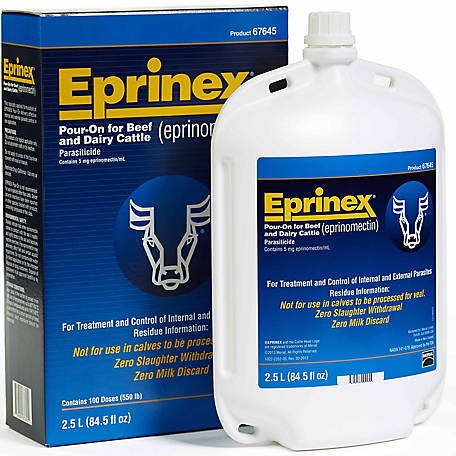
A heavy mite/lice load on a chicken can and will kill them. The little beasties suck blood to the point where they become anemic and weak. If not treated properly, death can result. To treat mites and lice I use a very simple yet effective product. It’s called Eprinex, developed for cattle, at low doses its very effective in treating mites and lice on chickens. Eprinex can be found at Tractor Supply and other feed stores in your area and carries a MSRP of about $50. However, since you use so little, it will last years.
To administer Eprinex, obtain a syringe (remove the needle) and apply the liquid directly to the skin at the base of the neck. In the same manner that an owner or vet would administer flea/tick treatment for a cat or dog. For a large or standard bird, apply 1/2 cc or ml and for a bantam bird, apply 1/4cc or ml. If you have birds with head crests, such as the Polish or Silkie, apply a drop or two on top of their head. These breeds are susceptible to mites/lice on the head due inability to preen this area. Reapply in 10 days. NOTE: an egg withdraw will be mandatory during treatment. This means that from start to finish, a 28–30-day egg withdrawal will need to be observed.
Its that simple!
Now for the internal parasites. At some point, you will run into a situation where your flock will need wormed. Chickens naturally have a worm load inside them. Usually, they manage well but at times such as times of stress, they can become overwhelmed. Typical signs of worms are weakness, weight loss, fatigue and in a worst-case scenario finding worms in their poop. Don’t freak out though, treating worms in your flock is very simple. As with the mites and lice there are many treatments out there. Again, I will reinforce the fact that natural methods of worming are not very effective. If your flock or several members have worms, you need to acquire an effective treatment and get rid of the little nasties. Worm left untreated will kill your birds.
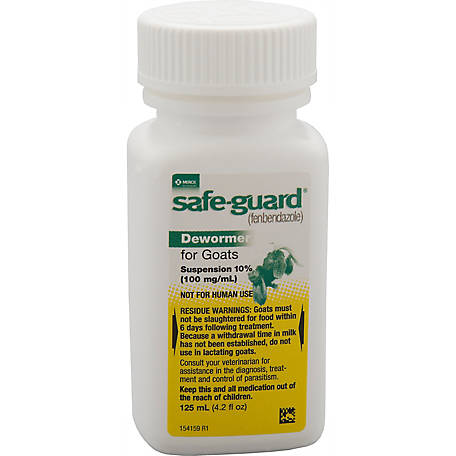
Worms can kill a chicken very fast, faster than you would expect. Additionally, if they have a heavy worm load, you may even find worms in your eggs. My product of choice is Safeguard. Originally developed for goats, it is very effective at small doses for worming. I like this product because it is a broad-spectrum wormer. It will not only take care of round worms but it will also take care of tape, flat, gape, lung and other worms that chickens can get. Some other wormers are only effective on round worms. Although round worms are most common in chickens, they can pick up other worms in their environment. You can find Safeguard at Tractor Supply and other feed stores. It usually runs anywhere between $30-50 depending on location.
To use Safeguard to worm your girls you need to give this to them orally. The easiest way I have found to worm them it to put the wormer on a small piece of bread and feed a piece to every member of your flock. Once again, use a syringe with the needle removed. For a standard size bird, measure 1/2cc or ml on a piece of bread and feed to the bird. For a bantam size bird, measure 1/4cc or ml and feed to bird. Repeat this process in 10 days. The first dose kills all the live worms in their body, the second kills all the worms that hatched. After two worming sessions, you are done, and your girls are free of worms.
Like treatments for mites/lice, a mandatory egg withdrawal is necessary. When undergoing treatment, residue from the wormer and/or worms may pass into the eggs. An egg withdraw for 28-30 days will need to be observed. Safeguard is a very safe and effective treatment for worms in your flock. Just like the mites and lice, only worm when need. A Chicken’s body is able to handle a normal worm load. Once it crosses a threshold, worming will be needed. You will know when you need to worm your flock. Worms in droppings, weak, and sick hens are all signs that you need to take action.
Taking routine care of internal and external parasites will go a long way to extending the life of your ladies. If they are free from pests, their bodies are in a much healthier state. Over the course of 10 years, I have only needed to worm a handful of times. I usually have more of an issue with the mites and lice during the colder months of the year. Even in those situations, outbreaks are very easy to address and eradicate. Just like you extend the life of your cat or dog by keeping them flea and worm free, the same applies to your chickens. In doing so, you have much more time to love and enjoy their company.
I hope that you have found this post informative or helpful. If you have any questions, feel free to post them in the comments. You can also drop me a line at kuntryklucker@gmail.com
I am a published author, multi-disciplinary writer and blog contributor. If you liked this blog, please visit some of my other sites.
This post is dedicated to the care and wellbeing of backyard laying hens. In the post, I will answer the following questions. What are oysters shells? What does it do for your hens? and why are they important?
But before we get into the specifics of oyster shells, I first need to discuss some of the basics of what your hens body goes though when she lays an egg.
One of the most common questions I get is, “do I need to have a rooster for hens to lay eggs?” The answer to that is No. Your hens will lay eggs in the absence of a rooster. If you want to populate your flock and hatch chicks on your farm, for that you will need a rooster. But that’s a post for another time. For now, we are just going to talk about how you hen lays eggs.
Each egg that your hen lays take about 24-26 hours to complete. There are 4 stages in the egg laying process that I will cover.
Stage 1: The Yolk Releases
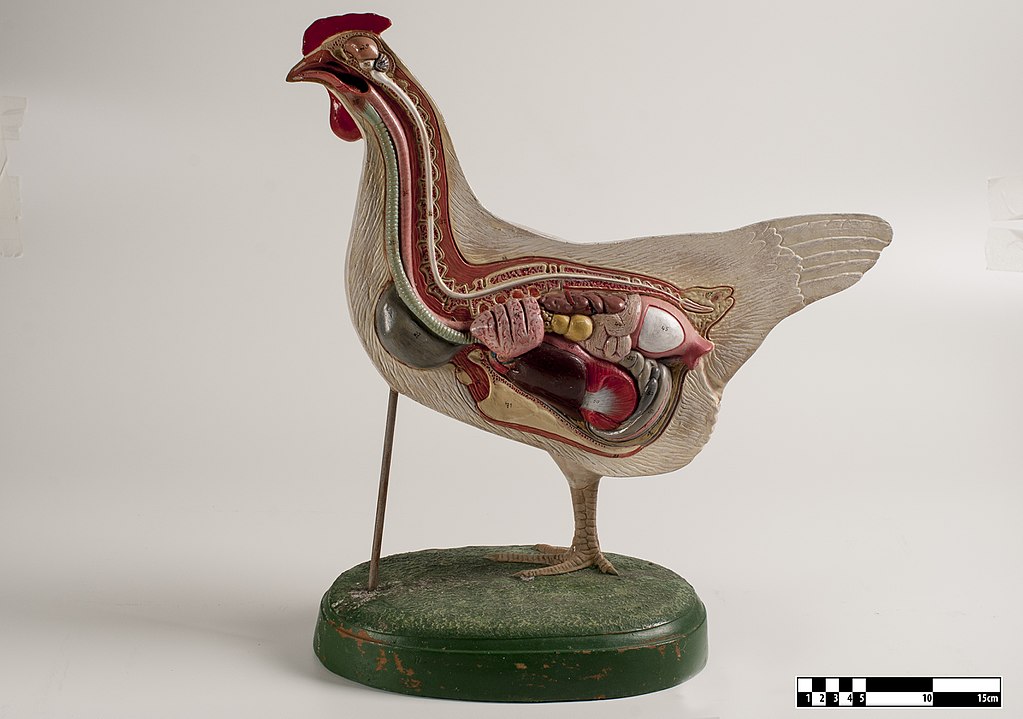
A hen is born with all the egg yolk cells that she will lay throughout her life. Each yolk is contained within its own follicle. When the yolk is released from the follicle, it travels from the ovary to the oviduct, commonly known as the reproductive track. This entire journey this far only takes about 15 minutes.
Stage 2: The White forms
The formation of the egg white takes your hen 4+ hours to complete. As the yolk leaves the ovary and travels through the oviduct, it can be fertilized by a rooster. An unfertilized egg is known as a blastodisc,a fertilized egg is known as a blastoderm. If you do not have any roosters, the blastodisc will continue its progress in his absence. The yolk (now known as a blastodisc or blastoderm) travels through the magnum and the isthmus sections of the oviduct. This is where most of the albumen (egg white) forms around the yolk, the thin outer shell membrane holding everything loosely together. When you break open an egg you will notice white spiral strands connected to the yolk. These spindles are called chalaza and attach the yolk to the shell. At this point the blastodisc resembles an egg missing the outer shell.
Stage 3: The Eggshell
The blastodisc (egg) receives the shell in the uterus via a shell gland. The shell takes about 20 hours to form and another hour or more for the pigment or color to be applied to the outer shell. It is this phase of egg development that requires calcium from your hen’s body. If she does not have access to calcium through her feed or supplemented in oyster shells, her body takes this critical nutrition from her bones. Over time, the depletion of calcium from the hen’s body weakens her bones leading to injury. This is why making oyster shells available to you hens is very important. Most feeds come “enriched” with oyster shells, but this does not meet all the calcium requirements needed by your laying hens.
State 4: The Nest Box
Your hens lay eggs through their cloaca (the vent). Eggs exit through the same vent used for everything a chicken excretes. Tissues of the uterus expands with the egg until the entire egg passes through the vent. During the act of laying the egg, a bloom layer is applied to the shell to protect the egg and keep it clean. This bloom keeps bacteria from entering the egg which can spoil the yolk and contents inside the egg. It is for this reason; we refrigerate eggs after washing them. Once the bloom is washed off the egg, the egg will begin spoiling. The outer layer of protection is removed, no long protecting the egg from bacteria.
Unwashed eggs can remain at room temperature for several weeks before they begin to break down. This is why eggs bought at the grocery store are sold in the refrigerated sections and kept cold. Farm fresh eggs only need to be washed prior to use. Otherwise, your farm fresh eggs can be stored at room temperature, only needing refrigeration if you will not use them for an extended period of time.
Now that you have a better understanding about you hens’ body and the process of laying eggs, let’s discuss and answer some common questions about oyster shells.
What are Oyster Shells?
Oyster shells are pretty much what they sound like, ground up oyster shells. They are an excellent source of calcium, a much-needed supplement for your hens. Most chicken feed contains some oyster shell in the feed. However, it is quickly absorbed by your hens, not longing enough for them to gain the full benefit. Don’t get me wrong, its better than nothing, but your hens are not getting what they need for their daily calcium requirements. Your hens require a long release calcium source which is not in all chicken feed brands.
The only feed brand that contains a long release oyster shell in the feed is Purina Poultry Feed. Purina can be found at Tractor Supply and many other farm and feed stores. If you cannot find Purina, don’t panic. You can still use the feed that you currently purchase, just make oyster shells available to your girls in addition to the feed.
I have found that a small dish attached to the side of their pen filled with oyster shell does the trick. You don’t need to worry about them going through it like scratch or even feed. A hen will only consume what she needs. Her body will tell her when she needs extra calcium and how much she needs to lay her eggs. Each hen’s body is different, some may consume more than others. Don’t worry is if one hen consumes a lot while another hen consumes very little, their bodies know what their supplement needs are.
What do Oyster Shells do for your hens?
Oyster Shells supply your girls with the calcium that they need to form strong eggshells. Most chicken feed brands have some oyster shell in the feed but not enough. Since hens do the majority of the hard work of making eggs shells during the night, they need a supplement that will provide calcium during this time. The Oyster Shell that is contained in the feed is only accessible to the hen while she is eating. Oyster Shells that are supplied in addition to the feed are larger pieces. Sitting in her crop during the night, they slowly grind down, supplying the hen with calcium as she sleeps. It is in this way that your hens are able to make strong eggshells, reducing the stress on her body and depleting her calcium resources.
Why are Oyster Shells important?
Oyster shells are important because they provide a calcium source that is required to make eggshells. If a hen does not have adequate calcium resources for her body to produce the eggshell, it will weaken her bone structure. An eggshell is made almost entirely of calcium, in the absence of a calcium source her body will take the needed resource from her bones. Over time this can lead to bone issues with hens who are not getting enough calcium, in particular the leg bones. Often time the weakened bones lead to painful injury, even breaking during normal activity. For the optimal health of your hens, providing Oyster Shells aids in their overall health and longevity.
After providing supplemental calcium to you girls, you will notice that the eggs she lays will be harder and have firmer shells. This is also beneficial to your hens; eggs are less likely to break during the process of laying. This is another risk to your hen. If an egg breaks inside a hen during the process of laying a soft-shelled egg, it can cause internal injury. Broken eggshells are sharp and can cut the delicate skin of her tract and vent. A broken shell during laying can often lead to infection, pain and discomfort. Recovery is not always possible depending on where and how the egg broke inside of her. To prevent this and other unwanted issues with egg laying, simply supply oyster shells to your laying hens.
I hope that you have found this post helpful. Keeping backyard chickens is a fun and rewarding endeavor. Like us, hens need a little help in supplementing their diet. They can’t get everything they need from their feed, but that’s an easy fix. Taking proper dietary care of your girls will lend to a long and happy life for your special ladies.
If you have any questions, please feel free to post them in the comments. You can also drop me a line at kuntryklucker@gmail.com.
I am a published author, multi-disciplinary writer and blog contributor. If you like this blog, please visit some of my other sites.
Contrary to popular opinion, keeping multiple roosters in a flock is possible. It is a misconception that only one rooster is best to oversee your flock. However, in order for multiple roosters to live peacefully, several requirements need to be meet. In this post, I am going to show you how my 13 roosters cohabitate while presiding over their girls. I will demonstrate these principles featuring my gents.
Smaug and Lestat live in the Kuntry Klucker. Each of the boys have their assigned hens and know which hens belong to whom. While they roost in the Kuntry Klucker at night, they free range during the day. The largest of my roosters, this rooster duo get along very well. Confrontations are minimal, giving way to mutual respect. Smaug and Lestat are at the top of the pecking order in the flock, assuming the Alpha and Beta positions. The remaining subjugated roosters answer to these gents. Despite their size and position, they are gentlemen, good to the ladies, and kind to their humans. Neither of these boys have ever shown any signs of aggression.
Enigma and Link:
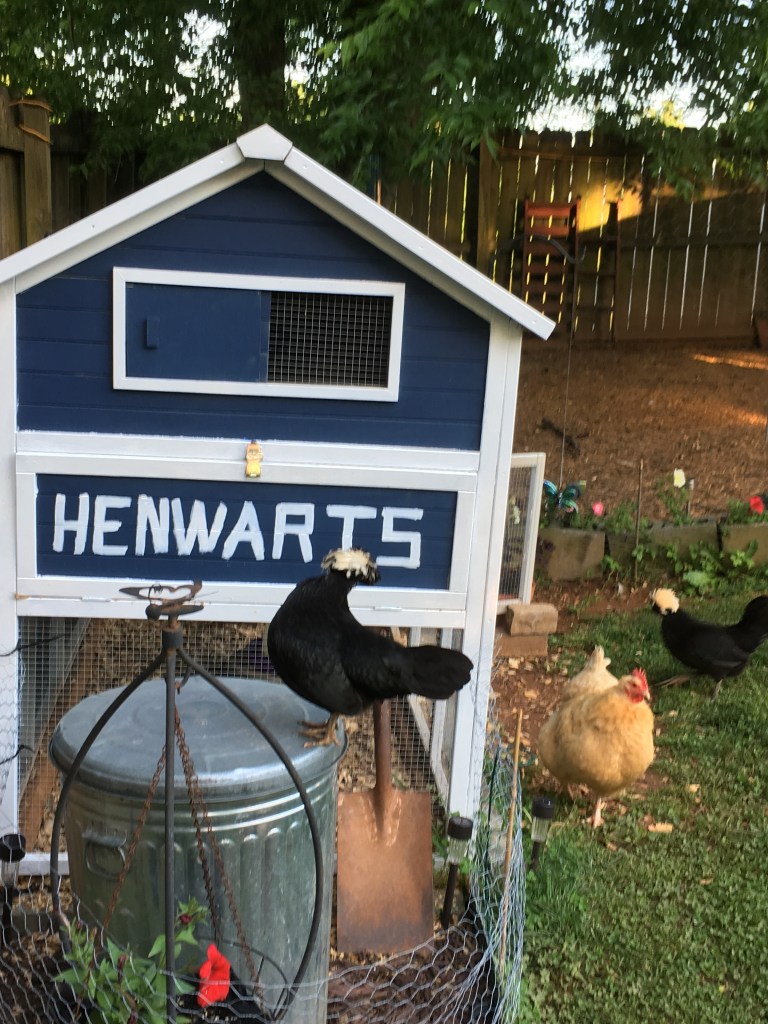
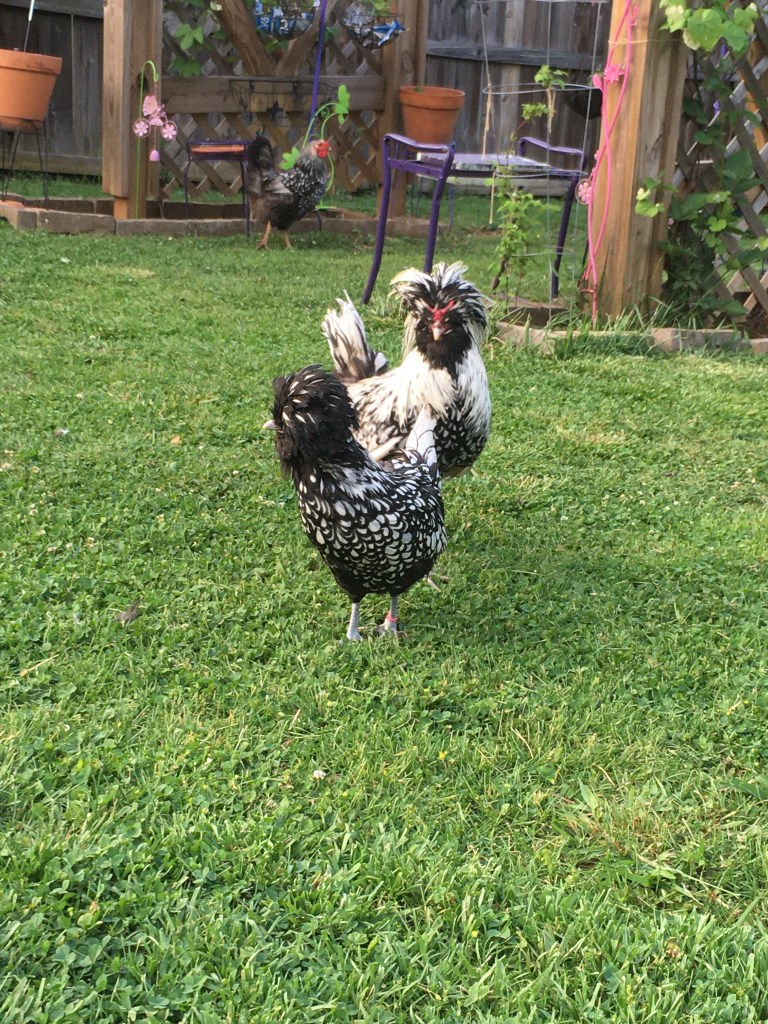
Link: Silver Lace Polish RoosterEnigma: Mottled Cochin RoosterEnigma and Link: patrolling the grape vines for delectibles.Henwarts CrewAthena: White Crested Polish Hen, perching on feed can outside of Henwarts.
Enigma and link roost in Henwarts. Henwarts is home to our white crested polish, silver lace polish and bantam cochin flock.
Enigma: is a Motted Cochin, he is the smallest and oldest of The Kuntry Klucker boys. At 7 years old, he is the senior rooster on the Farm. He is civil with Link but prefers to put distance between himself and Link while free ranging. He watches over the White Crested Polish hens that reside in Henwarts. Link: watches over the Silver Lace Polish and Bantam Cochin hens who also reside in Henwarts.
Link and Fi: Silver Lace Polish Hen and Rooster.
Additionally, Enigma has adopted a few of the Buff Orpington Hens that roost in the Kuntry Klucker. The Buff ladies are too big to roost in Henwarts thus, they reconvene while free ranging. Despite his small stature, he makes up for it with a big heart and lively personality.
Enigma watching over Aphrodite (White Crested Polish Hen) and the “golden girls” (Buff Orpington Hens).
Devros and Micky Smith:
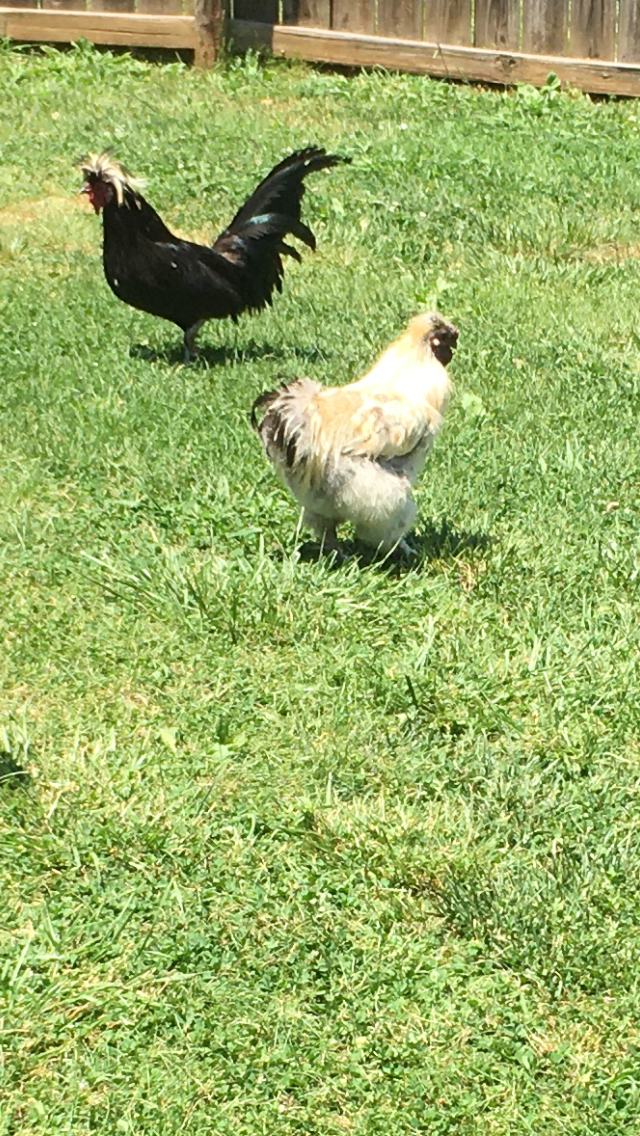
Devros and Micky Smither: (Silkie Roosters) looking after their Silkie hens.
Devros and Micky Smith: Devros and Micky Smith are our resident Silkie Roosters. This duo share responsibility of looking after the Silkie hens that live in the TARDIS. This duo are peas in a pod, they do everything together. If ever I have seen a rooster bromance, these two are it, never straying far from one another. As expected, there is no confrontations between these two gents, they are the best of friends.
Honorable Mention: I have a few other roosters that roam the Kuntry Klucker Farm. These boys do not necessarily lead a harem, rather they assist in other matters of flock maintenance. These boys roost with the TARDIS crew.
Pantaphobia: Pantaphobia is a White Crested Polish Rooster, as his name suggests, he is afraid of everything. He is our resident useless rooster, to read his unique story, click here.
Pantaphobia: White Crested Polish Rooster
Supreme: Supreme is a Splash Silkie Rooster. Although not assigned a harem of hens, he assists Devros and Micky Smith with overseeing the Silkie hens.
Pantaphobia and SupremePantaphobia and Supreme watching over the Silkie flock
Pantaphobia and Supreme are another rooster duo that relish each other’s company. They can be seen browsing the yard together in search of delectables, be it bugs, worms or greens.
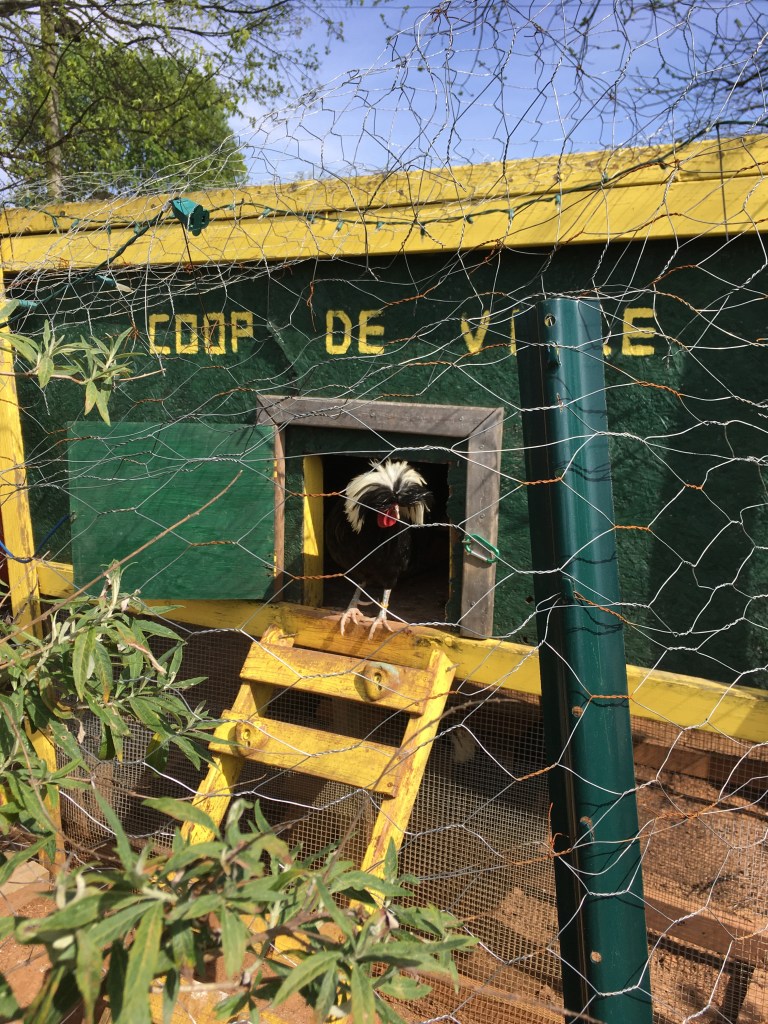
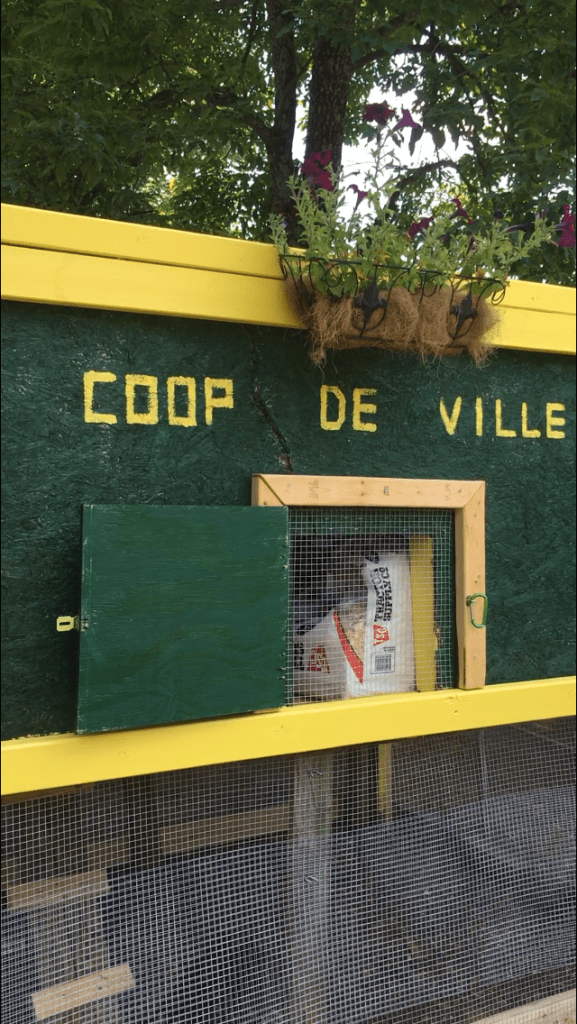
Bachelor Pen: If you have kept count, I am a few gents short of my quota of 13. The rest of my boys reside in a bachelor pen. The Coop De Ville is home to several White Crested Polish Breeding Roosters. These boys reside together in harmony. To see how I utilize a bachelor pen for roosters, please click here.
The Coop De VilleCoop De Ville PenResidents of the Coop De Ville
To successfully keep multiple roosters in your flock, several requirements need to be meet. I will list and explain these necessary prerequisites below.
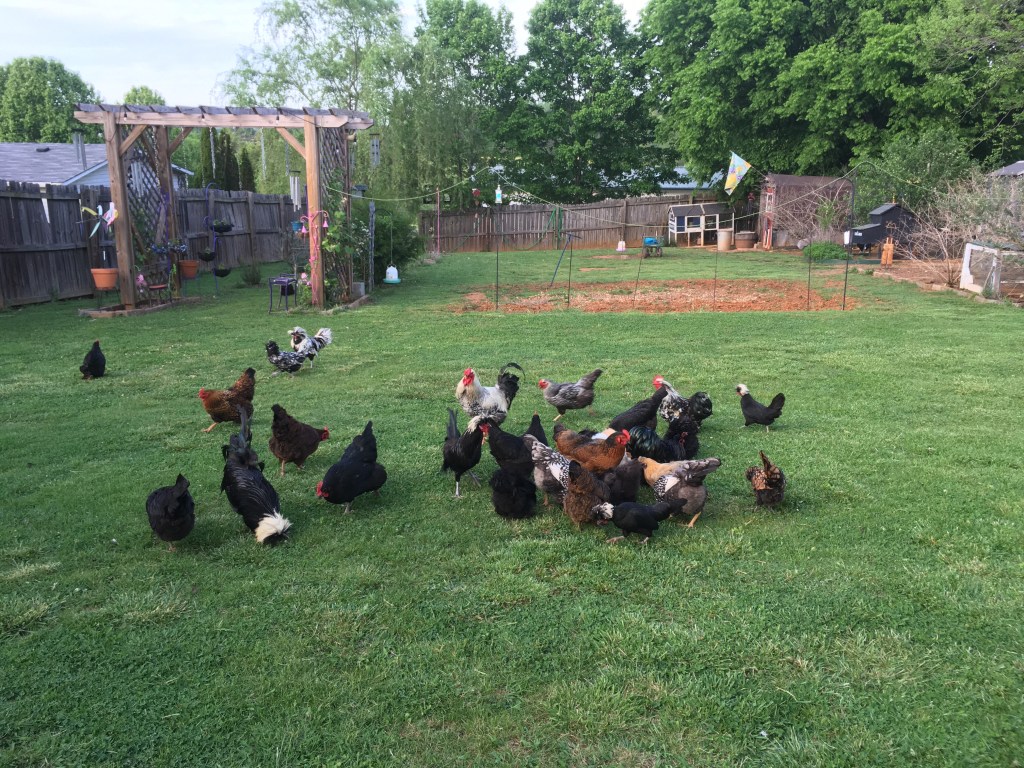
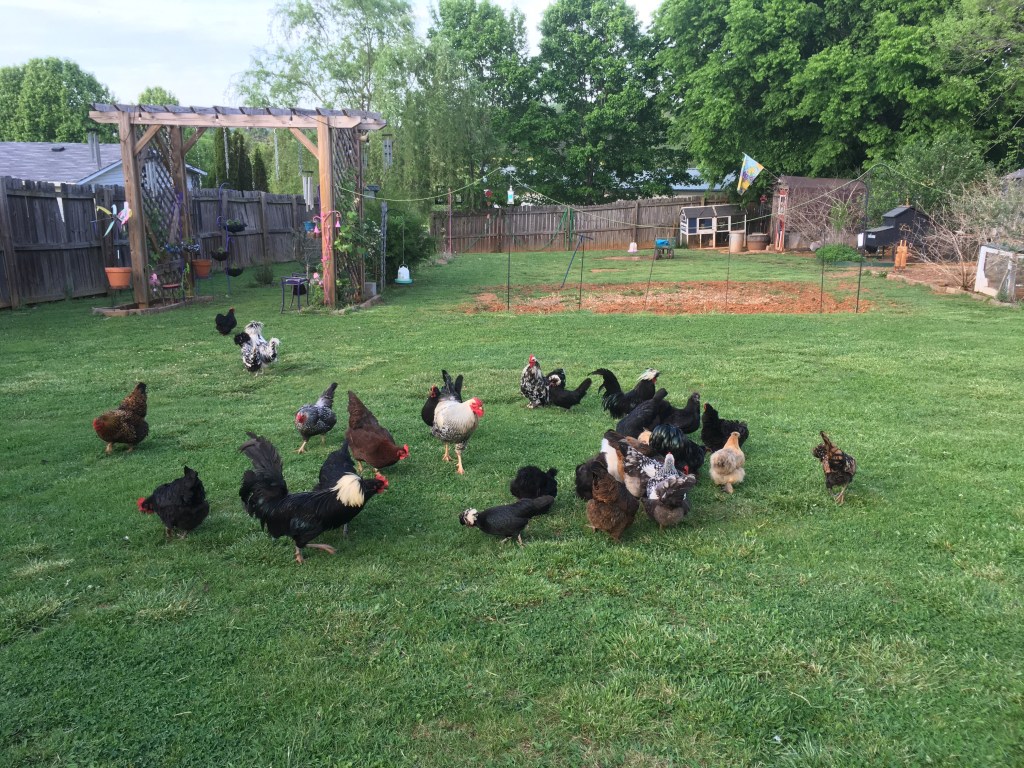
The Kuntry Klucker Farm flock grazing on a freshly cut lawn.
Ample Space
The first thing to consider in keeping multiple roosters is space. Roosters, if several are present in a flock, will divide free ranging space into jurisdictions. Each rooster will look after a portion of the girls in “his” specified territory. Each rooster will know the boundaries of his dominion. If a gent member should step outside his bounds, a confrontation will ensue. To ensure that your roosters will live peacefully with one another, they must have ample space to roam.
The flock making their way to the garden shed for a handout of crached corn and scratch grains.
2. Several feeding and water stations
When free ranging, it is the job of a rooster to look for food for his ladies. He will actively hunt for bugs, seeds, or weeds for them to dine on. If his hunt turns up empty, he will lead them to the feeder and water. With each rooster leading a section of the hens, multiple feeding and watering stations are mandatory. If these resources are too few, the boys will fight over these necessities. Each of my coops have their own food and water. Additionally, I have other feed/water stations available in the yard. With amplest access to food and water, my boys live peacefully, made possible by adequate sustenance.
3. Sufficient number of hens
The roosters and hens will decide amongst themselves who belongs on which rooster team. For this to be possible, there needs to be enough hens to go around. It is typical for one rooster to manage and service anywhere from 6-10 hens individually. If there are not enough hens to divide amongst the boys, serious problems can arise.
If there are too many roosters for too few hens, the hens can become injured through over mating. The hens will be mated too often which can cause feather loss, wounds on her back, and other injuries by aggressive mating by too many roosters. If there are too few hens, fighting amongst the roosters will be more frequent as they compete for the hens.
To combat this problem, there are a few solutions that can be implemented. If you want to keep all your boys, you can establish a Bachelor Pen for excess roosters. This too is achieved through adequate flock maintenance. When done right, all members live peacefully in their bachelor digs.
The Coop De Ville: Bachelor Pen
I hope that you have found this post helpful in managing roosters in your flock. If you live in the city, roosters are most likely not permitted. However, those that live in the county or country have more options when it comes to roosters.
I am of the persuasion that roosters are an amazing creature. I value them for the part they play in the social structure of a flock. In the past, I have sustained a span of several years where I did not have a rooster. During this time, I learned the true value of a rooster and the balance his presence brings to my flock.
Roosters are not the blood thirsty vicious creature of the past. When raised with care, they make a very admirable addition to the backyard setting.
If you have any questions about keeping multiple roosters, roosters, or chickens in general, feel free to leave a comment. You can also drop me a line at kuntryklucker@gmail.com
I am a published author, multi-disciplinary writer and blog contributor. If you like this post, please visit some of my other sites.
So, you want to raise chickens but you have absolutely no idea where to begin. In this post, I will tell you how I began my adventure with raising chickens and show you how to begin your own backyard chicken endeavor.
It was about 10 years ago when the thought of keeping chickens first crossed my mind. I never had chickens before, nor was I raised around them. My grandparents had a farm where they raised produce and pigs. I visited every summer, that was the extent of my country upbringing. I had a good handle on how to garden and grow crops, as to livestock, I had to start from square one.
In a world where we can buy literally everything we need at the store, I waned to have a say as to where my food came from. I wanted to have farm fresh eggs and a garden where I could grow organic produce for my family. I also needed guidence on how to cultivate hard red clay here in Tennessee.
Backyard homestead and gardens.
I found through this endeavor, soil conditioning and fertilizer in the form of manure is a good place to start. I also found out that chicken manure is the best from of fertilizer. Chicken, as opposed to cow or horse manure does not contain seeds, chickens process everything they consume. Due to the grinding organ, the gizzard, all seeds are broken down into usable fuel for a garden. Cow and horses on the other hand do not process all the seeds they eat, resulting in fertile weed seeds for your garden. In order to have the homestead and garden I wanted, I had to get chickens. Thus stated the adventure with my backyard divas.
Why do you want chickens?
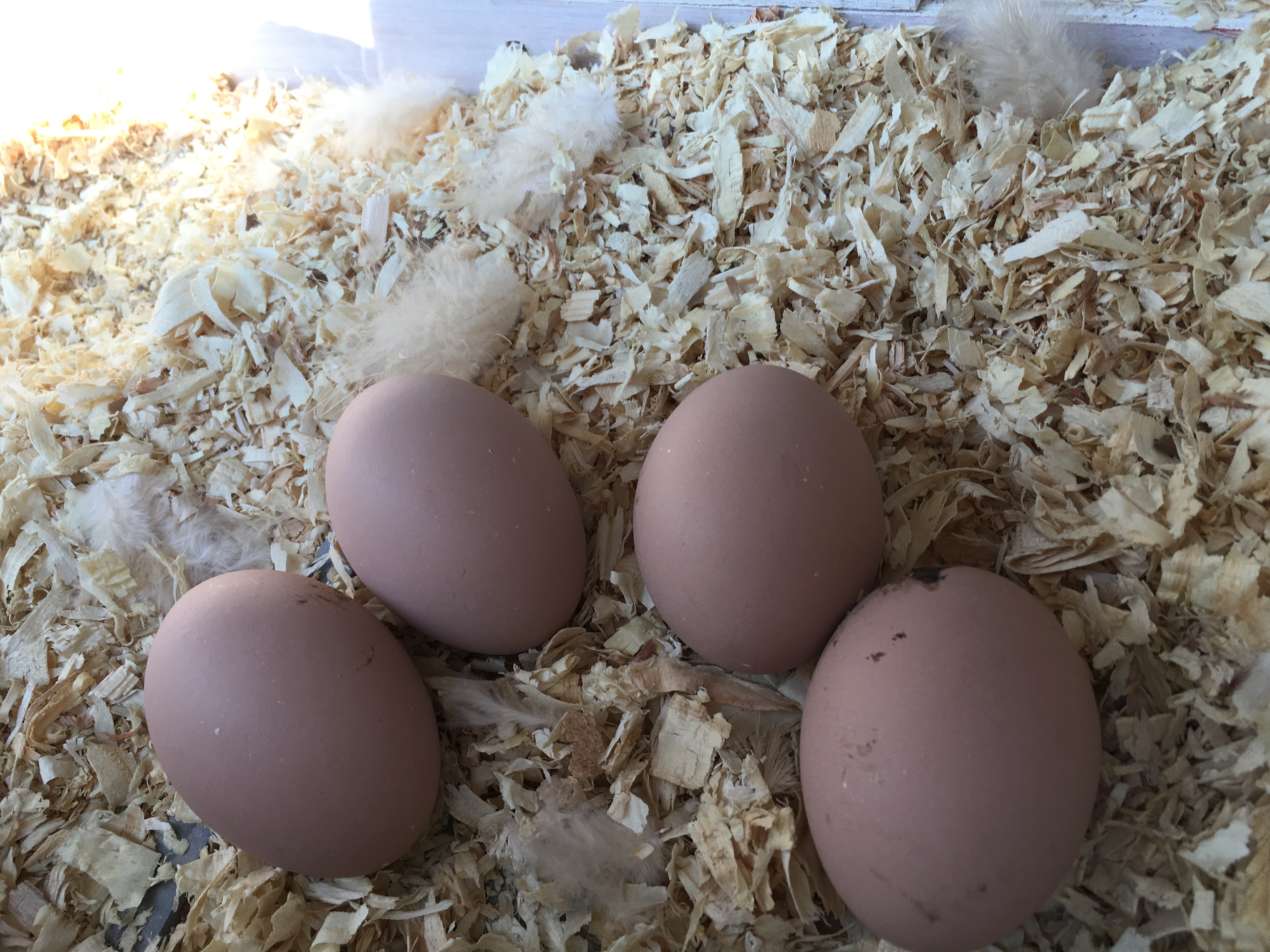
Buff Orpington eggs in a nesting box
If you are reading this blog post, you have already decided that you want to get chickens. This is the first and foremost thing to consider before getting your first flock. Keeping backyard chickens is very rewarding with many benefits. However, they do require daily care and attention. Knowing why you want to dedicate the time and resources required is very important.
Know your zoning laws.
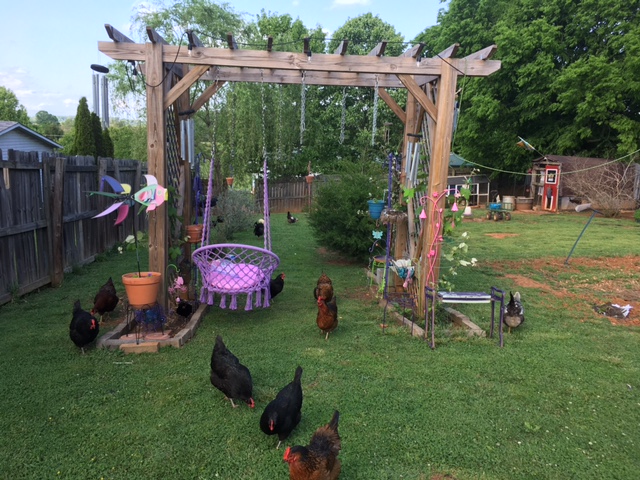
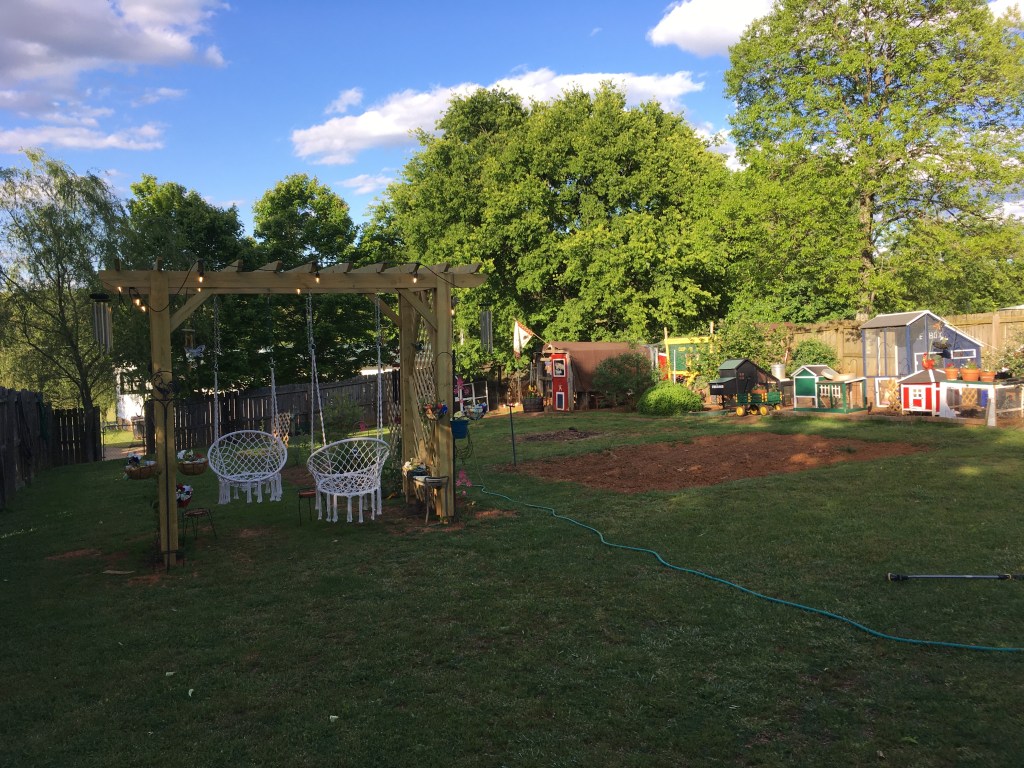
The Kuntry Klucker Farm “coop-hood”.
Before you even look at coop designs and hatcheries, you need to find out what your zoning laws require. Every state has a different zoning law when it comes to livestock. Unlike a cat or dog, there are strict laws concerning pet chickens, the state views them as “livestock”. If you are in the city, if allowed, you will be limited to a small number of hens in your backyard, usually 6 or so, omitting roosters. Most city ordinances do not allow roosters per the noise issue.
If you live in the county or country, livestock is most likely permitted. You still need to check your zoning laws to be sure of any and all restrictions. For example, I live in a rural county in East Tennessee. Although I am outside city limits, I have to abide by certain guidelines. For example, my coops need to be at least 250 feet away from my neighbor’s front door, my animals must be contained by either a fence or pen attached to their coop, and I need to have a good waste management routine implemented to reduce both varmints and odors that may bother my neighbors. I have met the requirements, stipulations and more. My girls’ coops are in our backyard, enclosed by a 6-foot wood privacy fence. Their coops and pens are cleaned and maintained daily, I practice good manure management, aiding in both good health and odor reduction.
The Kuntry Klucker Crew
Do your research..Breeds, temperament, disposition.
Ask yourself what kind of chickens you want? Do you want to keep a flock of chickens for eggs, or do you want them for meat?
Do you want to involve your kids in keeping backyard chickens? Do you want to keep them purely for the enjoyment and fun of owning backyard chickens? What temperament do you want in your backyard flock?
These are just a few of the questions to ask yourself. Of course, chickens can offer much more then eggs and meat, they can be pets, forms of entertainment and a companion like a family dog. The spectrum is so wide ranging when it comes to chickens, you can literally have your cake and eat it too.
Most people want to have a flock of chickens that are docile and friendly. If children will be involved with caring for the chickens, this is of upmost importance to beginning keepers. Luckily there are many breeds that would fit this need.
Below, I will list a few of the friendliest breeds. I have most of the breeds or have interacted with them and can vouch for calm and friendly behavior. As with people, chickens have personalities, some may not be as friendly as others. When viewed as a whole, these breeds are great choices for a beginning backyard setting. If roosters are a concern, I have much experience with roosters, I currently have 13 gents. I have examined the temperament and demeanor of various breeds. To read my research and experience with rooster, click here.
For egg potential, the best layer breeds are Orpingtons, Australorps, Easter Eggers, Rhode Island Reds, Production Reds, Leghorns and Plymouth Rocks.
As for meat chickens, typically any standard or large dual-purpose bird will do. However, Cornish Crosses are typically chosen to meet this need. I do not raise chickens for meat; thus, I am I am not able to speak into this. There are many YouTube and other sources on the net to help you get started on this path.
Where to get your chicks? Hatcheries or Feed Store.
After you have decided what purpose, you want your chickens to fill, you need to decide where to purchase chicks. I have purchased chicks from both feed stores and from hatcheries. There are pros and cons to both. I will list them below for your consideration.
Feed store chicks
~ pros: cheap, no waiting time, you can hand pick your chicks, usually older chicks typically a week old or more, don’t need to be picked up early in the morning at the post office.
~ Cons: usually only basic breeds, depending on store the care of the chicks can be poor, easy to purchase too many (I struggle with this one, I want them all), typically sold as straight runs (not sexed, you WILL get both hens and roosters), chicks tend to be more high strung and flighty due to feed store environment, sold during the spring months only (February thru April) although some locations may have chicks in the fall.
Hatchery
~ Pros: Chicks are sexed (you can purchase only pullets or hens, omitting roosters), chicks are usually in better health, can purchase rare breeds, chicks are typically of better quality, can order your chicks to be shipped any month (except winter months).
~ Cons: more expensive (you will need to pay shipping which can be as much as $45 depending on location), you will need to schedule a time to be home to receive your chicks ( you will need to clear two days from your calendar to pick up your chicks at the post office, they can be delayed in the mail), chicks will arrive at your post office (you will be called early usually between 5-7am to pick up your chicks when the overnight truck arrives), some chicks may die in transportation (be prepared to open your box and find dead chicks, this has only happened to me once in 10 years), orders typically need to be placed in November around Thanksgiving for spring chicks.
Given both methods of acquiring chicks, I prefer to work through hatcheries. Yes, it is a bit more expensive, I have several reasons for this preference. I will list them below.
1.)I like knowing I am the only one to care for them from the moment they arrive. Such things as the feed to the quality of the water and vitamins I administer in their water.
2.) I like the wider selection that hatcheries offer. I tend to gravitate towards more rare breeds not offered in the feed stores.
3.) I find that they are healthier and less traumatized than those purchased at the feed store.
4.) I have found that they are less flighty. Chicks sold in feed stores constantly have hands grabbing for them, causing them to be flightier and higher strung. The chicks that I purchased from the hatchery, despite traveling are much calmer and easier to hand raise. Chicks bought from the feed store are very skittish and harder to hand raise. Due to their exposure to the feed store setting, they are often terrified of hands.
If you decide that chicks from the feed store meet your needs, visit your local Tractor Supply or equivalent in your area and begin your backyard chicken adventure.
For those who decide after careful consideration that hatcheries are a better route for you, do your research before you order. There are many hatcheries out there to choose from. Who you order from will have a lot to do with what breeds you want. Some hatcheries specialize in heritage breeds, others offer rare breeds.
I have ordered from several hatcheries, all with good experiences. Below I will list the hatcheries I have done business with. I can vouch for their service and quality of chicks.
Cackle Hatchery – I ordered my first clutch of chicks from Cackle. 9 years later, I still have 5 of the original 17 Buff Orpingtons I ordered.
My Pet Chicken – I order all my Silkies and White Crested Polish Chickens from MPC. They are great outfit and offer some of the rarer breeds of chickens. Their customer service is top notch. If any chicks pass during shipping, they will reimburse you for the loss of chicks.
McMurray Hatchery – I have ordered some of my very rare Polish breeds through McMurray. They also stock some extremely rare breeds. If you are interested in something a little bit different for your backyard flock, they are the best place to go.
Preparing The Brooder.
Now that you have ordered or plan to pick up your chicks at your local feed store or co-op, it’s time to set up the brooder. A brooder is basically a heated home for your newly hatched chicks. In nature, the mother hen would be the brooder. She would keep them warm, teach them how to drink and what to eat. Since you picked up or ordered your chicks, essentially you have to be the mother hen to these little ones. Don’t worry, it’s not complicated. There are just a few very important steps that need to be taken to insure the successful transition of your chicks.
what you will need:
1. Enclosed container with sides and a top.
2. Heat source
3. Feeder and Feed
4. Waterer and vitamins to put in the water
5. Pine Shavings
6. Other accessories such as perches or toys to keep them occupied.
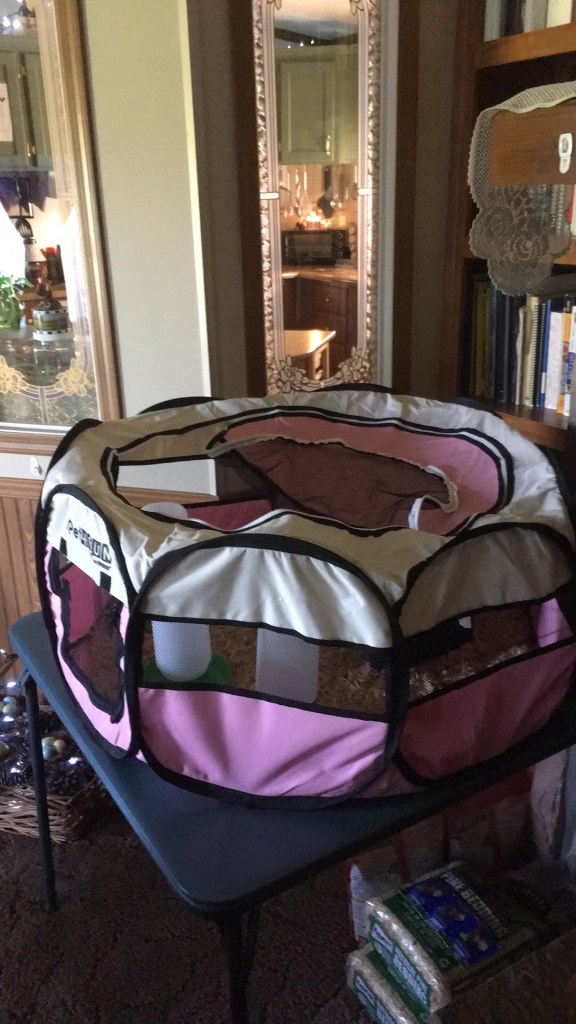
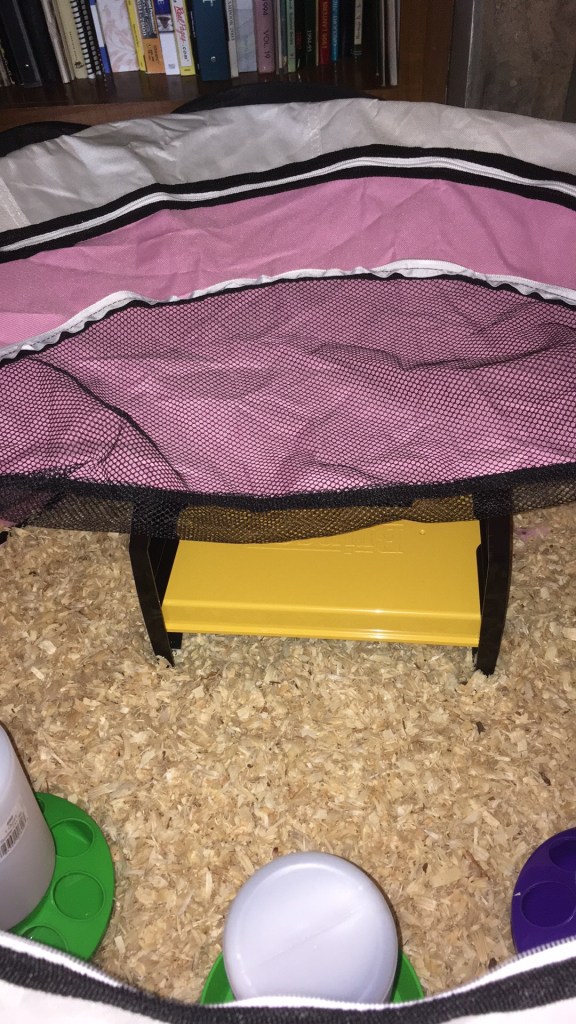
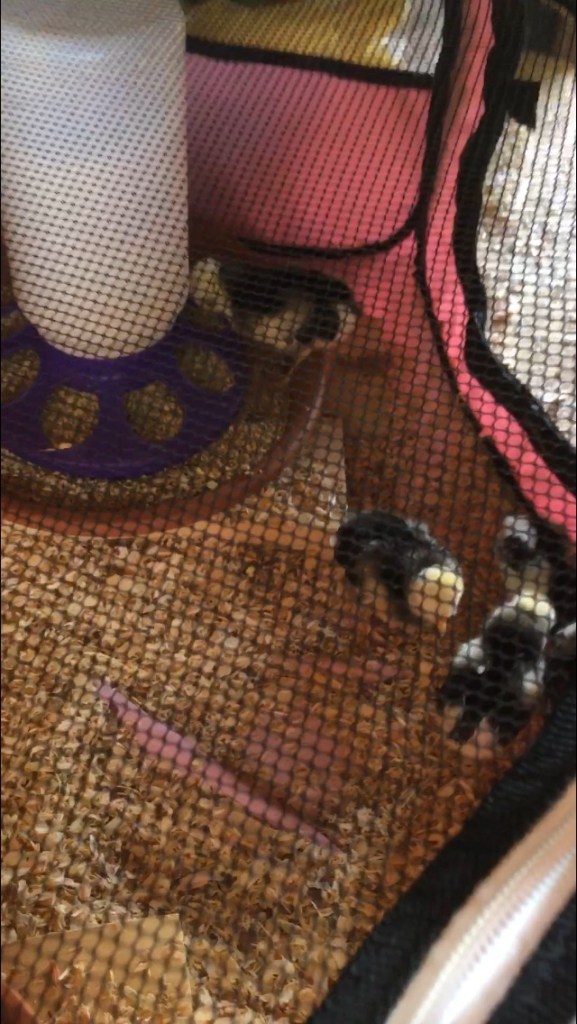
My brooder container or choice, puppy play pen.
For my brooder set up I use a Puppy Play Pen these can be found on Amazon and most pet stores. I like to use these for brooders for several reasons.
~ 1. They are completely enclosed, this means that all the shaving stays in the brooder, reducing much of the mess. The screened sides allow for air flow and visual access to your chicks. Due to the fact that the chicks can see and observe their world outside of the brooder, they are more laid back and less flighty.
~ 2. They have a top. This will become important when the chicks get to the flying phase of their development.
~ 3. They are easy to clean, fold up, and store easily.
Heat:
As for the heat source, I discourage the use of heat lamps. Most people associate brooding chicks with the big red 500-watt bulbs blasting the chicks with intense heat and light. This was the common way of brooding chicks during our grandparent’s day. As for today’s chicks, brooding has taken on a better much safer route to supplying heat to your chicks. Brooder lamps as they are known are very dangerous. There is no way to safely mount a heat lamp around shaving (kindling wood) and flying animals. I cannot recount how many times I have heard, or I see coop, barn, and house fires caused by the humble heat lamp.
Brinsea Ecoglow heat plate in brooder.
In lieu of a hazardous heat lamp I use a Brinsea Ecoglow Radiant Heat Plate. These radiant heat plates mimic the heat from a mother hen, rather than blasting the chicks with unnatural light 24/7. These are a much safer option for heating and do not carry the risk of fires, injury, and death as the heat lamp of yesteryear.
Feeders:
Next, you will need chick feed and a feeder. When it comes to chick feed there are two school of thought. Medicated or unmedicated. Medicated chick feed has a medicine in the feed to prevent or give the chicks an immunity to coccidiosis. Coccidiosis is a disease of the intestinal track; chicks are very susceptible to this condition. Coccidiosis contributes to a large percentage of high mortality rates in young chicks. The medicated feed prevents this condition, giving them a much healthier start in life.
Unmedicated feed is also a good choice, used mainly by people who choose to give their chicks a more organic start to life. Either is fine, you as the caretaker need to decide which route is best for you. As for me, I am pro medicated chick feed. Since I switched to medicated feed, I find that I lose less chicks and that they are healthier from the beginning. As for the feeder, feed stores have a wide variety of feeders to choose from. Just pick the one that fits your brooder set up the best.
Waterers and vitamins:
The type of waterer you have is very important. The goal of the waterer is to give your chicks access to clean fresh water, taking great care that they do not get wet. Once again when it comes to waterers there are two schools of thought, traditional waterers or poultry nipple drinkers.
The traditional waterers are widely available at feed stores, just make sure that you get a small one to prevent the chicks from getting wet. The poultry nipples can be found at some feed stores, but most of them have to be ordered. I do not use the nipple drinkers, I cannot into how to train your chicks to use them. I know that others use them with much success. I find that the traditional waterers work best for me.
Like people, vitamins are very important to young growing chicks. I put vitamins in my chick’s water daily for the first several months. The vitamins ensure that the chicks are getting all the nutrients that they need to get a good start in life. Some vitamins have probiotics in them which gives them an additional boost in the right direction. Most feed stores have poultry vitamins available; I typically pick them up at Tractor Supply.
Shavings or bedding:
Brooder bedding serves the purpose of absorbing moisture, keeping your chicks healthy and happy. The safest bedding to use around chicks is pine shaving. Most feed stores stock pine shavings, they can also be found at Walmart and pet stores. An important note about shavings, cedar is toxic to chicks, take care to make sure that you use pine shavings in your brooder set up.
The pine shaving should be cleaned out once a week and replaced with fresh. More often if you have a quite a few chicks in your brooder.
How to Introduce your new chicks to the brooder and teach them to eat and drink.
When you first arrive home with your new chicks, the first thing you want to do is teach them what water is and where to find it. After traveling for several days, they will be thirsty. To relay this important survival information to your chicks, dip their beaks in the water. As you remove them from their shipping container and place them in the brooder, dip their beaks in the water. Do this for every one of the chicks. You may need to dip their beaks in the water more than once for them to make the connection. You will know that the connection has been made when they drink from the waterer on their own. They will be thirsty; it will not take them long to appreciate the water.
Chicks naturally have a pecking instinct; this means that they will peck at anything that is in front of them. It is your job as a caretaker to teach them what is food. The best way to do this is to line the bottom of your brooder with paper towels for the first few days. On top of the paper towels, scatter some chick feed. The chicks will instinctively peck at the feed, teaching them that “this is food”. If you put new chicks on the shavings, they may eat the shavings mistaking them for food. After they learn to identify their food, the source by eating from feeder, you can remove the paper towels and expose the shavings. They will enjoy scratching in the shavings looking for food, much like adult hens do when looking for bugs in the grass.
Once everyone is eating and drinking on their own, you can take a sigh of relief. From this point on they are able to take care of their needs, regulating their food as water intake as needed. The first week they will spend a lot of time under the heater and sleep a lot. Beginning in the second week, they will be a lot more active and enjoy interacting with their caretaker.
Once the young brood is completely feathered, they can move into their outdoor digs. The time of year you acquire your brood will make a huge difference on when they can be moved outside to their coop. If you get them during the colder months (February – April) depending on your location, you may have to keep them inside a bit longer. To get around this, I typically request my hatch dates to be in May and June. During these months, the temps are warmer especially at night. I do this so that I can get them outside a lot sooner. During these summer months, I can even brood my chicks outdoors in a protected coop. I often resort to this method of brooding. I find that the chicks do much better early on if raised outdoors. Additionally, it frees me from the shaving mess and dust that chicks produce, giving our allergies a much-needed break.
I set up a brooder outside just the same as I would set up one indoors. I provide the essentials food, water, and heat. I simply purchase an industrial outdoor extension cord, run it to the coop and hook the power up. I am currently brooding a clutch of 6 White Crested Polish Bantam chicks in The Coop De Ville. All are doing well and are enjoying the coop life.
Getting the Coop purchased and constructed
Now that that you have your new additions home and brooding, if you have not already, it’s time to get their outdoor digs ready.
Once again, when it comes to coops there are two schools of thought, hand-built or prefab. I have done both and will link the blog post where I discuss this in detail here. Whichever method you choose is up to you. I really don’t think one is necessary better than the other, its whatever works for you and your family.
Backyard “coop-hood”.
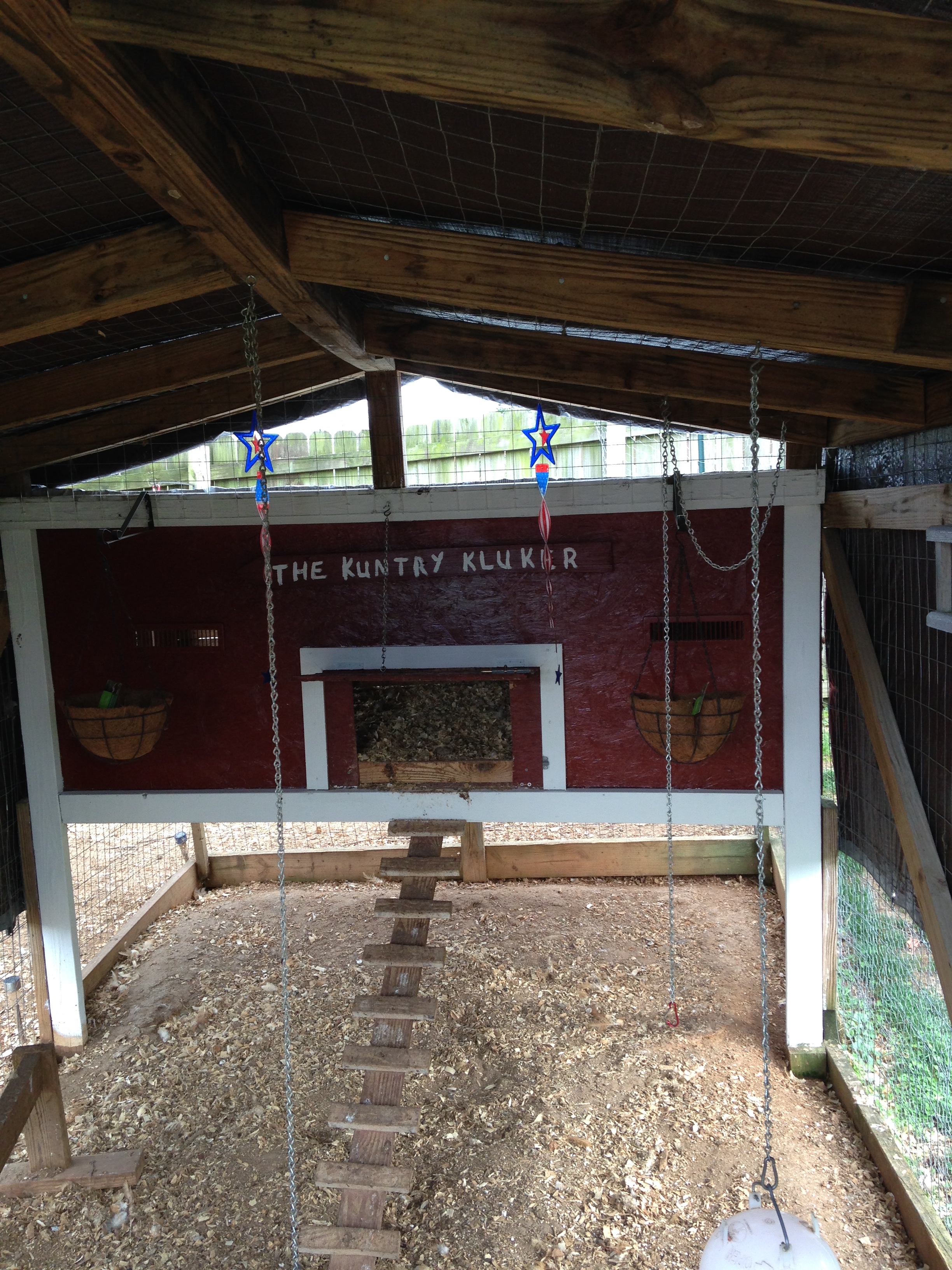
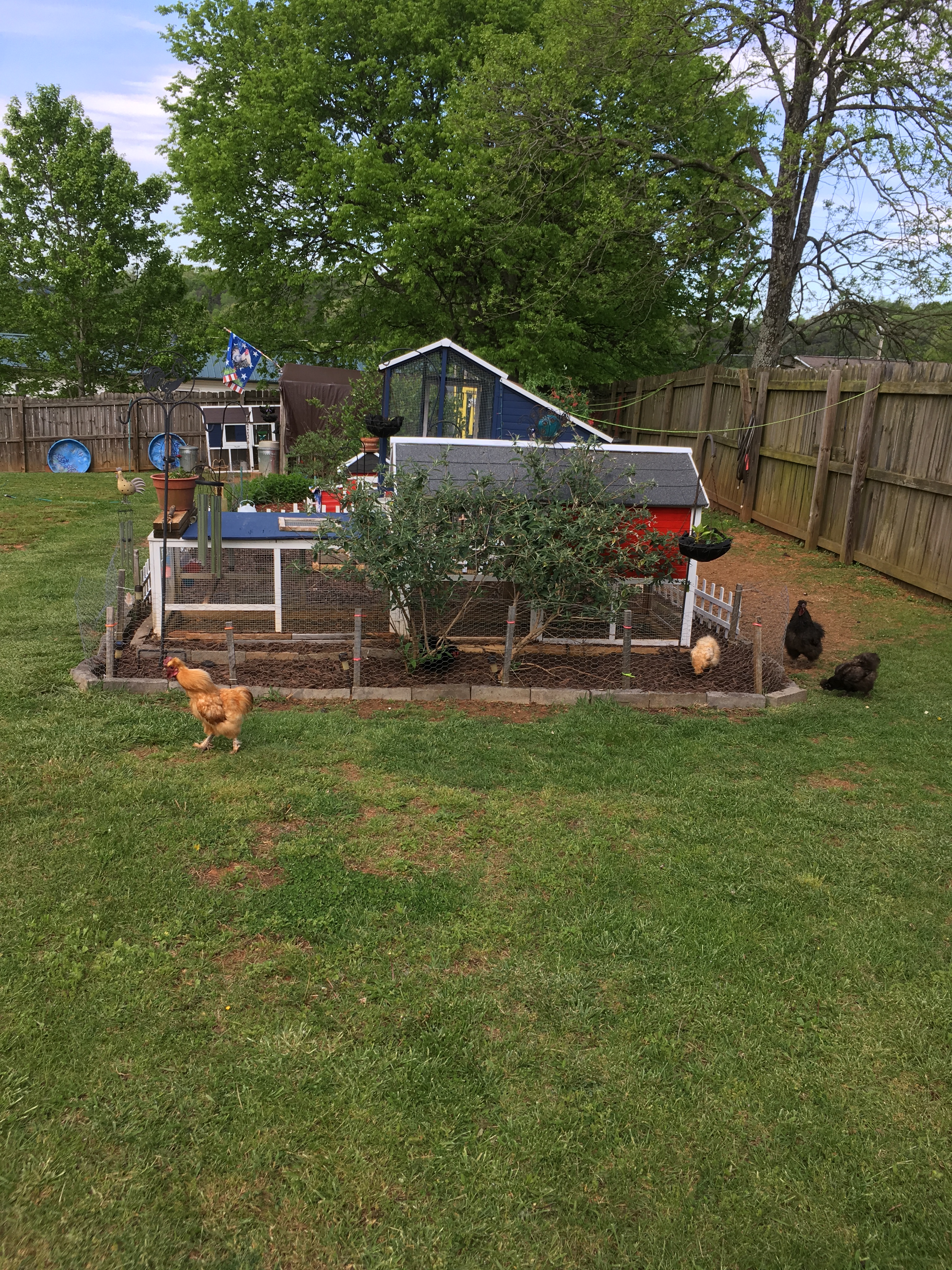
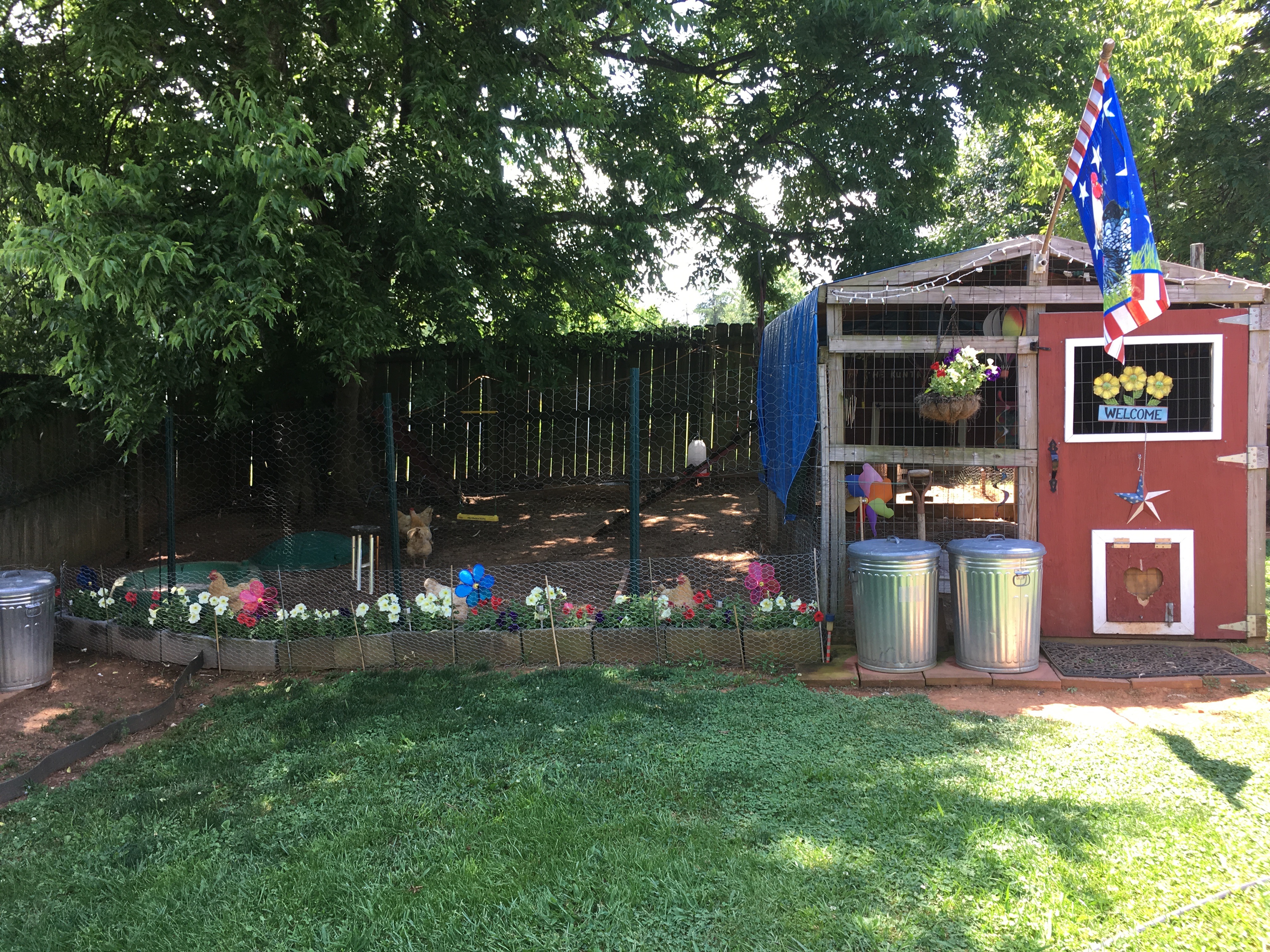
I have 5 prefab coops; with proper care they last a long time. I also have 2 hand-built coops also with proper care are long lasting. Both prefab and hand-built coops will require care and Maintenace. My oldest prefab coop is 5 years old. My first coop, The Kuntry Klucker I built 10 years ago. It comes down to your budget, skills in wood working, and time. It takes longer to build a coop, more money and the skills needed to conceptualize and execute.
If building a coop is not in your wheelhouse that’s ok. Tractor Supply and other co-ops have a great selection of coops in stores as well as online. I own three Tractor Supply prefab coops; I am pleased with all of them. They are holding up very well and make excellent homes for all my girls.
I hope that is you have found this post helpful in staring your own flock. It may seem daunting at first, especially if you were not raised around livestock. It takes a bit of time and research. Once you get rolling, you will find that chickens are simple creatures. They require little but give back a lot in return. Aside from the small amount of time they require, chickens really are lot of fun and are very rewarding.
Here is a short video of my chicken yard. As you can see, I have both prefab and hand-built coops. Both make excellent homes for your ladies and gent.
Link to my blog post entitled Bachelor Pens for Roosters, mentioned in the above video. If you need a solution for extra roosters, a bachelor pen is a great option.
If you have any questions, feel free to post in the comments. You can also drop me a line at kuntryklucker@gmail.com.
I am a published author, multi-disciplinary writer and blog contributor. If you like this blog, please visit some of my other sites.
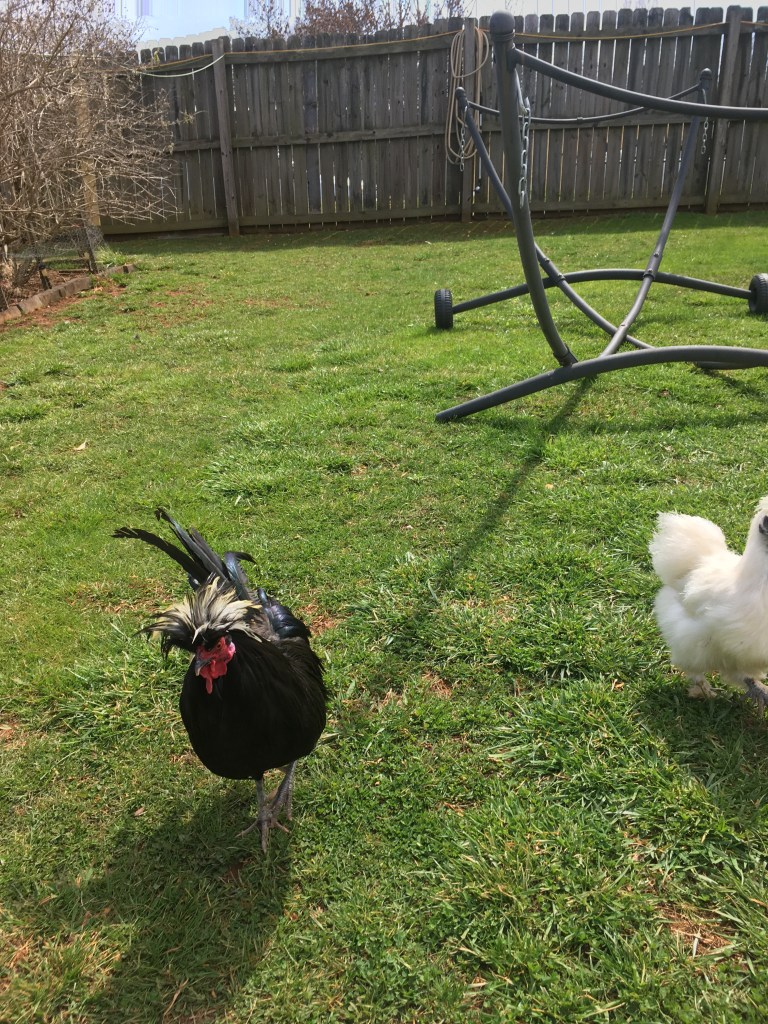
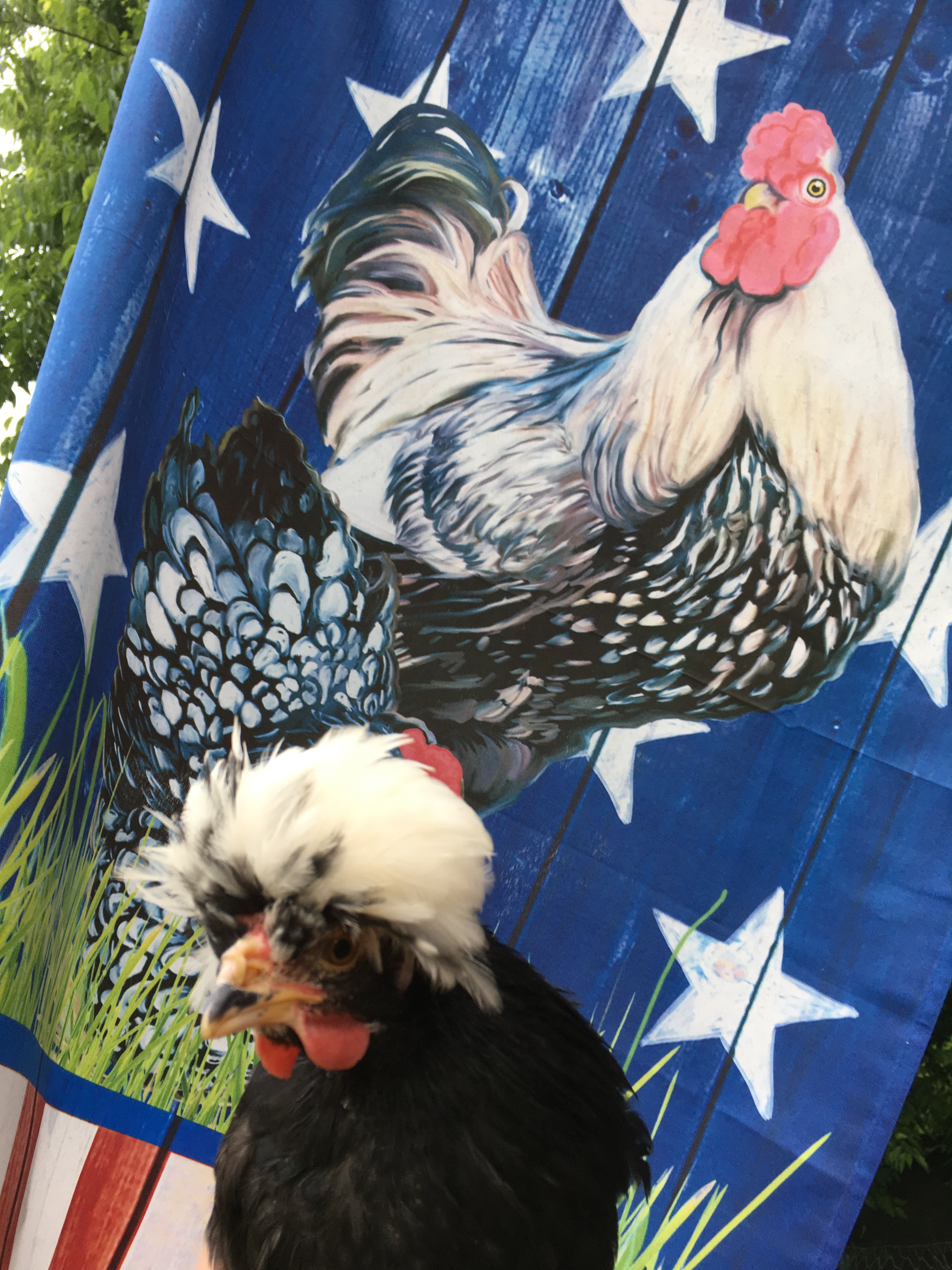
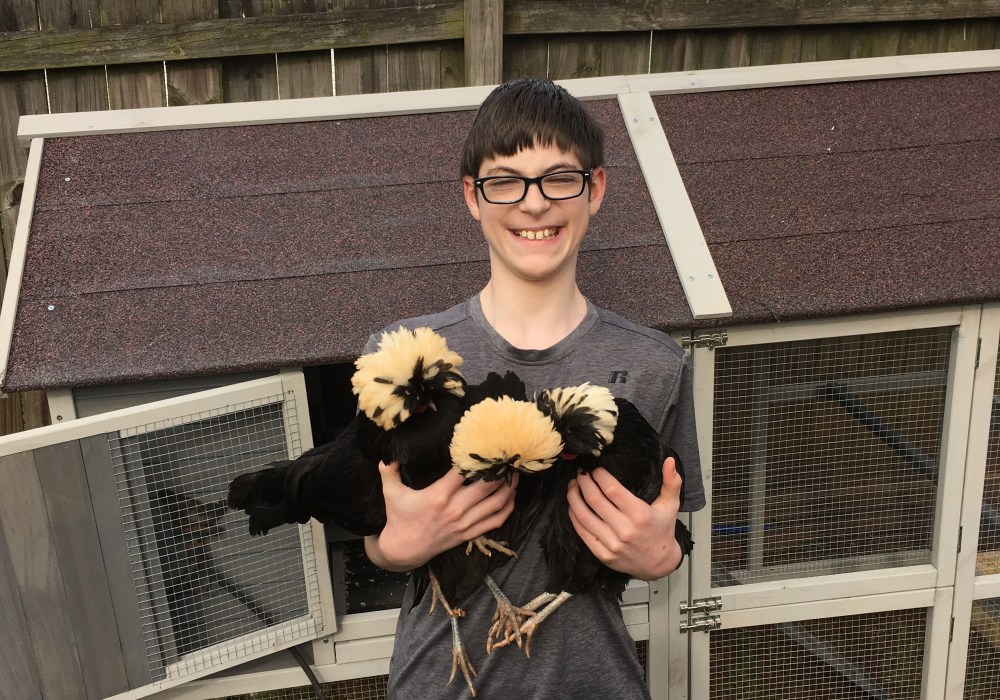
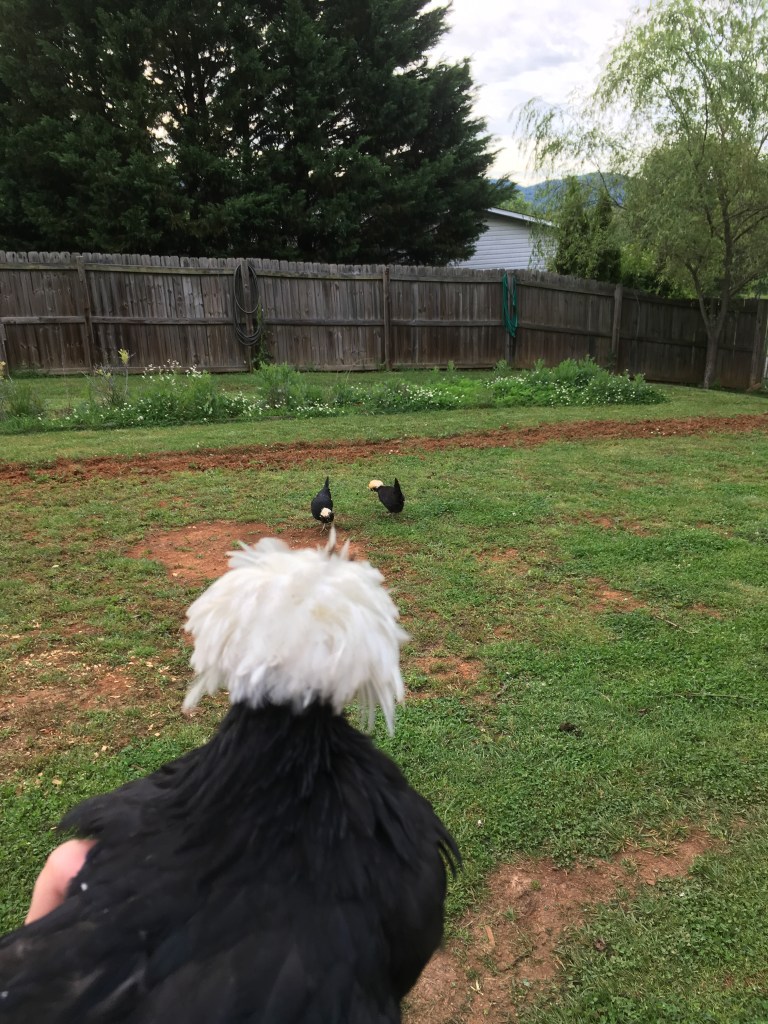
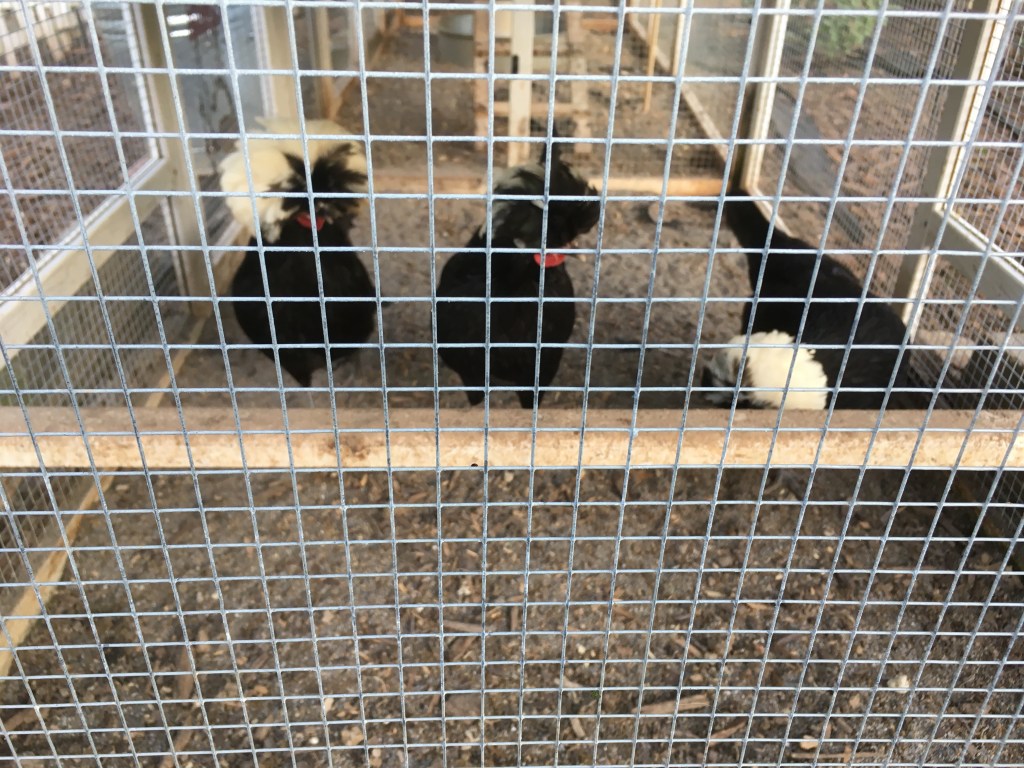
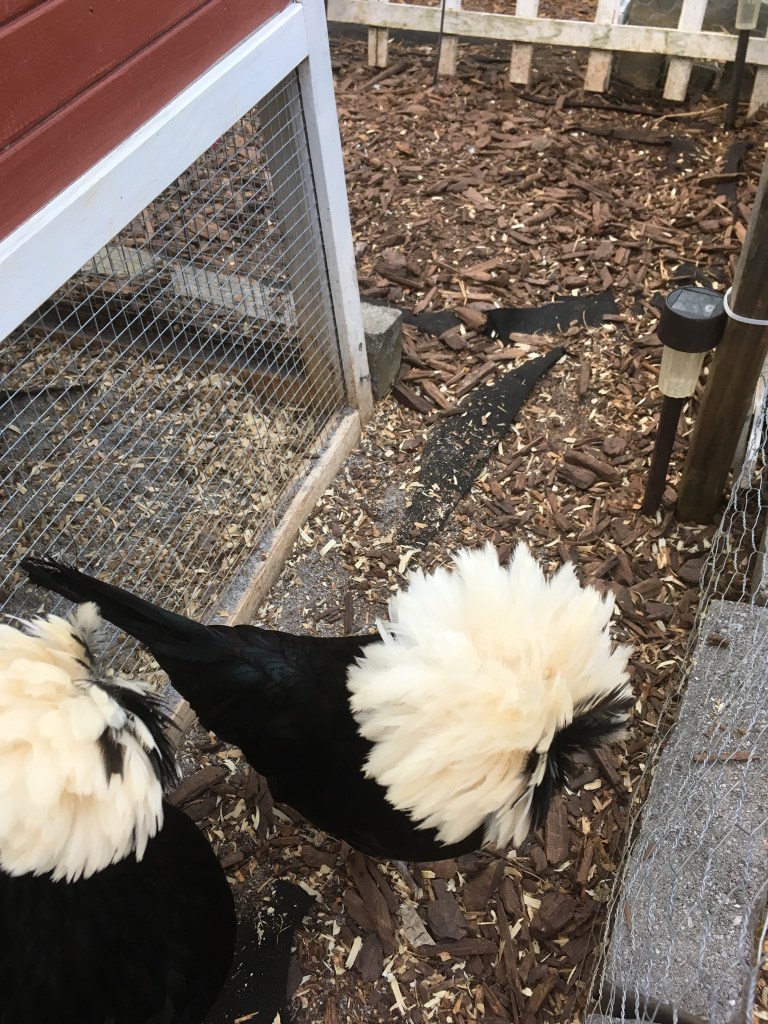
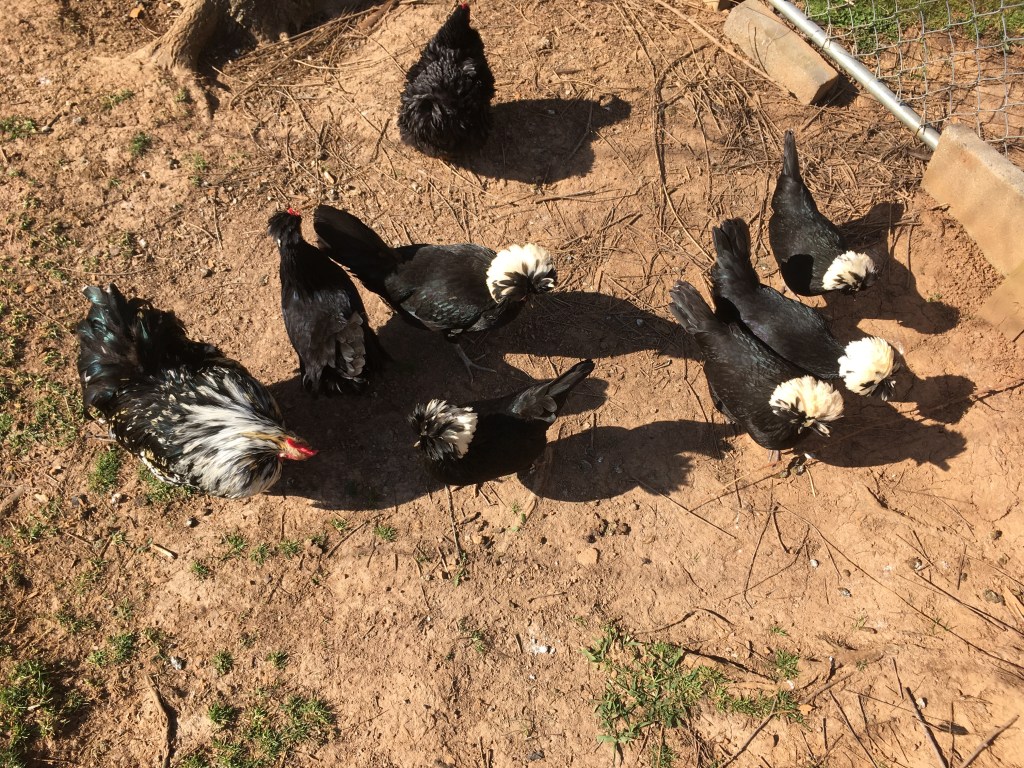
With their crazy 80’s rock band hair do, it’s hard not to love this fancy breed. Dressed in black and white, they look like they’re going to a fancy “Chicken Gala”. These classy girls leave all other chickens in the dust when it comes to clucky high-class couture. The distinct white feathered crest on their head contrasting with their sleek jet-black bodies sets them apart in a flock. Beauty may only be skin deep, but these girls are gorgeous inside and out. Read on to find out why we at The Kuntry Klucker Farm are head over hills in love with these black and white beauties.
1. Every polish chicken is crowned with white crest.
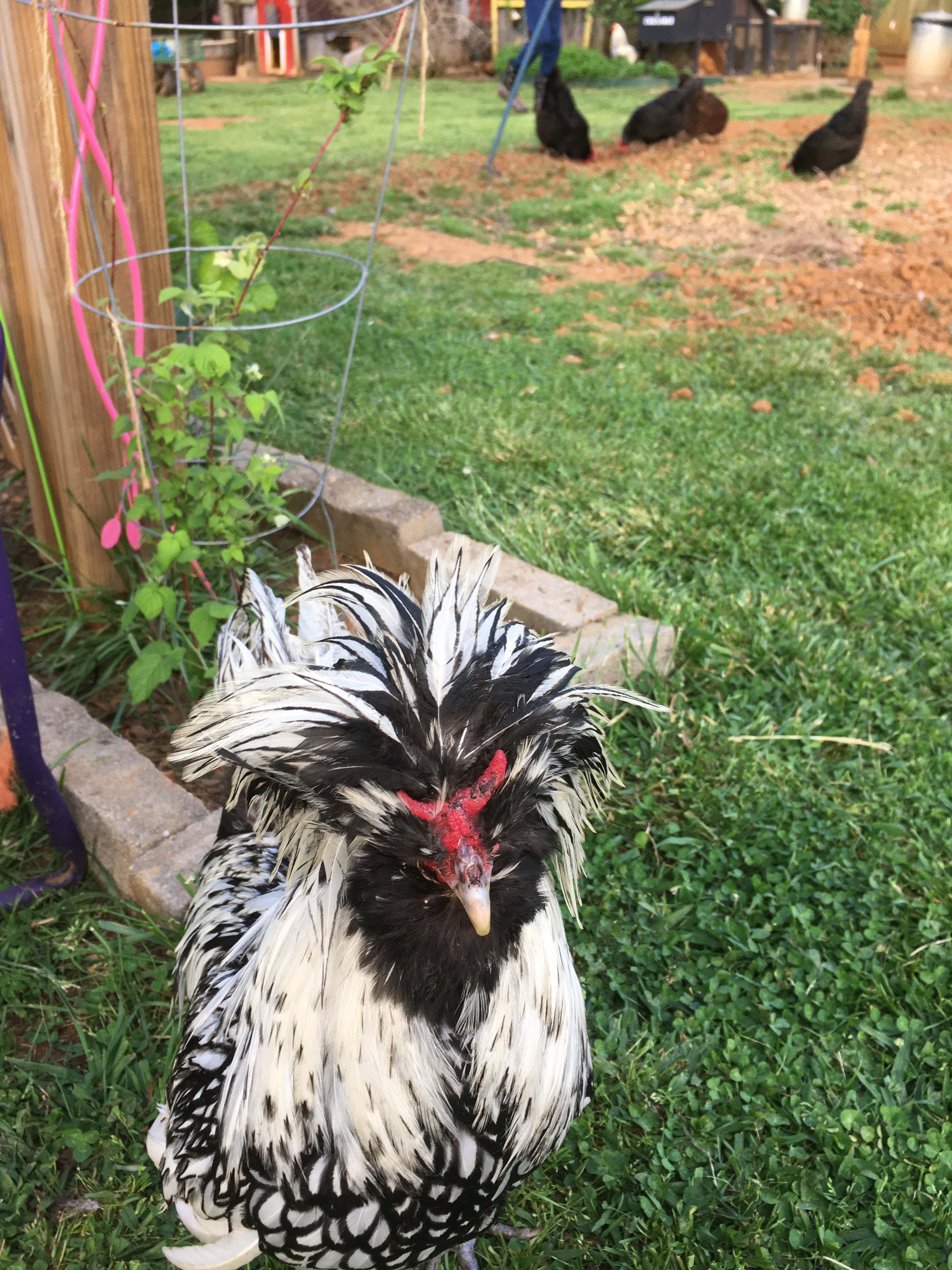
White Crested Polish chickens and all Polish breeds always stand out due to the large fluffy bouffant of feathers that adorn their head like some kind of glamorous crown, the most iconic feature of this fancy breed. It’s this feature that makes them a very popular choice for those who want something a little “different” in the flock. They will make visitors ask, “what is that?” due to the fact that they do not look like a standard chicken. As aesthetic as their crest may appear, be warned that these guys and gals need a little bit of “hair care”. Due to their crown of feathers their vision is limited and may need to be trimmed or put in pigtails to allow them to see better. Because they are unable to groom their crests, they are susceptible to mites and lice. To prevent this problem an owner needs to take proactive steps to keep these guys and gals looking their best. Because they do not tolerate being wet or dirty, an owner needs to provide a leak free dry coop and run. If a keeper can provide these services, this breed will bring great joy and diversity to the flock.
2. Non-broody hens who have more time to lay eggs and pose for pictures.
Broodiness is not a trait that is possessed by the Polish chicken, broodiness is the desire to incubate eggs and hatch chicks. Some breeds are prone to broodiness such as the Silkie and Orpington, the polish is one of the few breeds that are not. Because of this, they will continue to lay eggs for their keeper. Be warned though they are not prolific layers like other breeds, they lay about 120 small white eggs a year.
But don’t let this turn you off from the White Crested Polish chicken, they make up for the low egg output in other ways. For example, they make excellent and unique subjects for all kinds of photo ops. They are very docile and even tempered so working with them is a breeze. Which brings me to my next point.
3. Loyal and loving backyard companions.
If you are looking for a loyal backyard friend, look no further than the White Crested Polish. Due to diminished vision, a consequence of their glorious crests, they will happily sit in the protection of their owner’s lap. Polishes become very attached to their owners often following them around the yard much like a dog. They crave human interaction and are happiest in the company of their owners. They are nervous and flighty by nature needing a dedicated and compassionate keeper who doesn’t mind giving them a little extra attention. If kept in a flock due to vision limitations, they tend to be at the bottom of the “pecking order”. For this reason, it’s best if they have digs of their own separate from larger or more aggressive breeds.
4. Delightful and unique personalities.
The personality of the White Crested Polish is just as unique as their appearance. These guys and gals love to jabber and talk to their owner. If you want a chicken that you can have a conversation with, the White Crested Polish is the breed for you. They get very excited when their owner comes to the backyard, run, or coop. They want to follow you around and tell you all about their day. They eagerly bock, squeak, or trill all the details of their adventures. For this reason, they are one of the noisier breeds, they are not quiet much like the Silkies. If this is okay for your situation, then I highly recommend these little gossip gals.
5. Stunning phasic!
These guys and gals have a beautifully proportioned silhouette. Aside from the crest feathers that get in the way and diminish their vision, Polishes really have a shapely and attractive figure. They have full breasts, shapely wings, and deep bodies. As they strut towards you, they have a playful bounce to their gate which further accents their crown of feathers. These guys and gals will truly be eye candy in your backyard flock.
5. Make excellent birds for poultry shows.
Polish chickens always stand out due to the large fluffy bouffant of feathers that adorn their head like a glamorous crown. It’s no surprise that the stylish look of these distinctive chooks makes them a popular choice in poultry shows all round the world. When it comes to male crests in the competitive world of show chickens the bigger the better whereas a more round and even shaped crest is favored among hens. The roosters are very distinguished, but due to their larger crests the feathers seem to take on more of a 80’s rock hair band look. When trimmed and kept nice a well-groomed polish rooster can steal the show.
6. Great breed to have around children.
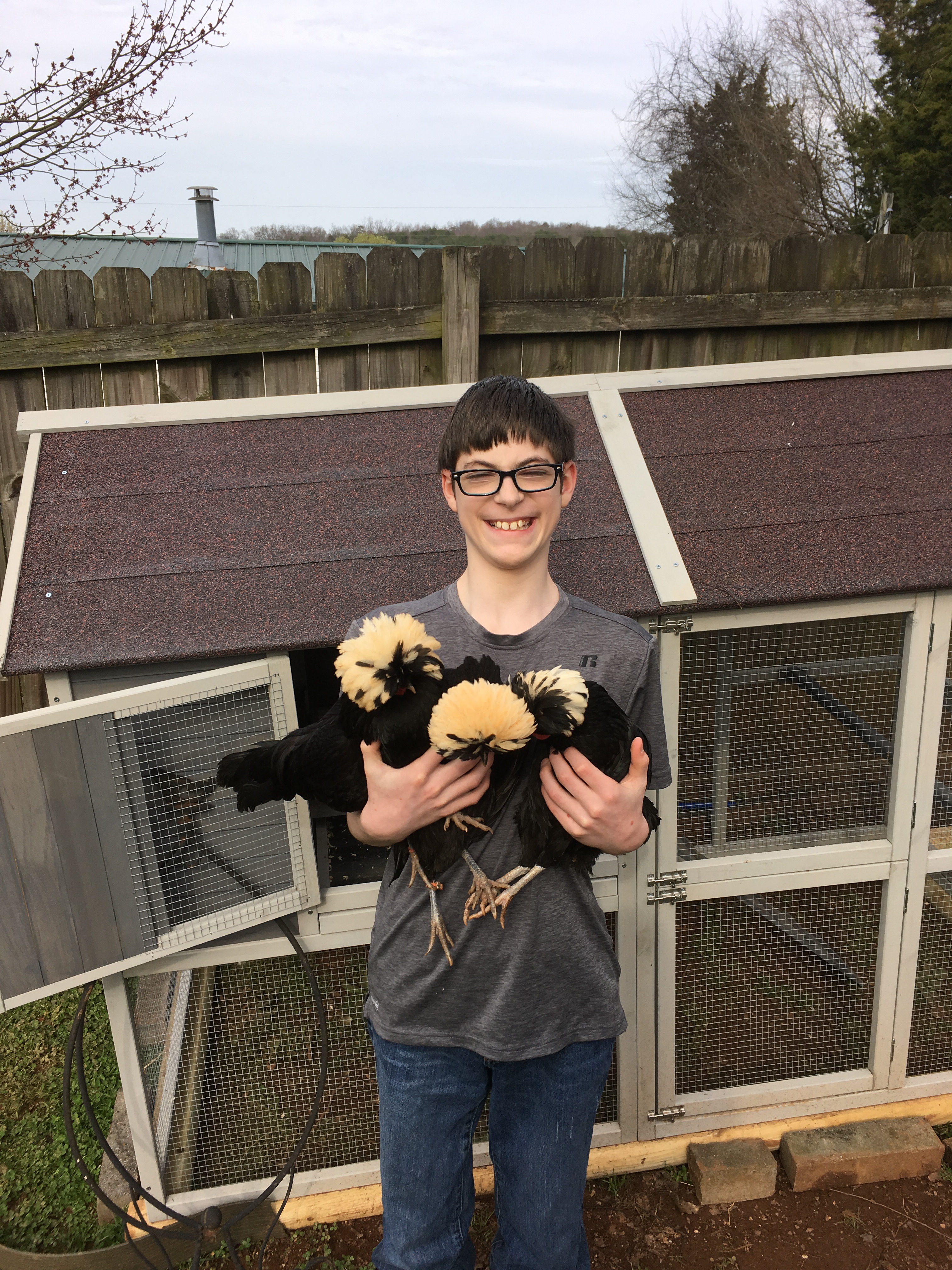
If you want to involve kids with keeping backyard chickens, the Polish is a great breed to choose. Due to their appearance kids are often times captivated with the White Crested Polish. They are a gentile breed that is docile and not prone to aggression. Even the roosters are fairly good natured as compared to other breeds. Due to their vision limitations from their crests, they are fairly easy for kids to catch and bond with. They are a bit flighty which might startle young kids at first but once they get used to their behaviors, they will really enjoy their feathered friends in the backyard. Currently I have 9 Polishes of different colors all of them are great with my boys.
7. Mysterious History. Where did they come from?
It is not really clear where these stunning birds came from. You may be thinking that they came from Poland. But this is not the case. Their name is derived from the Dutch word “pol” which means head, however that is still being debated amongst poultry experts. It has also been hypothesized that they originated in the Netherlands, whereas other enthusiasts think that they were brought to Europe during the time of the Medieval Mongols. Other fun loving chicken lovers such as I ponder if their origins are not of this world at all. Possibly like H.P. Lovecraft’s Cthulhu, they came from Orion or another world out there, just kidding :-). In all seriousness though, no one really knows where these crown jewels really came from. Still today there remains a lot of mystery surrounding their origins. Maybe we will never know, but for rare breed chicken lovers that does not really matter. If anything, it just makes these cuddly backyard buddies even more lovable.
Are these classy chickens right for your backyard flock?
If you choose to keep these unique chickens several requirements must be meet.
~ A secure coop and outdoor pen are a must. Since they are unable to see well, they can be vulnerable to arial predator attacks. If you are unable to supervise them keep your birds secure in their pen till you can spend time with them.
~ Due to their crest feathers they require extra vigilance that they do not get wet. During the winter if their crest feathers get wet it can freeze causing discomfort and in some cases illness to the bird.
~ If you decide to keep these girls, a separate coop for them is a must. Due to their diminished vision they often times reside at the bottom of the pecking order and can at times be picked on.
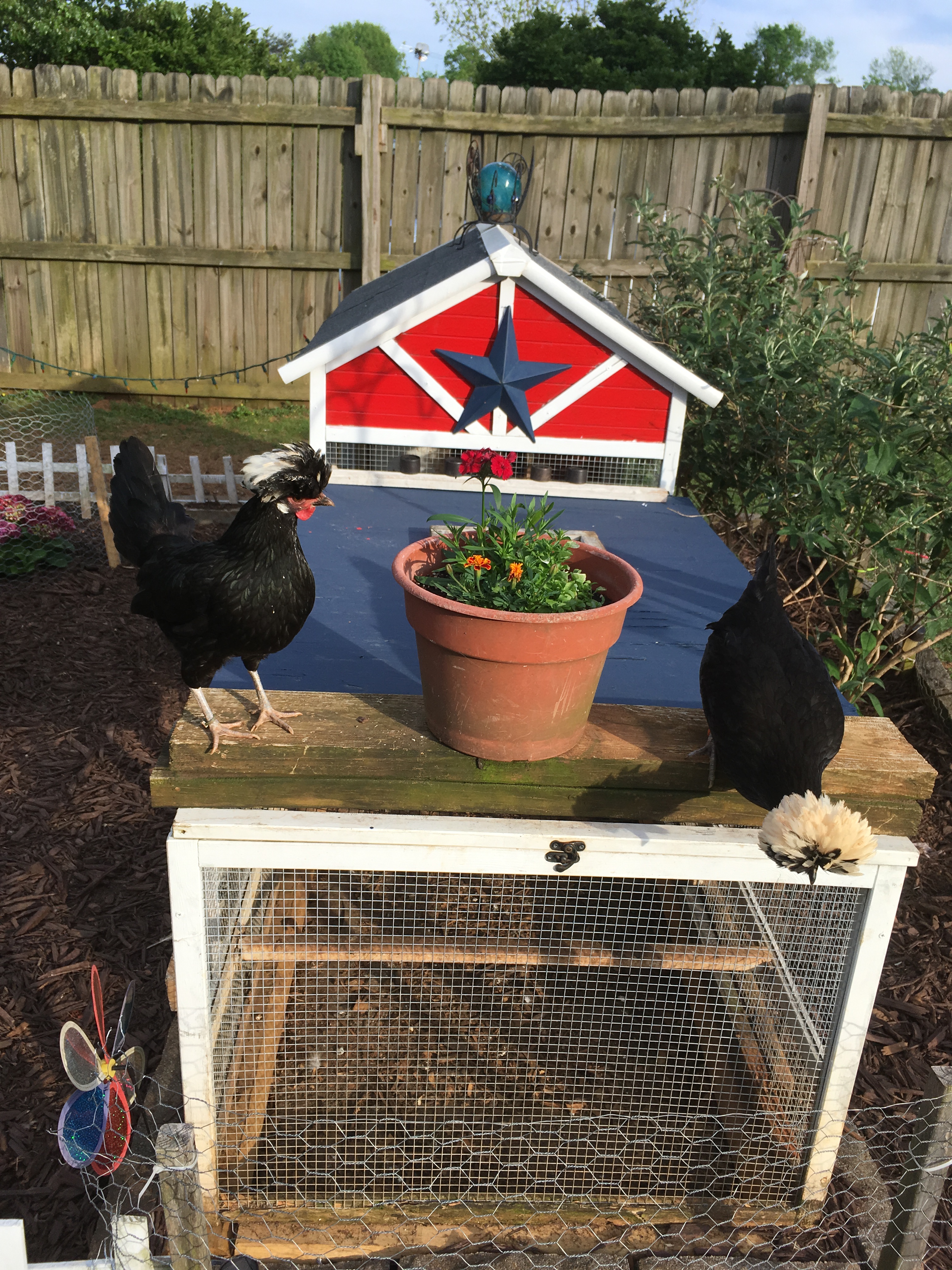
~ Making sure they have a clean and dry place to themselves will assure their success as a part of your backyard flock. While you’re at it, have a little fun with their home. A classy chicken with a personality such as the Polish needs a coop with some character. Many places like Tractor Supply and Hayneedle have adorable coops they would complement your fancy couture wearing girls nicely.
As always thanks for reading!
If you have any questions regarding the Polish breed, feel free by leaving a comment. I will get back to you as soon as I can.
I am a published author, multi-disciplinary writer and blog contributor. If you like this blog, please visit some of my other sites.






















































 The Kuntry Klucker