
Homemade Flock Block

As a dangerous winter storm will soon impact the Northern Hemisphere, people are preparing for impacts of snow, ice, and severe cold temperatures. Store shelves are picked clean, and pet and livestock owners are stocking essentials for their animals till the storm relinquishes its grip.
During this time, many backyard chicken keepers will need to confine the flock to the pen and coop. While the flock is cooped up, providing stimulating activities will assist the flock in weathering the worst of Old Man Winter.

When winter storms impact our region, I like to prepare my flock a homemade flockblock for my hens and gents. All ingredients are available in most home pantries or easy to obtain in stores. Over the past decade, I have had much success with this recipe, and the girls greatly enjoy the break from the winter blues with this boredom buster.
Ingredients:

2 cups of scratch grains (cracked corn is also good)
1 cup layer feed (pellets or crumbles)
1 Cup old fashioned oats
1/2 cup flax seed (ground or whole)
1/4 cup flour (whole wheat is best)
1 teaspoon ground cinnamon
1/2 teaspoon cayenne pepper
3 eggs (shells included)
1/2 cup blackstrap molasses
1/2 coconut oil
1 cup raisins (dried cranberries, blueberries, or bananas will also work)
Begin by placing the scratch and layer feed in a large bowl.

Add the oats.
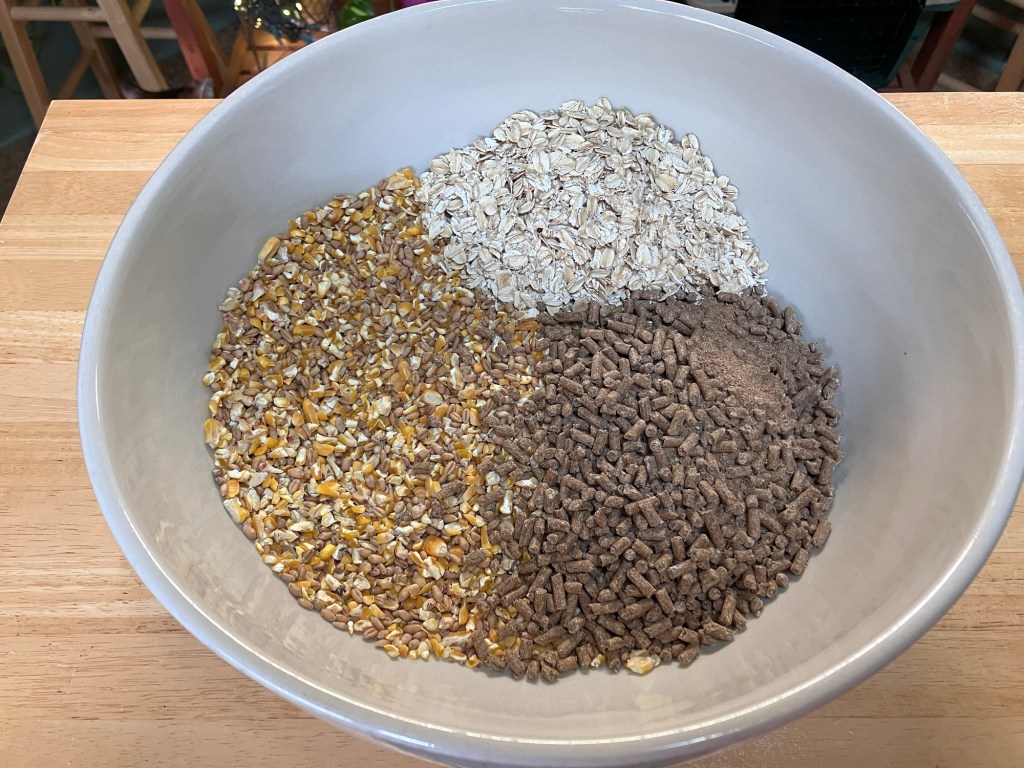
Next, add the spices. The cinnamon aids in respiratory health in the cold weather and the cayenne pepper helps circulation.

Next, add the raisins. The raisins will promote pecking as they look like tasty bugs, plump after baking.

Mix all the dry ingredients together well. After mixing, add the flour and the eggs. Crush up the eggshells into smaller pieces when mixing. The eggshells will dehydrate while baking adding calcium to the final product.
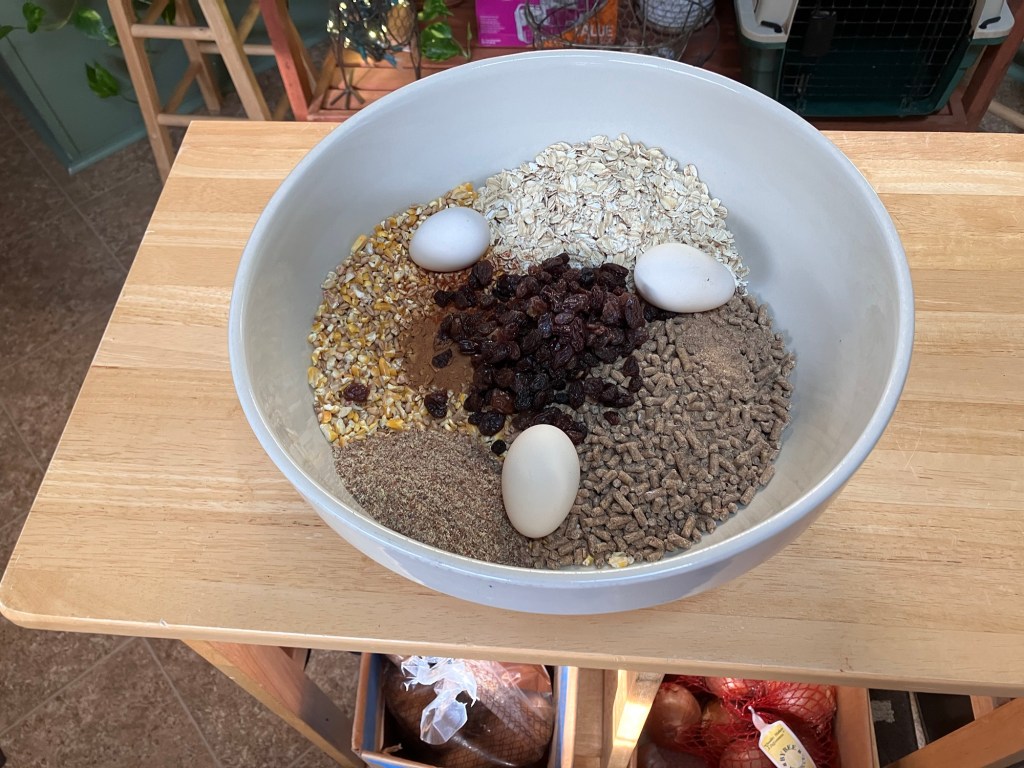
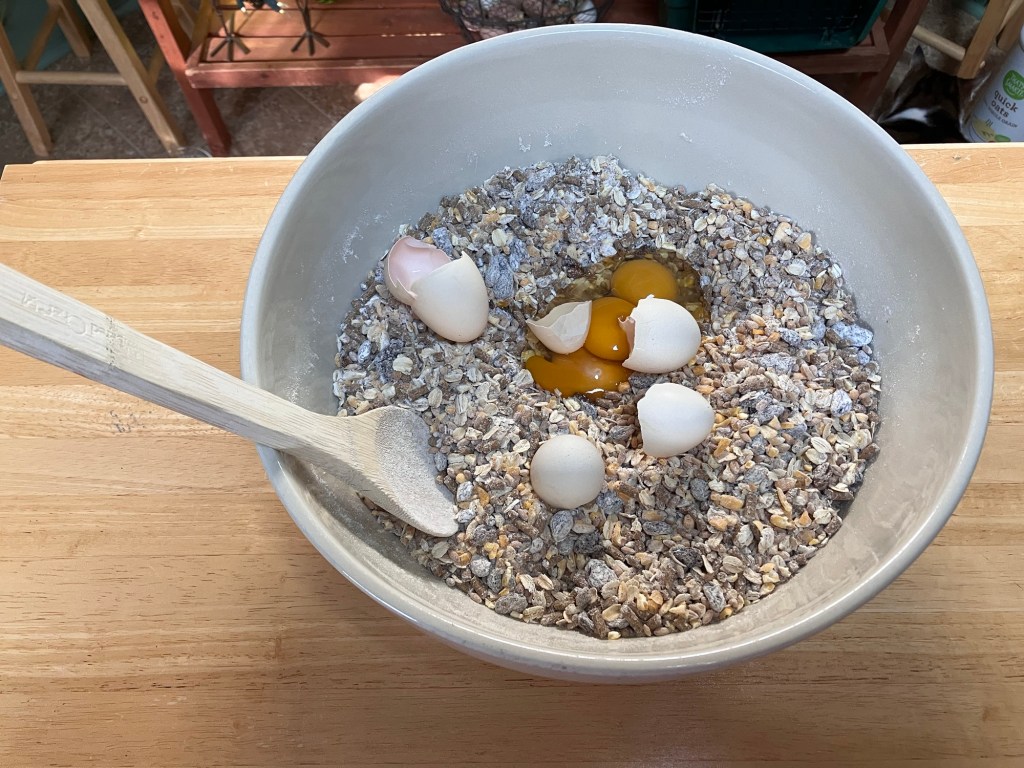
After mixing the eggs in well, add the blackstrap molasses and coconut oil.

Continue to mix. As the molasses and coconut oil combines, the mixture should be sticky and hold a ball shape when compressed in the hand.

Select an oven baking pan and line with foil. Spray the foil with a cooking spray for easy release after baking.
For a large flock block, select a square baking dish. If you prefer to hang the flock block in the pen, bread pans work best because it is roughly the size of a standard suit feeder. For free-hang, a round pie dish works best. Poke a hole in the area where rope or twine be will inserted. You can also double the recipe to create a large flock block to fill a 9 x 13 baking dish.


Press the mixture into the chosen baking dish. Press hard to compact the mixture as much as possible. This will result in a dense flock block that will not fall apart when removing from the pan.


Preheat the oven to 325 degrees. Place the baking dish or dishes into the oven and bake for 35 minutes.


After baking, cut the flock block into the desired size. If you plan to hang the flock block in a suit feeder, a bread pan flock block can be cut in half, into two equal sizes that will fit nicely. If you prefer a larger flock block to free-hang in the pen, cut a hole for the rope of twine.

Do not try to remove the flock block from the baking pan till cool. Removing the flock block while warm will increase the chance that it will fall apart. As it cools, the flock block will harden making removal simple.
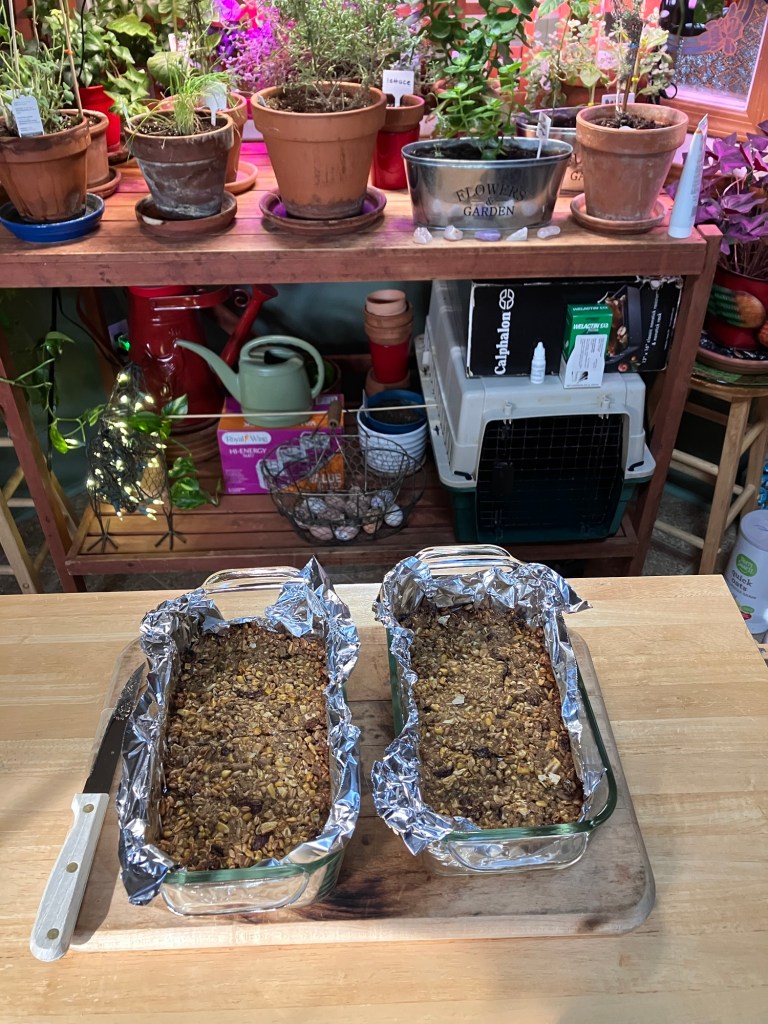
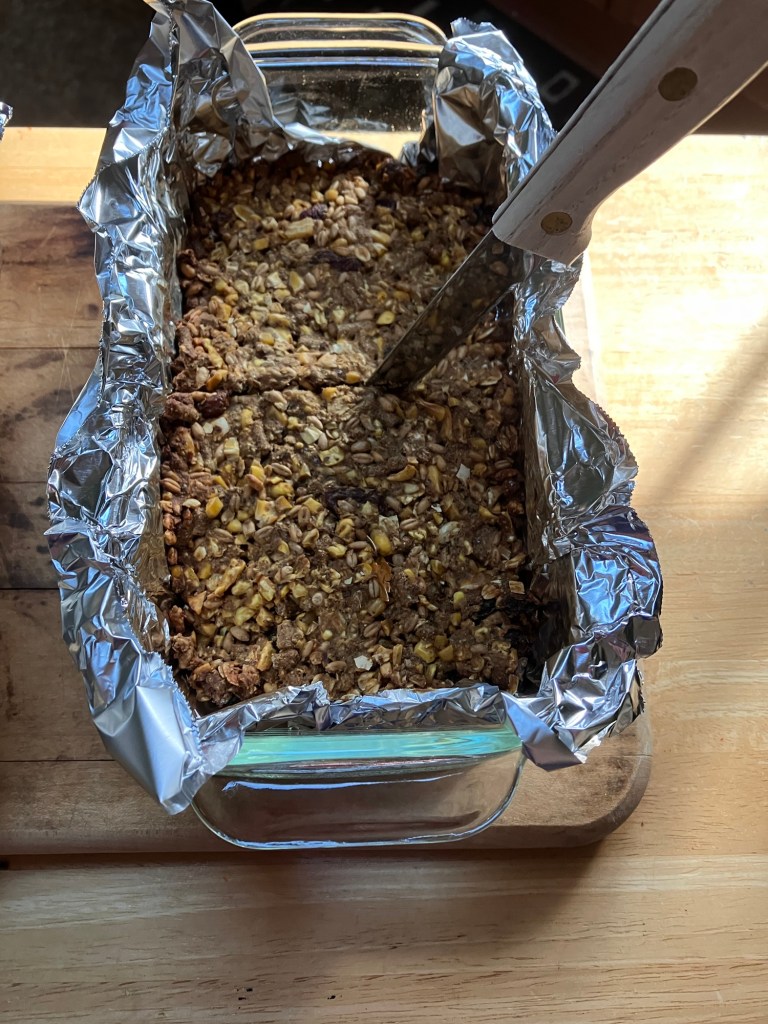

Once the flock block has cooled, remove by lifting the foil out of the pan and turn over. This recipe will freeze for several months when wrapped in plastic wrap and foil.
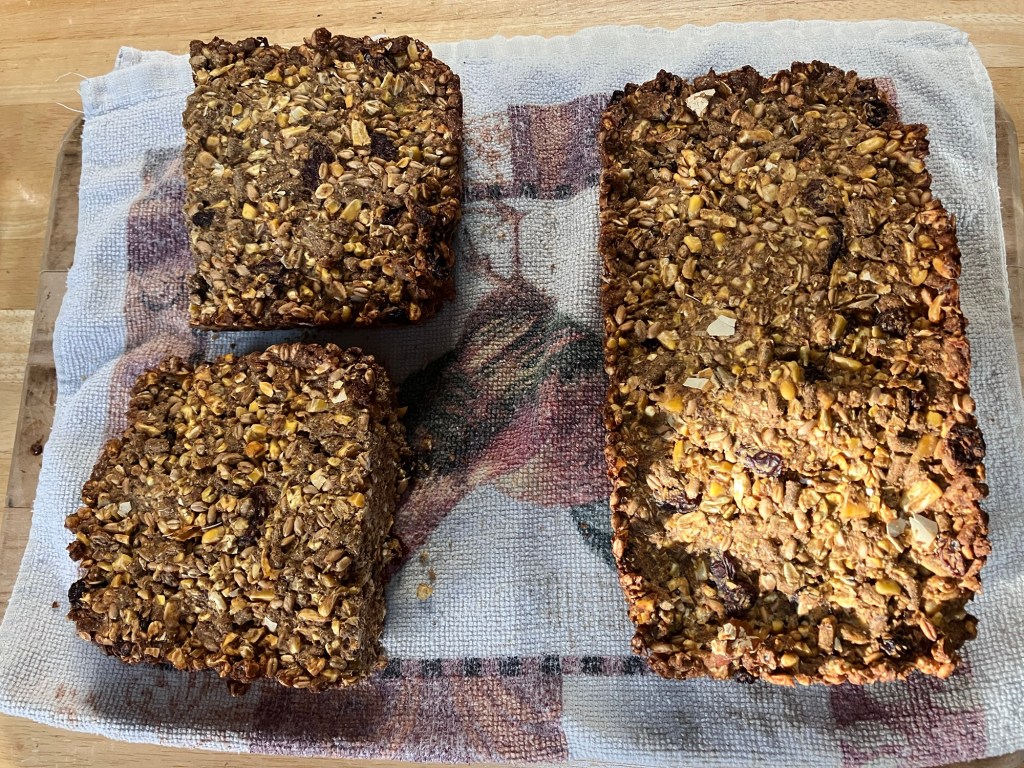

Wishing everyone the best. Stay safe during this historic winter storm and cold weather and remember to give your flock boredom busters to help them bide the time while cooped up.
If you enjoyed this post, please peck the subscribe button.
If you like this blog, please consider visiting some of my other sites and online writing portfolio.
Coffee and Coelophysis – A blog about dinosaurs!
Chicken Math University – A blog about homeschooling
As always, thanks or reading. If you have any questions, please leave me a comment or you can email me at kuntryklucker@gmail.com
Till next time, keep on crowing!

~ The Kuntry Klucker Crew ~


 The Kuntry Klucker