Keeping Multiple Roosters in Your Backyard Flock.

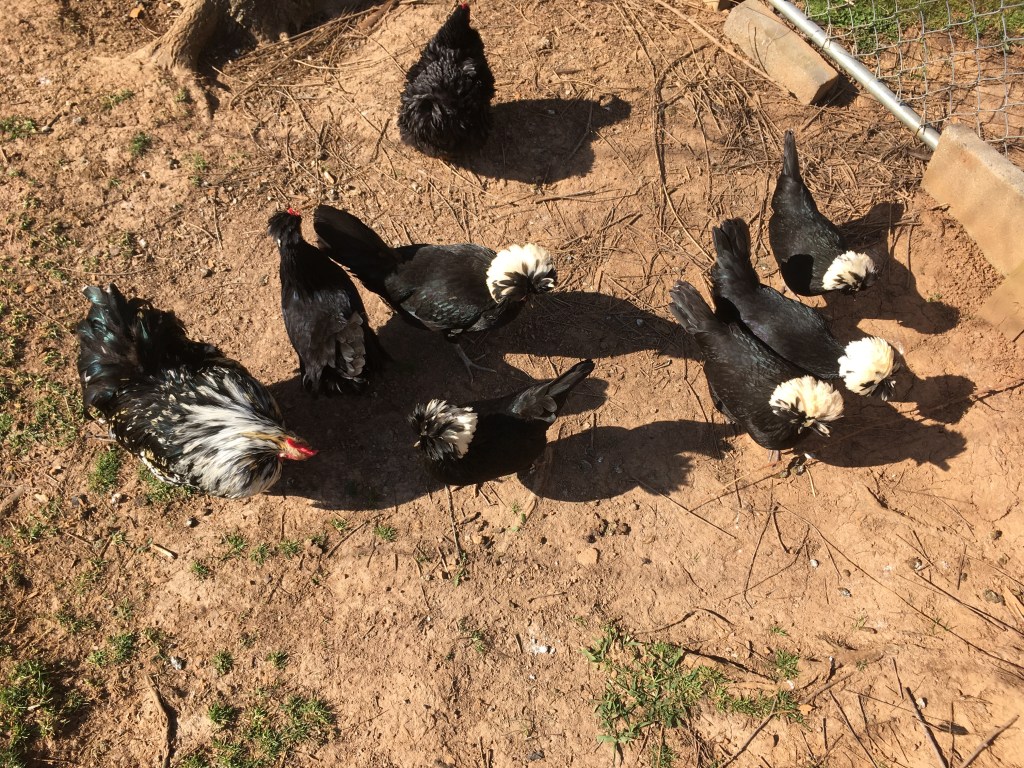
Contrary to popular opinion, keeping multiple roosters in a flock is possible. It is a misconception that only one rooster is best to oversee your flock. However, in order for multiple roosters to live peacefully, several requirements need to be meet. In this post, I am going to show you how my 13 roosters cohabitate while presiding over their girls. I will demonstrate these principles featuring my gents.

Smoug and Lestat:

The Kuntry Klucker

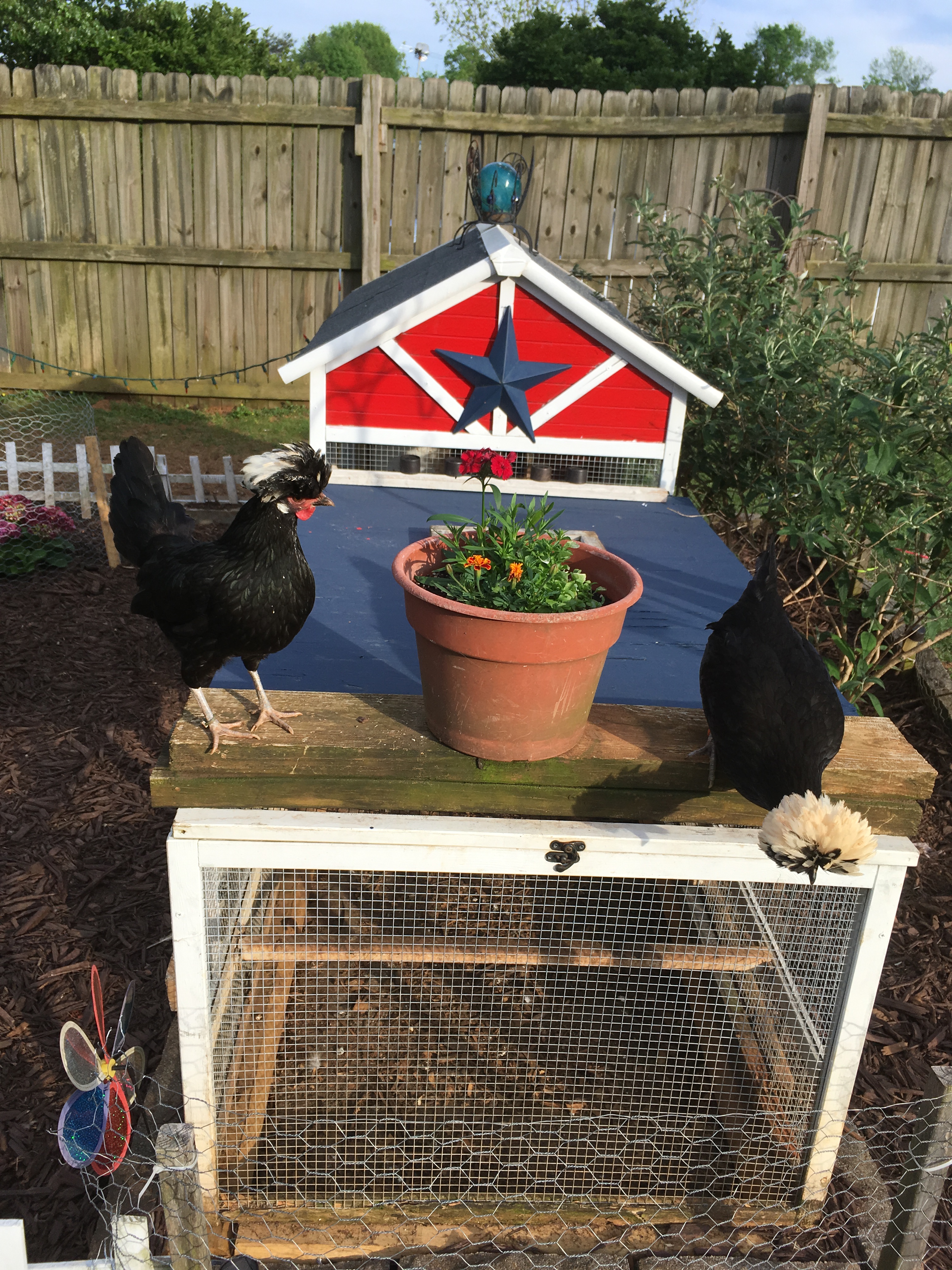
Smaug and Lestat live in the Kuntry Klucker. Each of the boys have their assigned hens and know which hens belong to whom. While they roost in the Kuntry Klucker at night, they free range during the day. The largest of my roosters, this rooster duo get along very well. Confrontations are minimal, giving way to mutual respect. Smaug and Lestat are at the top of the pecking order in the flock, assuming the Alpha and Beta positions. The remaining subjugated roosters answer to these gents. Despite their size and position, they are gentlemen, good to the ladies, and kind to their humans. Neither of these boys have ever shown any signs of aggression.

Enigma and Link:
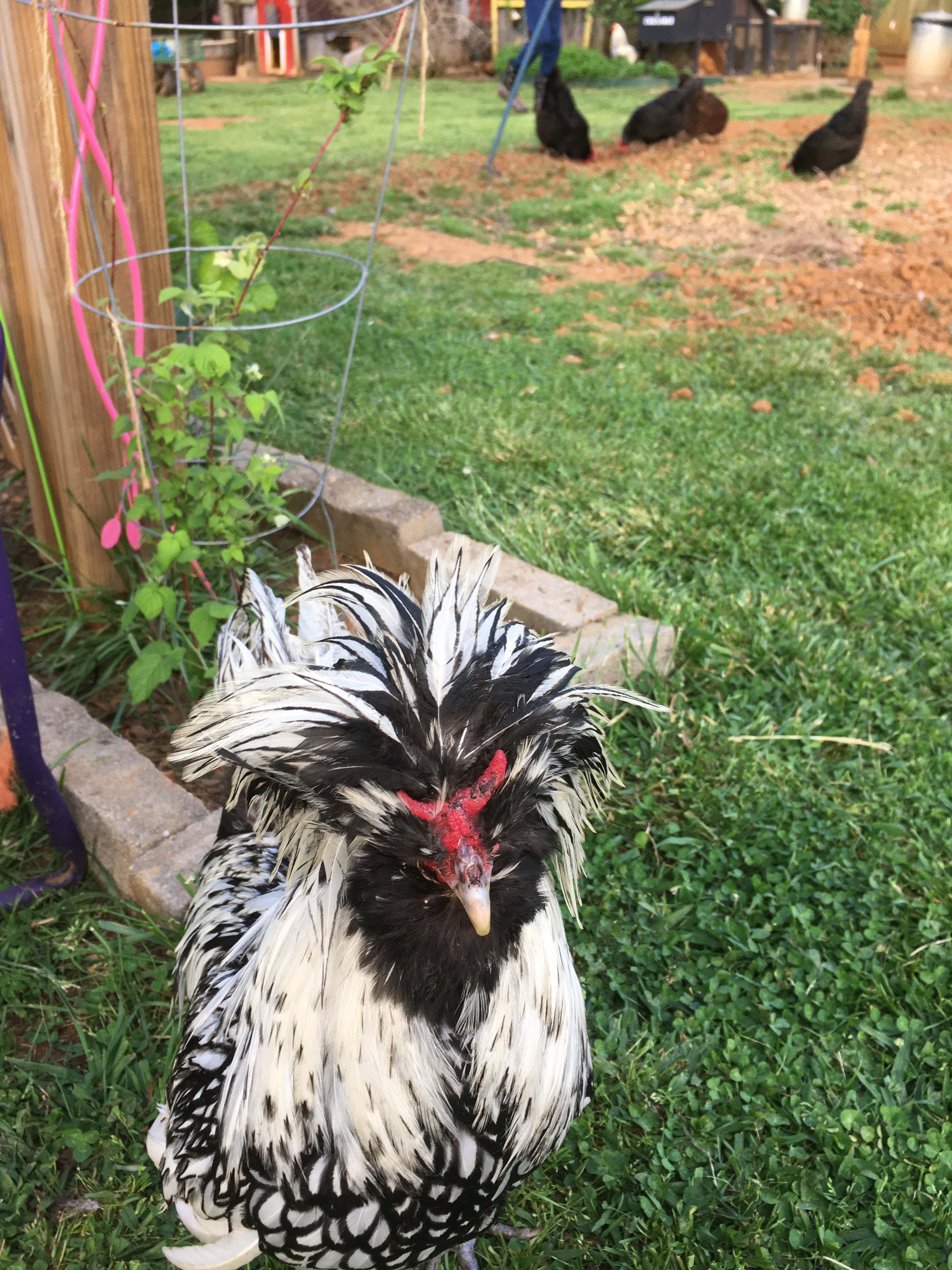
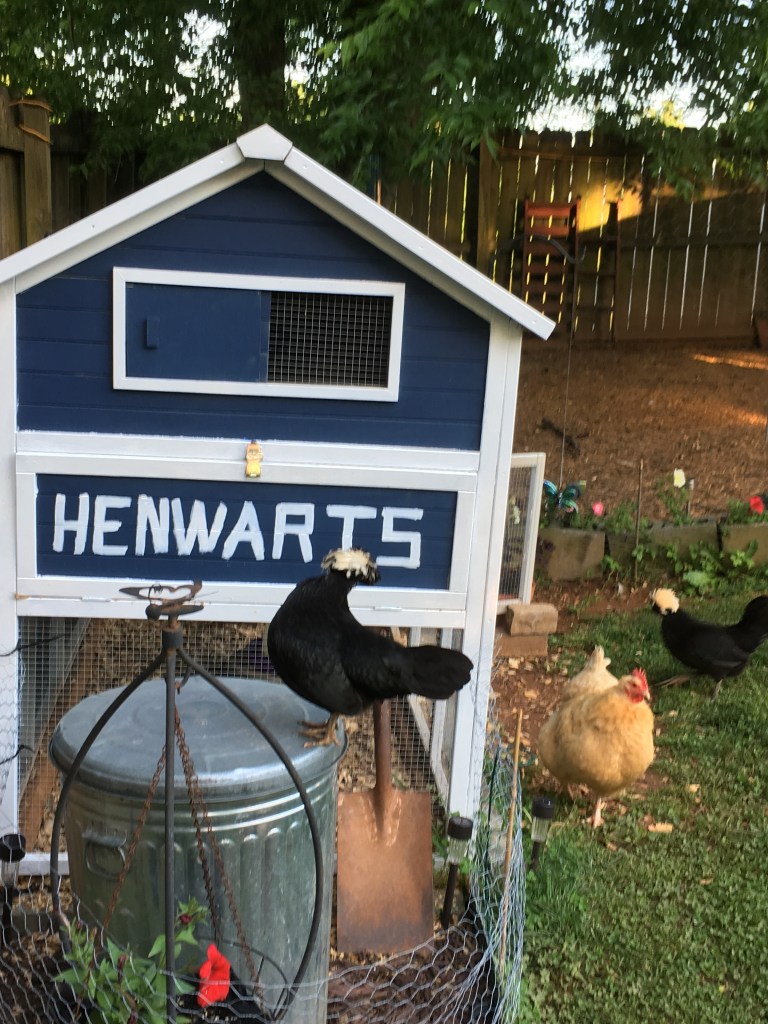
Athena: White Crested Polish Hen, perching on feed can outside of Henwarts.

Enigma and link roost in Henwarts. Henwarts is home to our white crested polish, silver lace polish and bantam cochin flock.

Enigma: is a Motted Cochin, he is the smallest and oldest of The Kuntry Klucker boys. At 7 years old, he is the senior rooster on the Farm. He is civil with Link but prefers to put distance between himself and Link while free ranging. He watches over the White Crested Polish hens that reside in Henwarts. Link: watches over the Silver Lace Polish and Bantam Cochin hens who also reside in Henwarts.
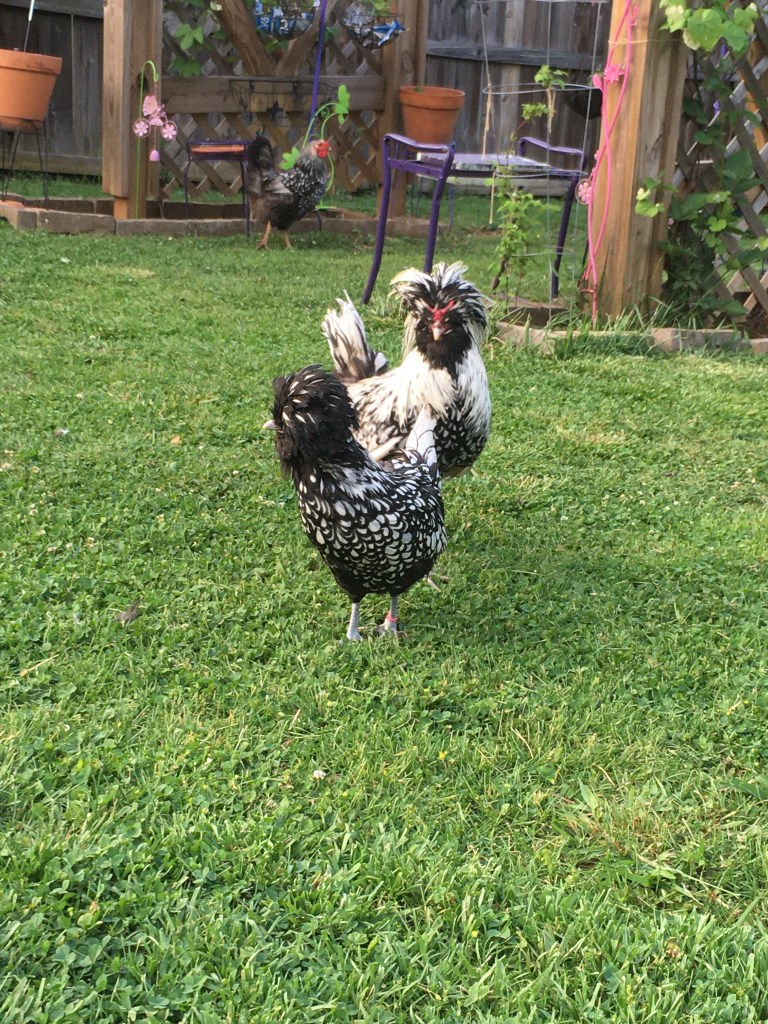
Link and Fi: Silver Lace Polish Hen and Rooster.

Additionally, Enigma has adopted a few of the Buff Orpington Hens that roost in the Kuntry Klucker. The Buff ladies are too big to roost in Henwarts thus, they reconvene while free ranging. Despite his small stature, he makes up for it with a big heart and lively personality.

Enigma watching over Aphrodite (White Crested Polish Hen) and the “golden girls” (Buff Orpington Hens).

Devros and Micky Smith:

IMG_4954
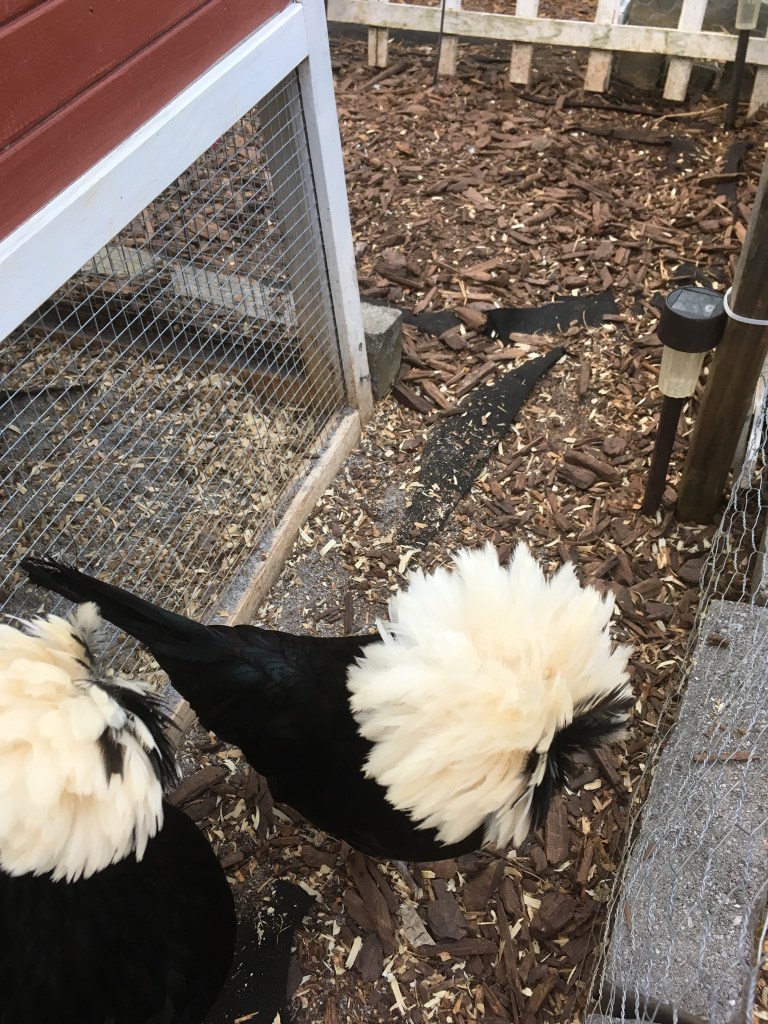
Devros and Micky Smither: (Silkie Roosters) looking after their Silkie hens.

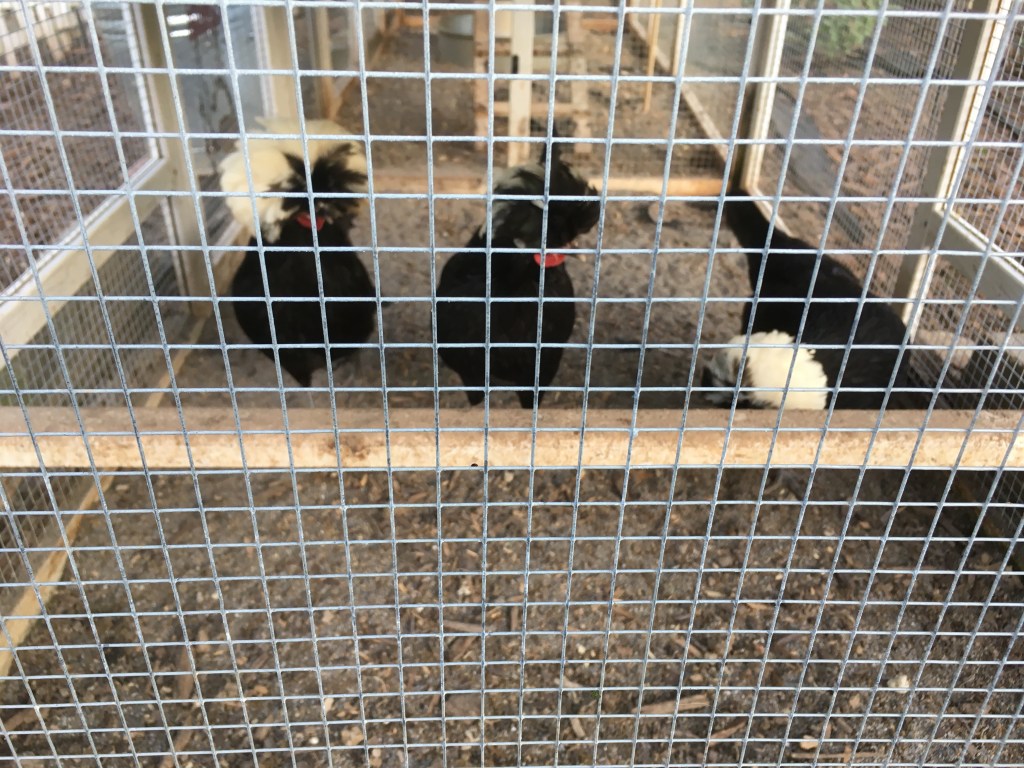
Devros and Micky Smith: Devros and Micky Smith are our resident Silkie Roosters. This duo share responsibility of looking after the Silkie hens that live in the TARDIS. This duo are peas in a pod, they do everything together. If ever I have seen a rooster bromance, these two are it, never straying far from one another. As expected, there is no confrontations between these two gents, they are the best of friends.

Honorable Mention: I have a few other roosters that roam the Kuntry Klucker Farm. These boys do not necessarily lead a harem, rather they assist in other matters of flock maintenance. These boys roost with the TARDIS crew.

Pantaphobia: Pantaphobia is a White Crested Polish Rooster, as his name suggests, he is afraid of everything. He is our resident useless rooster, to read his unique story, click here.
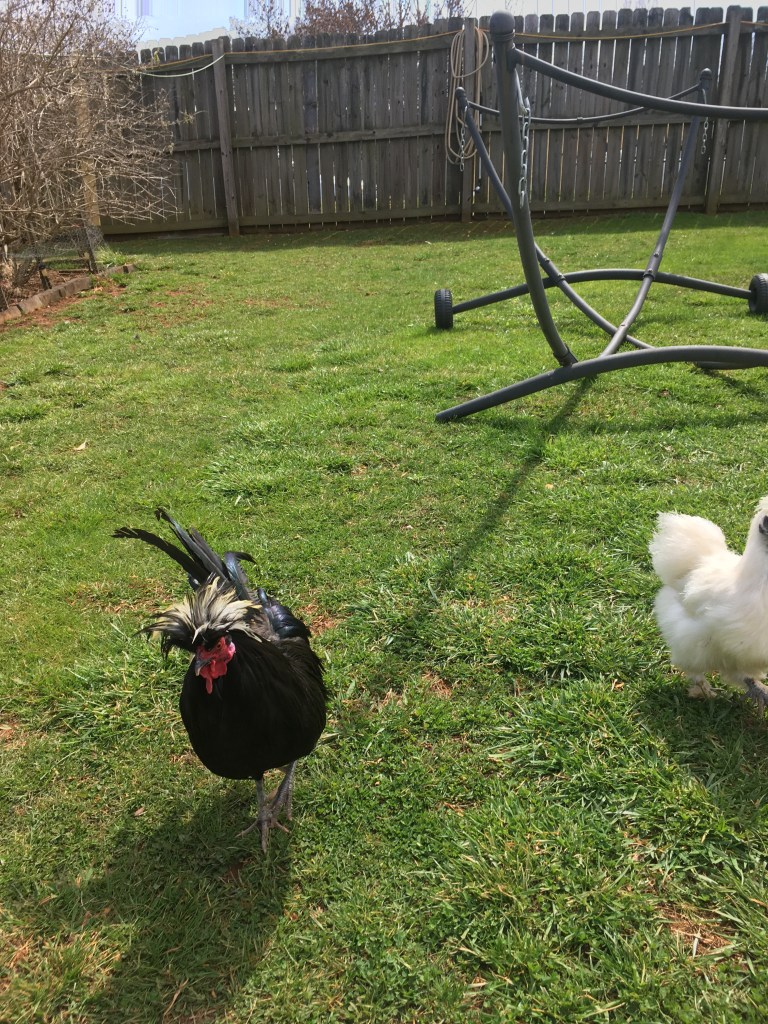
Pantaphobia: White Crested Polish Rooster

Supreme: Supreme is a Splash Silkie Rooster. Although not assigned a harem of hens, he assists Devros and Micky Smith with overseeing the Silkie hens.
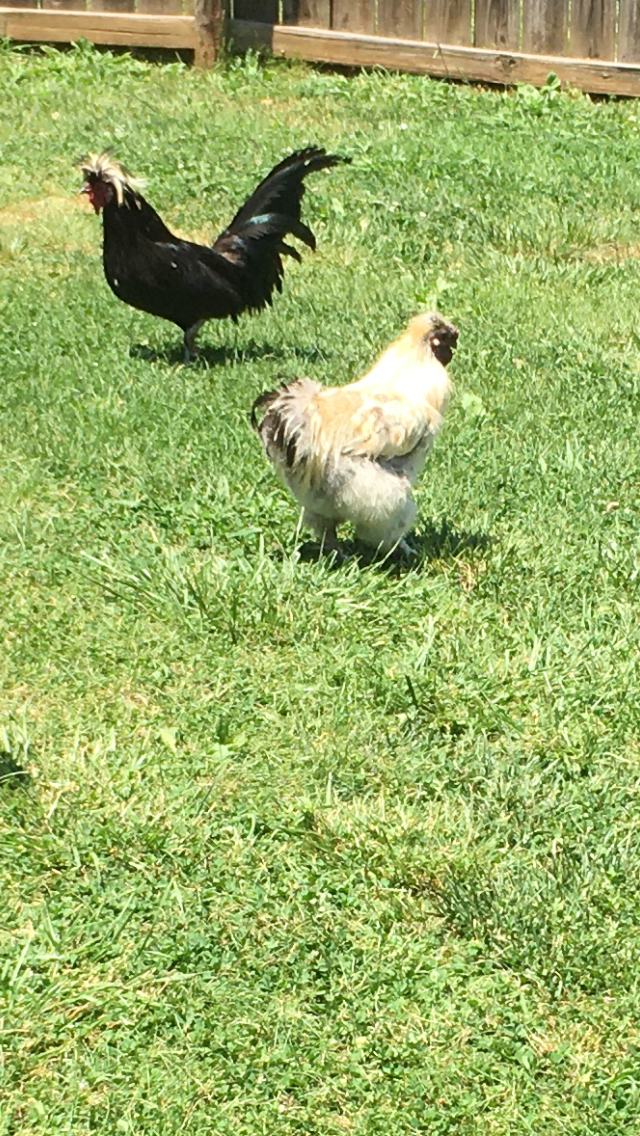
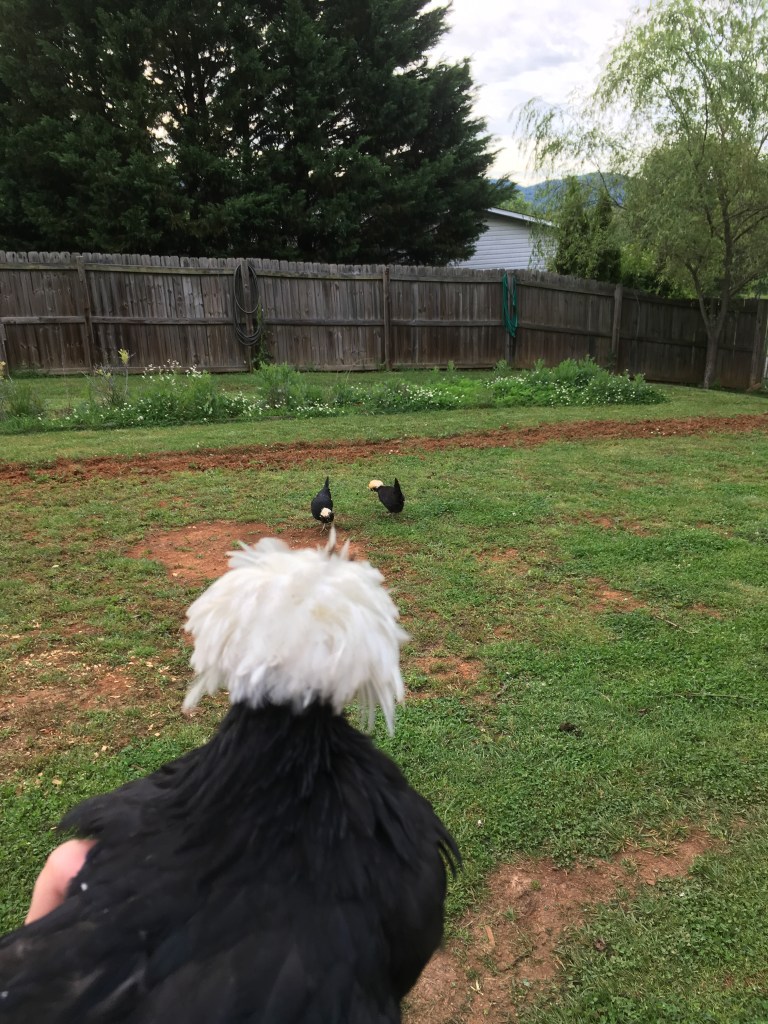
Pantaphobia and Supreme are another rooster duo that relish each other’s company. They can be seen browsing the yard together in search of delectables, be it bugs, worms or greens.

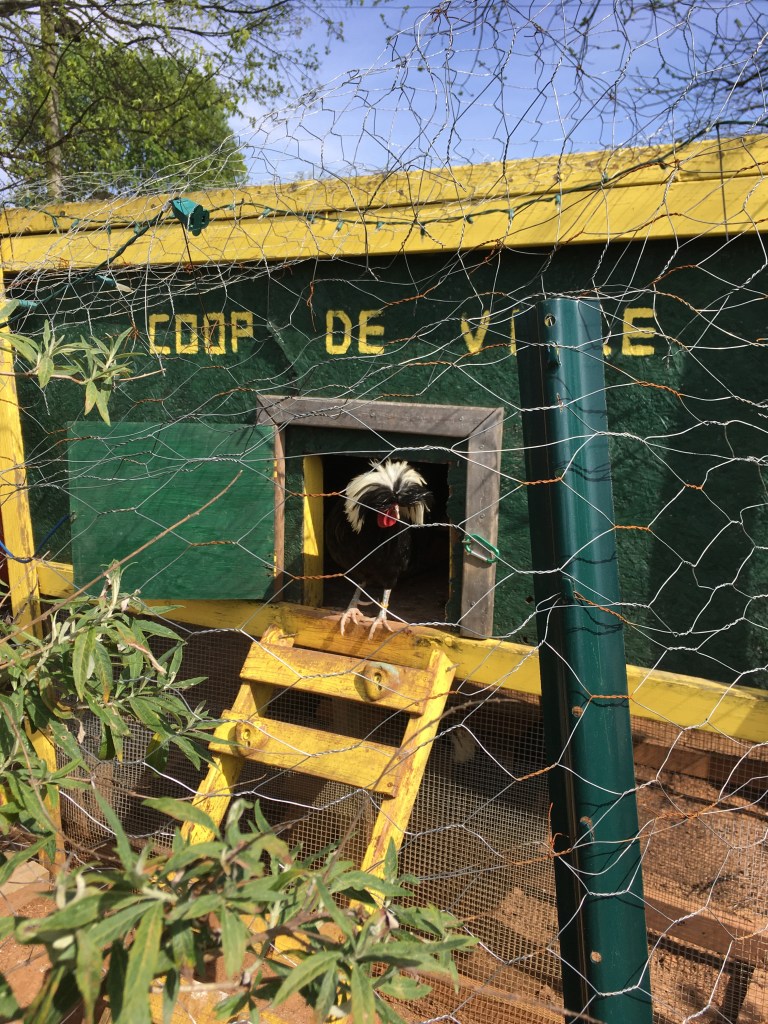
Bachelor Pen: If you have kept count, I am a few gents short of my quota of 13. The rest of my boys reside in a bachelor pen. The Coop De Ville is home to several White Crested Polish Breeding Roosters. These boys reside together in harmony. To see how I utilize a bachelor pen for roosters, please click here.

To successfully keep multiple roosters in your flock, several requirements need to be meet. I will list and explain these necessary prerequisites below.
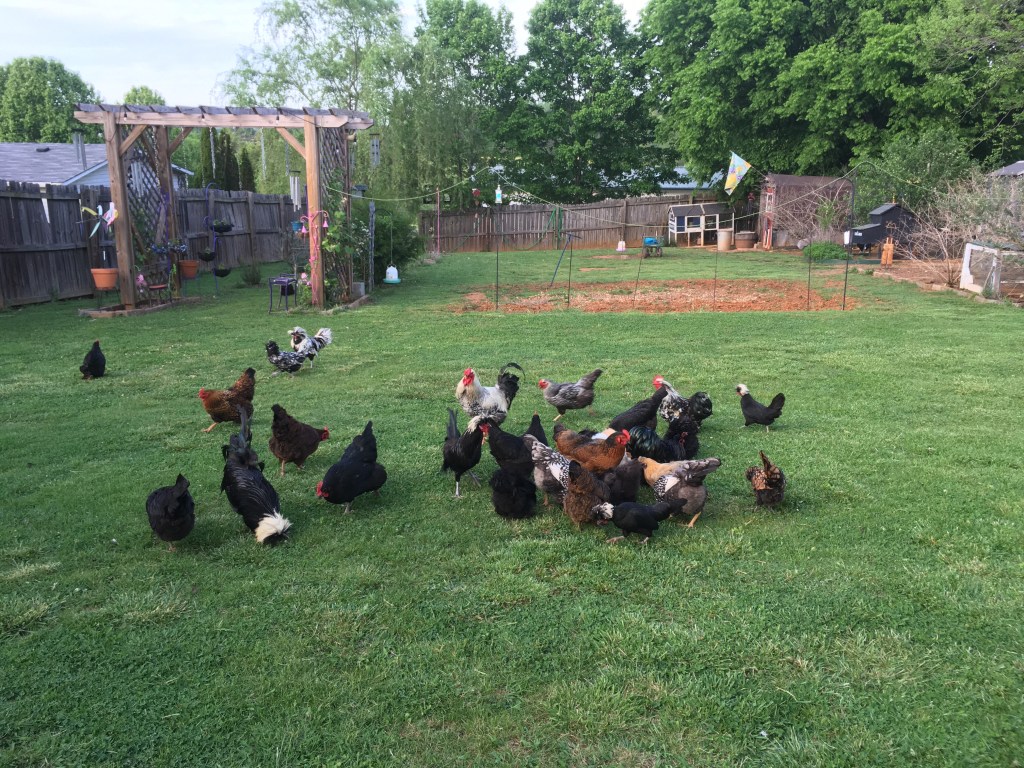
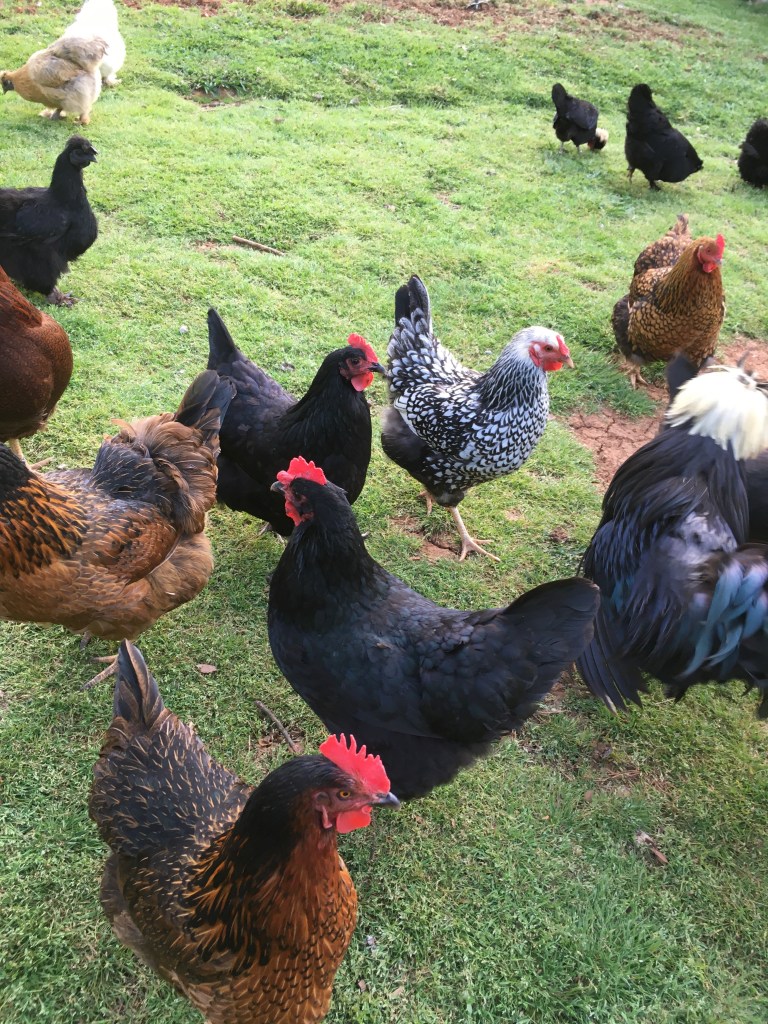
The Kuntry Klucker Farm flock grazing on a freshly cut lawn.
  1. Ample Space

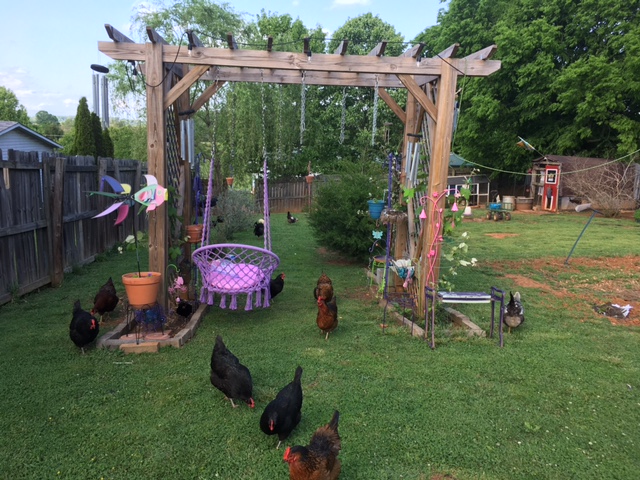
The first thing to consider in keeping multiple roosters is space. Roosters, if several are present in a flock, will divide free ranging space into jurisdictions. Each rooster will look after a portion of the girls in “his” specified territory. Each rooster will know the boundaries of his dominion. If a gent member should step outside his bounds, a confrontation will ensue. To ensure that your roosters will live peacefully with one another, they must have ample space to roam.

The flock making their way to the garden shed for a handout of crached corn and scratch grains.

2. Several feeding and water stations

When free ranging, it is the job of a rooster to look for food for his ladies. He will actively hunt for bugs, seeds, or weeds for them to dine on. If his hunt turns up empty, he will lead them to the feeder and water. With each rooster leading a section of the hens, multiple feeding and watering stations are mandatory. If these resources are too few, the boys will fight over these necessities. Each of my coops have their own food and water. Additionally, I have other feed/water stations available in the yard. With amplest access to food and water, my boys live peacefully, made possible by adequate sustenance.

3. Sufficient number of hens

The roosters and hens will decide amongst themselves who belongs on which rooster team. For this to be possible, there needs to be enough hens to go around. It is typical for one rooster to manage and service anywhere from 6-10 hens individually. If there are not enough hens to divide amongst the boys, serious problems can arise.

If there are too many roosters for too few hens, the hens can become injured through over mating. The hens will be mated too often which can cause feather loss, wounds on her back, and other injuries by aggressive mating by too many roosters. If there are too few hens, fighting amongst the roosters will be more frequent as they compete for the hens.

To combat this problem, there are a few solutions that can be implemented. If you want to keep all your boys, you can establish a Bachelor Pen for excess roosters. This too is achieved through adequate flock maintenance. When done right, all members live peacefully in their bachelor digs.
I hope that you have found this post helpful in managing roosters in your flock. If you live in the city, roosters are most likely not permitted. However, those that live in the county or country have more options when it comes to roosters.

I am of the persuasion that roosters are an amazing creature. I value them for the part they play in the social structure of a flock. In the past, I have sustained a span of several years where I did not have a rooster. During this time, I learned the true value of a rooster and the balance his presence brings to my flock.

Roosters are not the blood thirsty vicious creature of the past. When raised with care, they make a very admirable addition to the backyard setting.

If you have any questions about keeping multiple roosters, roosters, or chickens in general, feel free to leave a comment. You can also drop me a line at kuntryklucker@gmail.com

I am a published author, multi-disciplinary writer and blog contributor. If you like this post, please visit some of my other sites.

Knowledge of the Spheres – Exploring the Celestial Spheres!

Coffee and Coelophysis – A blog about Dinosaurs.

Chicken Math University – Adventures in Homeschooling.

If you liked this post, peck the subscribe button. As always, thanks for reading. Till next time, keep on crowing.

~ The Kuntry Klucker Crew ~

7 Reasons to Love White Crested Polishes.

With their crazy 80’s rock band hair do, it’s hard not to love this fancy breed. Dressed in black and white, they look like they’re going to a fancy “Chicken Gala”. These classy girls leave all other chickens in the dust when it comes to clucky high-class couture. The distinct white feathered crest on their head contrasting with their sleek jet-black bodies sets them apart in a flock. Beauty may only be skin deep, but these girls are gorgeous inside and out. Read on to find out why we at The Kuntry Klucker Farm are head over hills in love with these black and white beauties.

      1. Every polish chicken is crowned with white crest.

IMG_4590

White Crested Polish chickens and all Polish breeds always stand out due to the large fluffy bouffant of feathers that adorn their head like some kind of glamorous crown, the most iconic feature of this fancy breed. It’s this feature that makes them a very popular choice for those who want something a little “different” in the flock. They will make visitors ask, “what is that?” due to the fact that they do not look like a standard chicken. As aesthetic as their crest may appear, be warned that these guys and gals need a little bit of “hair care”. Due to their crown of feathers their vision is limited and may need to be trimmed or put in pigtails to allow them to see better. Because they are unable to groom their crests, they are susceptible to mites and lice. To prevent this problem an owner needs to take proactive steps to keep these guys and gals looking their best. Because they do not tolerate being wet or dirty, an owner needs to provide a leak free dry coop and run. If a keeper can provide these services, this breed will bring great joy and diversity to the flock.

2. Non-broody hens who have more time to lay eggs and pose for pictures. 

Broodiness is not a trait that is possessed by the Polish chicken, broodiness is the desire to incubate eggs and hatch chicks. Some breeds are prone to broodiness such as the Silkie and Orpington, the polish is one of the few breeds that are not. Because of this, they will continue to lay eggs for their keeper. Be warned though they are not prolific layers like other breeds, they lay about 120 small white eggs a year.

But don’t let this turn you off from the White Crested Polish chicken, they make up for the low egg output in other ways. For example, they make excellent and unique subjects for all kinds of photo ops. They are very docile and even tempered so working with them is a breeze.  Which brings me to my next point.

3. Loyal and loving backyard companions. 

IMG_4783

If you are looking for a loyal backyard friend, look no further than the White Crested Polish. Due to diminished vision, a consequence of their glorious crests, they will happily sit in the protection of their owner’s lap. Polishes become very attached to their owners often following them around the yard much like a dog. They crave human interaction and are happiest in the company of their owners. They are nervous and flighty by nature needing a dedicated and compassionate keeper who doesn’t mind giving them a little extra attention. If kept in a flock due to vision limitations, they tend to be at the bottom of the “pecking order”. For this reason, it’s best if they have digs of their own separate from larger or more aggressive breeds.

4. Delightful and unique personalities. 

The personality of the White Crested Polish is just as unique as their appearance. These guys and gals love to jabber and talk to their owner. If you want a chicken that you can have a conversation with, the White Crested Polish is the breed for you. They get very excited when their owner comes to the backyard, run, or coop. They want to follow you around and tell you all about their day. They eagerly bock, squeak, or trill all the details of their adventures. For this reason, they are one of the noisier breeds, they are not quiet much like the Silkies. If this is okay for your situation, then I highly recommend these little gossip gals.

5. Stunning phasic! 

IMG_4469

These guys and gals have a beautifully proportioned silhouette. Aside from the crest feathers that get in the way and diminish their vision, Polishes really have a shapely and attractive figure. They have full breasts, shapely wings, and deep bodies. As they strut towards you, they have a playful bounce to their gate which further accents their crown of feathers. These guys and gals will truly be eye candy in your backyard flock.

5. Make excellent birds for poultry shows.

Polish chickens always stand out due to the large fluffy bouffant of feathers that adorn their head like a glamorous crown. It’s no surprise that the stylish look of these distinctive chooks makes them a popular choice in poultry shows all round the world. When it comes to male crests in the competitive world of show chickens the bigger the better whereas a more round and even shaped crest is favored among hens. The roosters are very distinguished, but due to their larger crests the feathers seem to take on more of a 80’s rock hair band look. When trimmed and kept nice a well-groomed polish rooster can steal the show.

6. Great breed to have around children. 

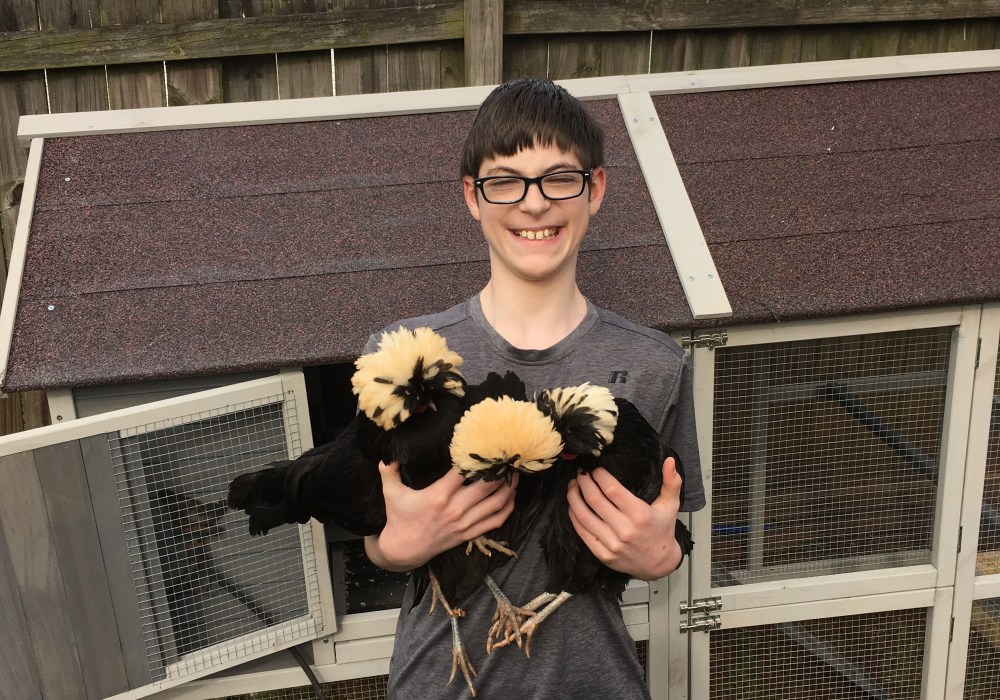
adams polishes

If you want to involve kids with keeping backyard chickens, the Polish is a great breed to choose. Due to their appearance kids are often times captivated with the White Crested Polish. They are a gentile breed that is docile and not prone to aggression. Even the roosters are fairly good natured as compared to other breeds. Due to their vision limitations from their crests, they are fairly easy for kids to catch and bond with. They are a bit flighty which might startle young kids at first but once they get used to their behaviors, they will really enjoy their feathered friends in the backyard. Currently I have 9 Polishes of different colors all of them are great with my boys.

7. Mysterious History. Where did they come from? 

IMG_2866

It is not really clear where these stunning birds came from. You may be thinking that they came from Poland. But this is not the case. Their name is derived from the Dutch word “pol” which means head, however that is still being debated amongst poultry experts. It has also been hypothesized that they originated in the Netherlands, whereas other enthusiasts think that they were brought to Europe during the time of the Medieval Mongols. Other fun loving chicken lovers such as I ponder if their origins are not of this world at all. Possibly like H.P. Lovecraft’s Cthulhu, they came from Orion or another world out there, just kidding :-). In all seriousness though, no one really knows where these crown jewels really came from. Still today there remains a lot of mystery surrounding their origins. Maybe we will never know, but for rare breed chicken lovers that does not really matter. If anything, it just makes these cuddly backyard buddies even more lovable.

Are these classy chickens right for your backyard flock?

If you choose to keep these unique chickens several requirements must be meet.

~ A secure coop and outdoor pen are a must. Since they are unable to see well, they can be vulnerable to arial predator attacks. If you are unable to supervise them keep your birds secure in their pen till you can spend time with them.

~ Due to their crest feathers they require extra vigilance that they do not get wet. During the winter if their crest feathers get wet it can freeze causing discomfort and in some cases illness to the bird.
~ If you decide to keep these girls, a separate coop for them is a must. Due to their diminished vision they often times reside at the bottom of the pecking order and can at times be picked on.

~ Making sure they have a clean and dry place to themselves will assure their success as a part of your backyard flock. While you’re at it, have a little fun with their home. A classy chicken with a personality such as the Polish needs a coop with some character. Many places like Tractor Supply and Hayneedle have adorable coops they would complement your fancy couture wearing girls nicely.

IMG_2868

As always thanks for reading!

If you have any questions regarding the Polish breed, feel free by leaving a comment. I will get back to you as soon as I can.

I am a published author, multi-disciplinary writer and blog contributor. If you like this blog, please visit some of my other sites.

Coffee and Coelophysis – A blog about dinosaurs!

Knowledge of the Spheres – Exploring the Celestial Spheres.

Chicken Math University – Adventures in Homeschooling.

If you liked this post, peck the subscribe button.

As always, thanks for reading. Till next time, keep on crowing!

~The Kuntry Klucker Crew~

How to Treat Bumble foot in Backyard Chickens.

IMG_0238.jpg

Along with the fun of raising backyard chickens, there are times when care needs to be taken to assure the well-being of our feathered friends. Last summer I had a few of my girls come down with a condition called bumble foot. I know it’s a funny sounding word, what it basically amounts to is an infection in the pad of their foot. Now, the chicken has an amazing ability to heal and recover from a variety of wounds and conditions. Often times I am most certain that an ailment will take the life of one of my girls and as it turns out they, make an amazing recovery.

So what is bumble foot exactly? Basically, it is caused by a very small puncture wound on the chicken’s foot. As the chicken’s body attempts to heal itself, a “corn” is formed in the soft tissue of the foot, creating a very painful condition called bumble foot. Although it is not inherently common in backyard flocks, it does happen from time to time.

My girls came down with the condition by injuring their feet by tree branches that fell into their outdoor run area after several severe spring storms ripped through our area. Some of the branches were sharp and a few of the girls obtained small wounds on their feet before I could get everything cleaned up. Even something as simple as digging in mulch can cause a splinter to get infected and cause bumble foot in a chicken. So, there are a variety of things that can cause bumble foot to grow in the soft tissue of even pampered backyard divas.

Although the condition sounds severe, it is actually rather simple to treat. All it takes is some time and attention. There are many ways to treat the infection. Some chicken owners will actually cut the infection out of the foot. I would only do this is only in extreme conditions. Although this would remove the infection from the bird very quickly, I would hate to cause this much pain to one of my girls. This procedure honestly is much better handled by a vet who has the proper pain management to perform this method of addressing bumble foot. I take a bit gentler approach, working with the chicken’s body to draw out the infection with as little pain as possible. I call it the salve method. I will detail below with pictures how to treat the infection using salve.

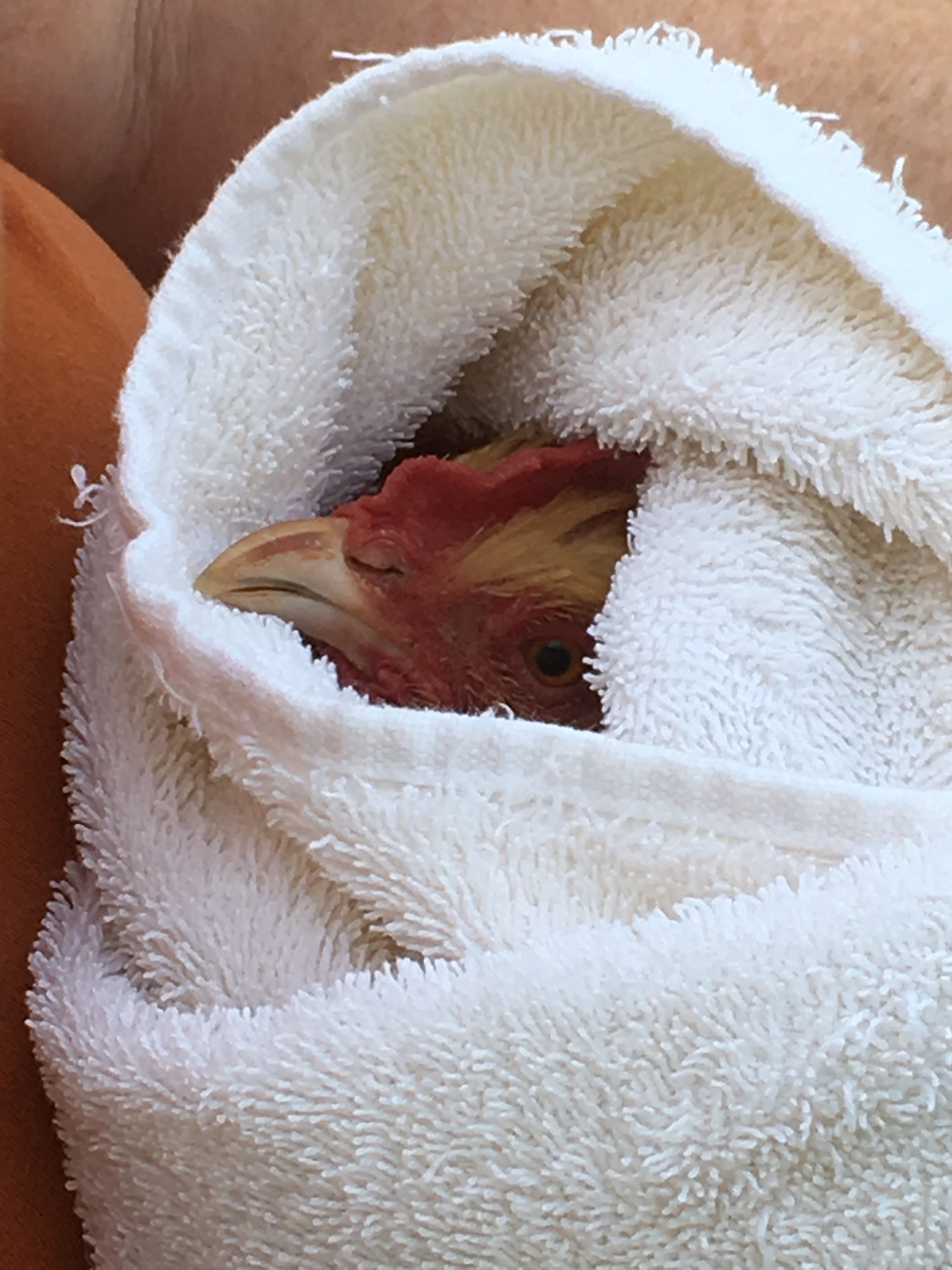
First, you will need to catch the patient that needs the bumble foot infection addressed. It is best to wrap the patient in a towel. This will keep the bird calm and make it easier for your assistant to hold. That is right, I forgot to mention that you will need a helper for this little project. My helper today is my mom, Mary. She loves my girls and enjoys holding and talking to our patient throughout the entire procedure.

img_0180

Our patient today is Miss Pea. She is one of the last remaining girls that is still recovering from a bumble foot infection. Her infection is slow to heal, mainly because she is the largest of all my hens. She puts a lot of weight on her feet which does tend to make the healing process slower. Nonetheless, she takes her Pedi days in stride.

Ok, now that you have your patient wrapped in a towel, give the patient to you assistant and let them hold the bird for you. This will make it easier for you to use both your hands to work on the bumble foot infection.

img_0175
img_0183

One very important note here: Make sure that you wear gloves!!! Bumble foot is a bacterial infection. Many bacteria live in the ground, it is possible that some bumble foot infection can actually contain the staph bacteria making them staph infections. So to protect yourself, make sure that you wear a good pair of quality medical exam gloves. Also, see that your assistant wears that same quality medical exam gloves.

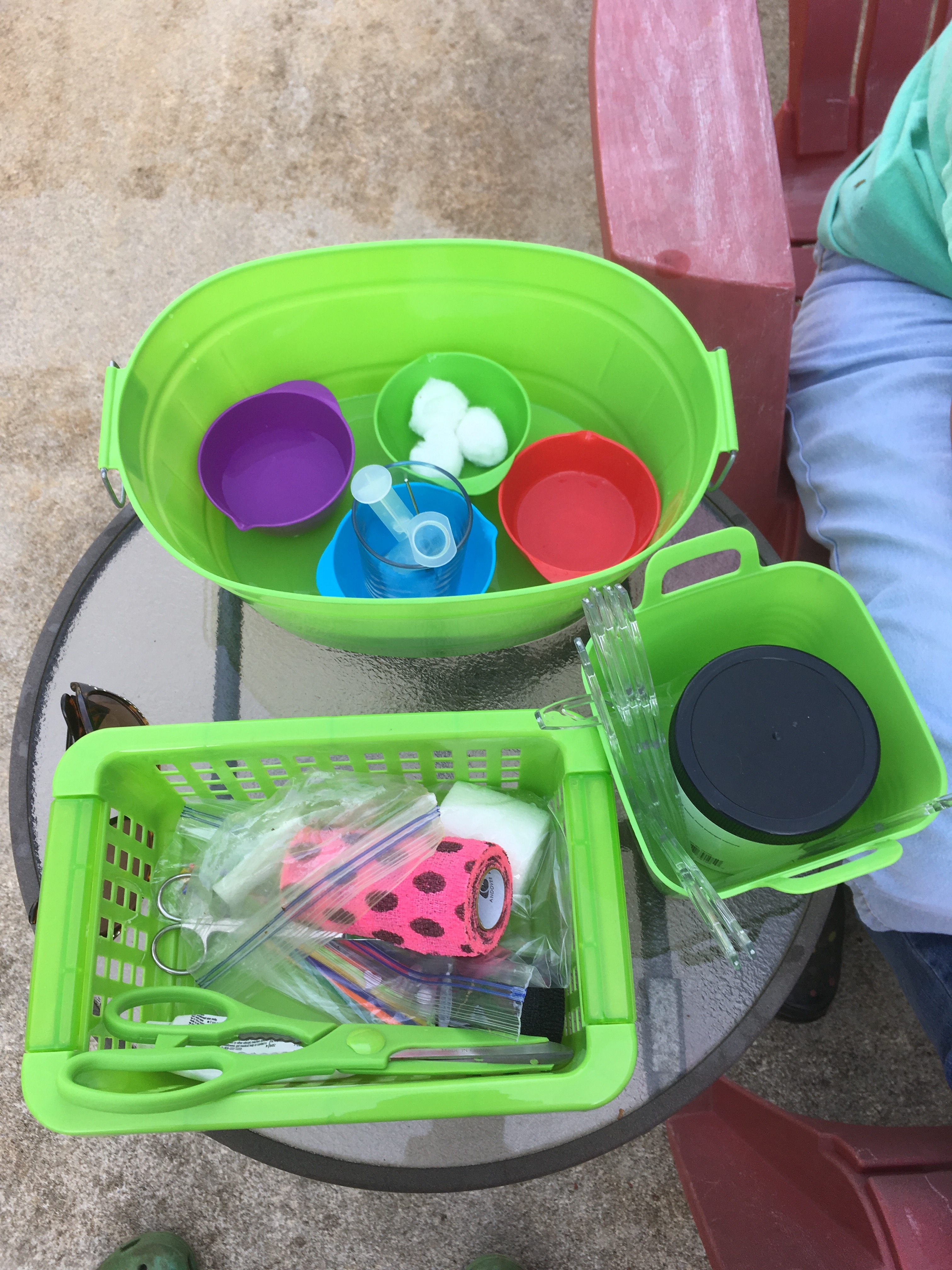
Ok, now for the procedure, make sure that you have a stocked medical kit. You will need: Gloves, Peroxide, rubbing Alcohol, cotton balls, scissors, rolled gauze, antibacterial cream such as triple antibiotic cream, salve, and vet wrap. Here are my supplies laid out and ready to use.

img_0178

Ok, now that you have your patient and your assistant holding your patient, it’s time to begin. Isolate the foot that has the infection and secure the other foot under the towel. A chicken will have the natural reaction to kick with the other foot, so that foot need to be secured. You don’t want the claws from the other foot to put holes in your gloves.

img_0177

Take a cotton ball, dip it into some alcohol or peroxide and wipe the foot clean. Removing all debris and disinfecting the foot pad. Chickens’ feet can be very dirty. Sometimes it helps to soak the foot in a tub of warm Epsom salt water to further clean the feet and allow the skin to soften.

After you have cleaned the foot, inspect the wound. This is Miss Pea’s foot; she has a pretty large bumble foot infection. As you can see, they are usually circular in nature and can be very deep. After I cleaned her foot, I put a dab of Salve on her foot. Just enough to cover the wound, you don’t need to smear the whole foot in Salve.

img_0199

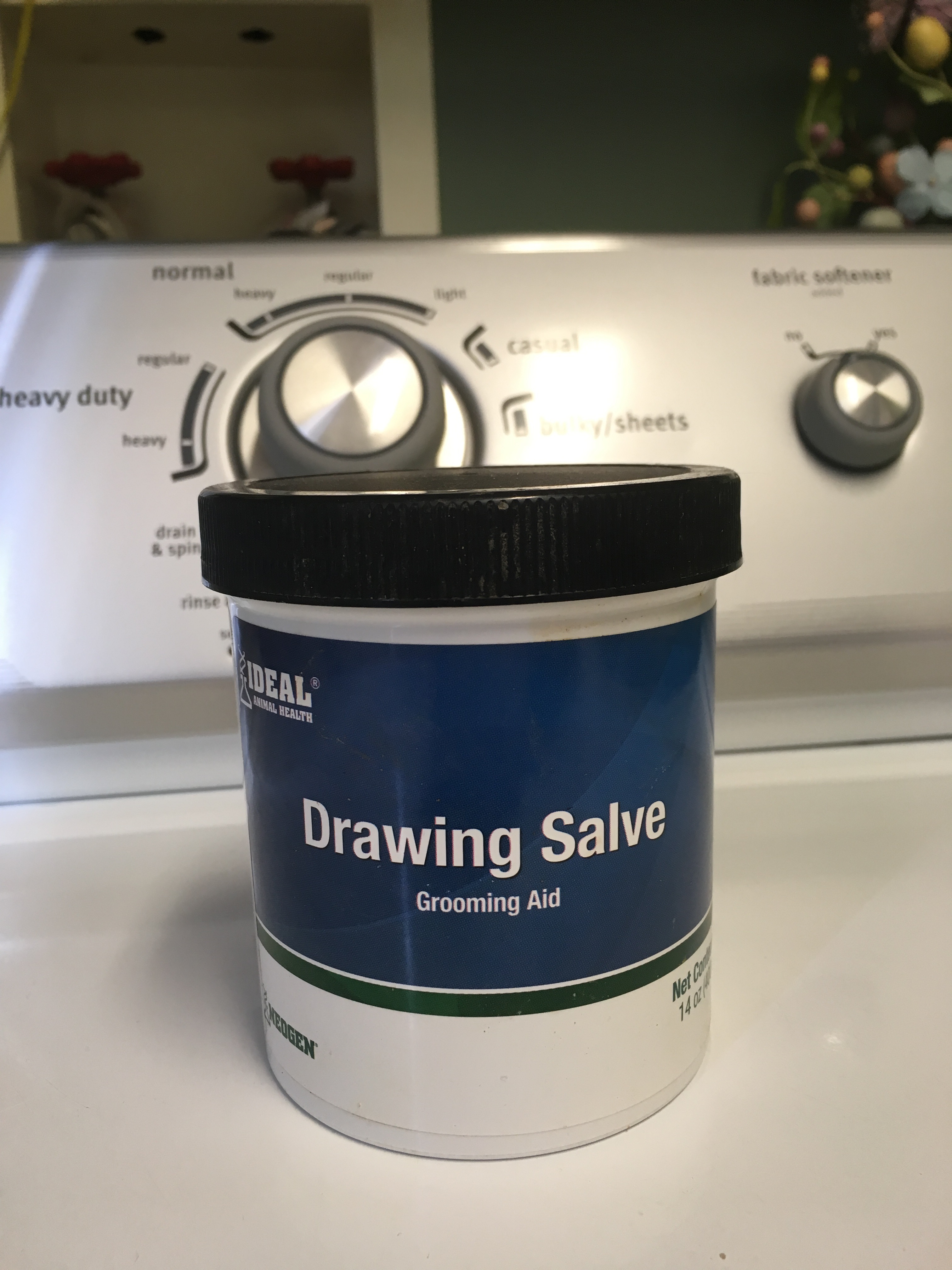
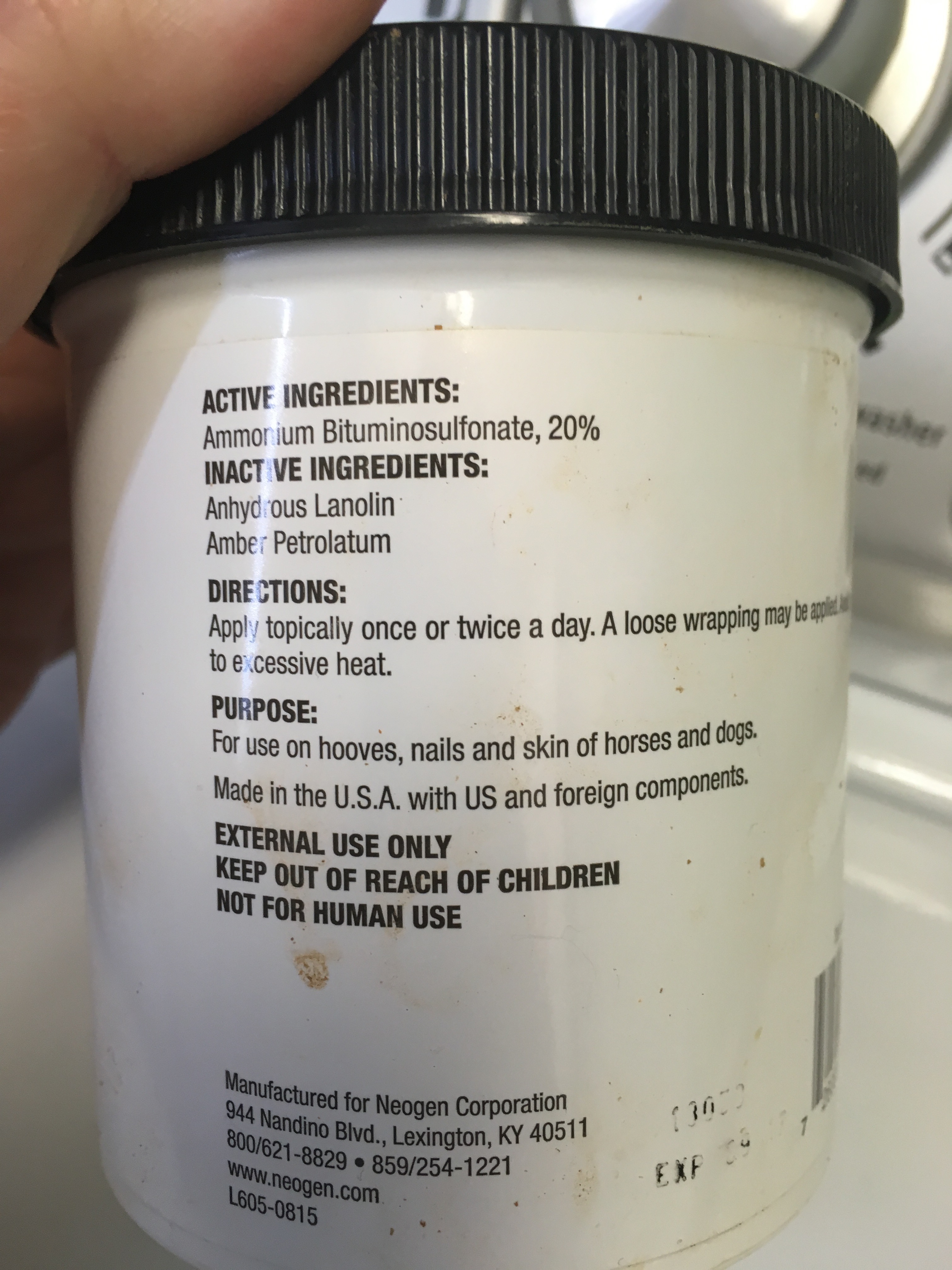
Now is a good time to talk about Salve. I swear by this product. The purpose of Salve is to soften the skin allowing the body to expel the infection. It is often used for horses to pull pebbles and other objects out of their hove’s. It is non-toxic and painless for the bird. It is a wonderful product. I would not keep chickens without this in my chicken first aid kit. It is found at Tractor Supply and costs about $20 a tub. It will last you literally forever. It is black, smells awful, looks like tar but will works miracles on bumble foot infection. I also use it on my kids when they get splinters or other cut wounds.

img_0939
img_0940

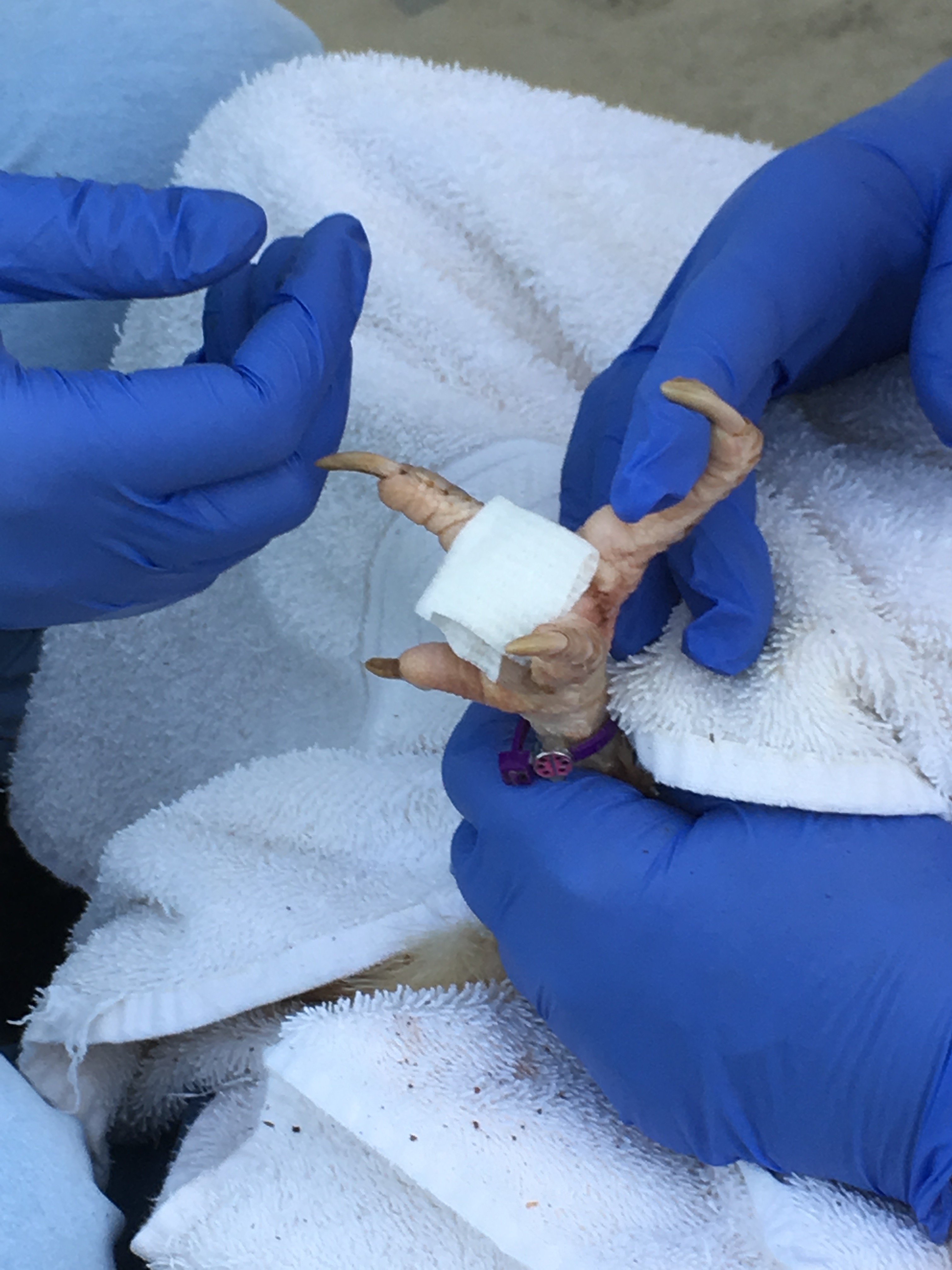
Once you put the Salve on the patients cleaned and disinfected foot, place some gauze on top of it. The gauze will keep the salve next to the skin and offer some protection for the wound.

img_0203

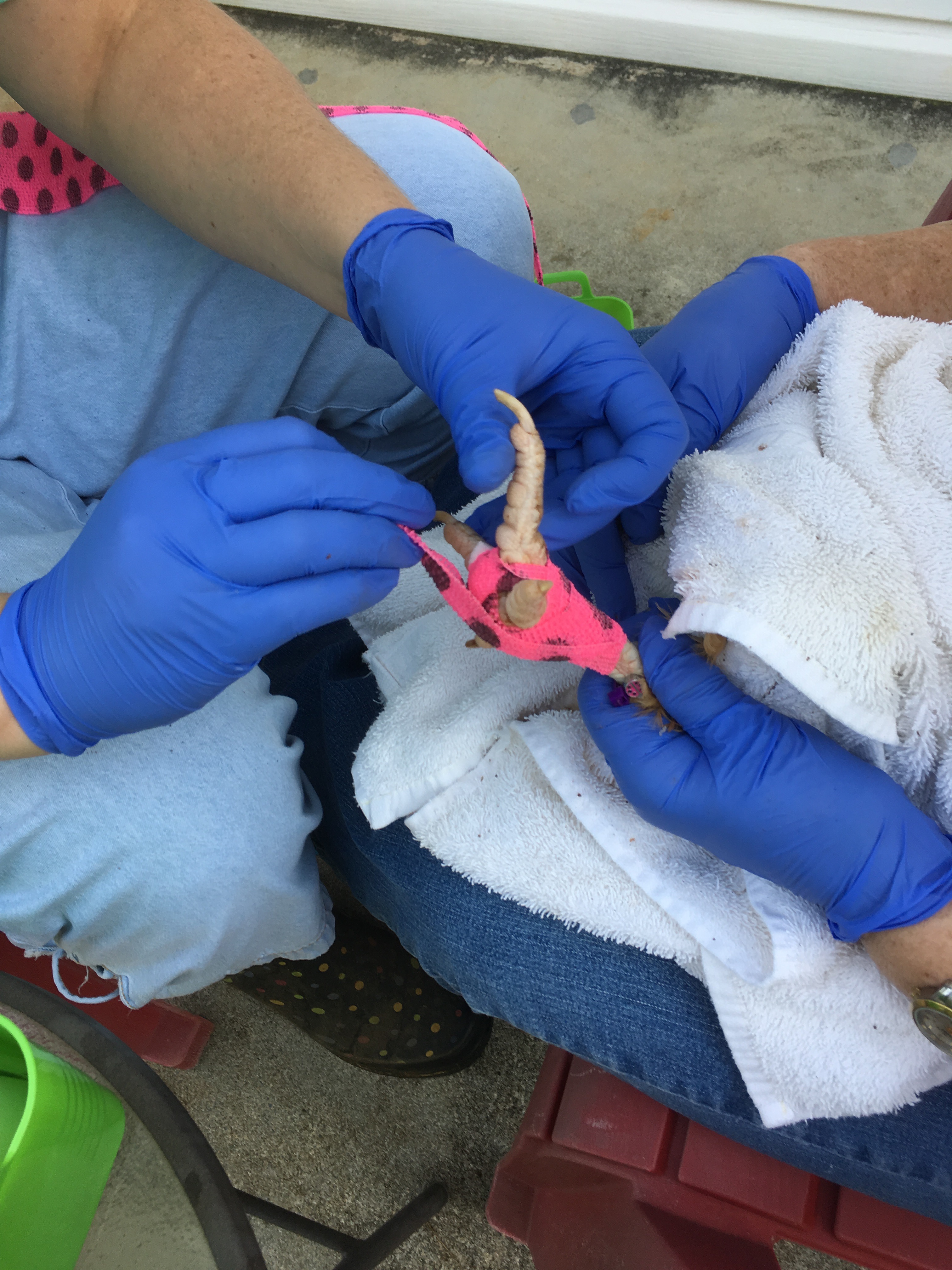
Now that you have the wound Salved and gauzed, it is time to wrap the foot. This keeps the gauze in place and prevents dirt and other things from contaminating the wound causing more infection to grow.

A chicken’s foot is a bit of a challenge to wrap, but once you get the hang of it its rather easy. First you will need to cut 2-3 strips of vet wrap about 10-12 inches long. Start several inches up the bird legs and wrap the vet wrap around her leg. Then, as you reach the toes just weave the vet wrap in-between the toes, making sure to cover the bottom of the foot completely. A note here, DO NOT make the vet wrap too tight. You are not trying to provide compression. You are simply holding the gauze in place and preventing dirt from infecting the wound further. Wrapping too tight will cut off circulation to the patient’s foot causing severe leg problems. Keep the wrap rather loose, vet wrap will stick to itself so there is no need to wrap the foot too tight. I would rather that you question whether it is too loose than too tight.

img_0212
img_0176

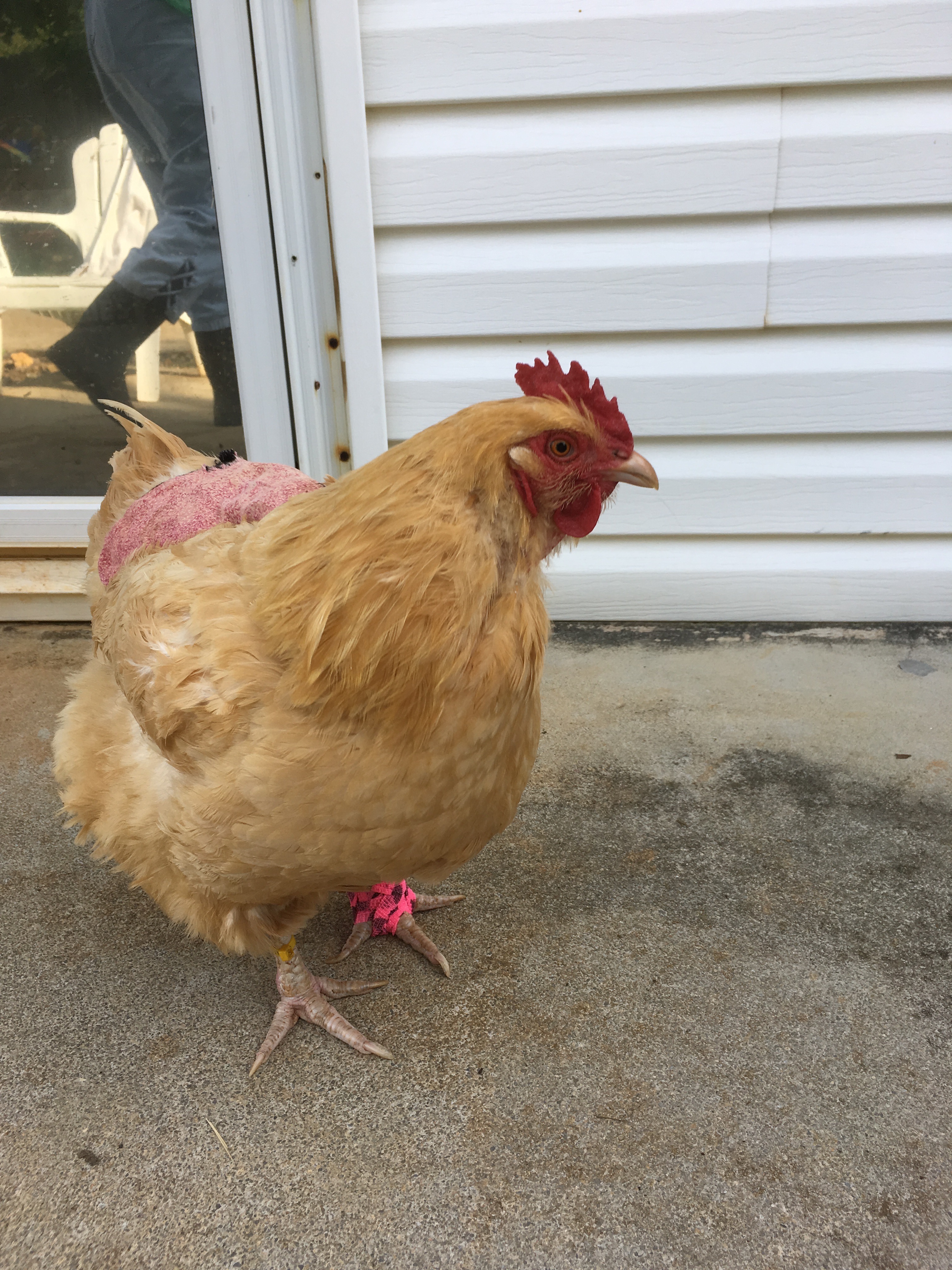
Once you have the patients foot wrapped. They are good to go, a free bird. You can allow your patient to roam with the rest of the flock. All I caution about is do not let their foot get wet. So, if you are expecting rain in the forecast, make sure that they do not step in mud or puddles. Secure your patient to the pen for the day if the weather is going to be bad. If the foot does gets wet, it could cause further infection and delay recovery. However, if their foot gets wet just remove the bandage, disinfect, apply more salve and rewrap. It’s not a big deal, it happened to me several times when we would get a freak shower. So, I just rewrapped her and called it a day.

img_0238

Once they have their foot fashions on, return the patient to the flock and check the wound in a few days. I go no longer than a week, every 2-3 days is ideal. The Salve will work to pull the infection from the body bring with its puss and the corn. Simply remove the gauze, disinfect the foot with either alcohol or peroxide apply more salve, and wrap.

The Salve method takes a while to completely clear the infection. A bad bumble foot infection can take several months to completely clear up. This is the disadvantage of using the Salve vs cutting the infection out. However, the Salve is painless and very effective. The surgical method requires an individual to have a tough stomach when it comes to blood and puss. Not only is it bloody but it is very painful unless numbing medication is properly administered. This procedure is best left to a vet. Additionally, when you cut into a bird you risk the very real possibility of severe life-threatening infection. This is because if the bacterium in foot gets into the blood stream it could be life threatening for the bird. I would much rather use a method that takes a bit longer but is painless and reduces the infection rather than possibly making it worse. The Salve will work, it is absolutely amazing, will save you hundreds on vet bills, and be painless for the patient.

Bumble foot, although sounding daunting is a very simple condition to treat. Using the right methods, it is painless for the bird and returns their quality of life once fully recovered.

I hope that this post has helped anyone who is struggling with how to address bumble foot in backyard chickens.

I am a published author, multi-disciplinary writer and blog contributor. If you like this blog, please visti some of my other sites.

Coffee and Coelophysis – A blog about dinosaurs!

Chicken Math University – Adventures in Homeschooling

Knowledge of the Spheres – Exploring the Celestial Spheres

If you liked this post, peck the subscribe button.

As always, the girls and I thank you for stopping by. Remember to keep on crowing and we will see you next time.

~The Kuntry Klucker Crew~

DSCF4984