Molt: A Natural Phenomenon in Backyard Chicken Keeping

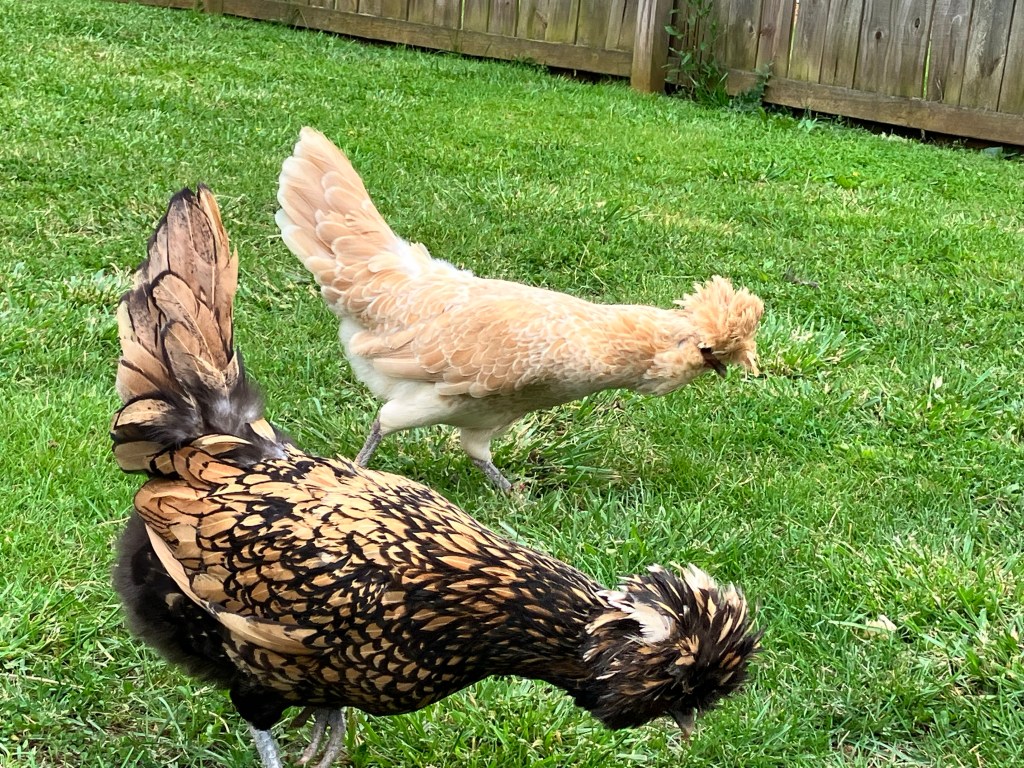
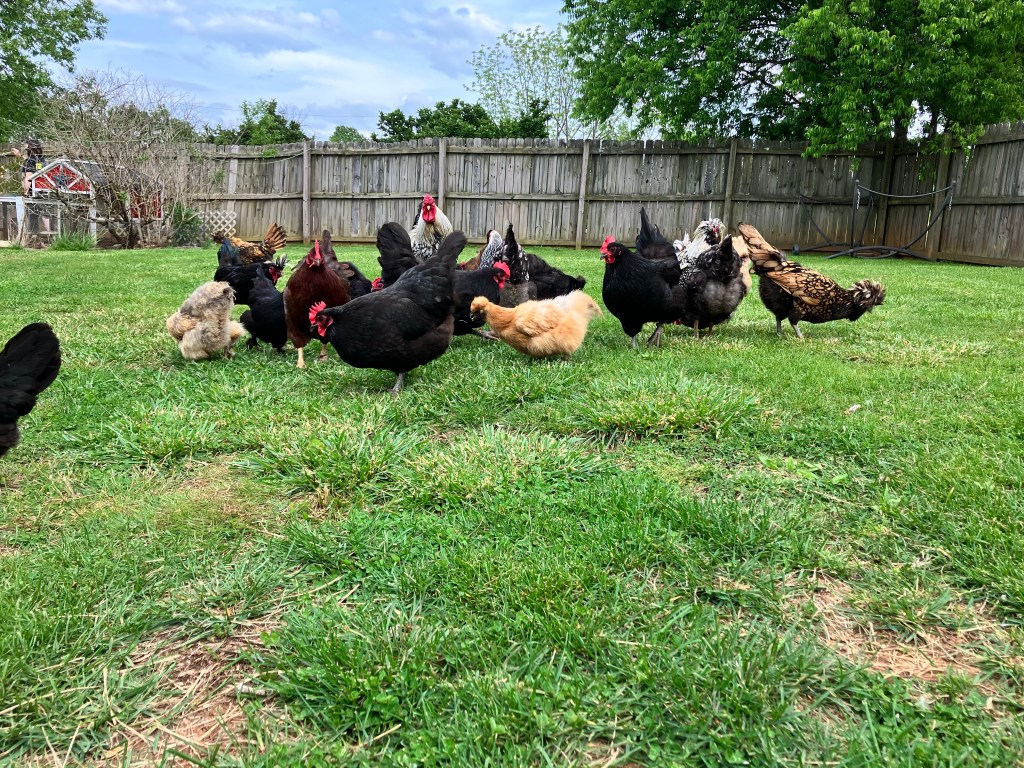
The Kuntry Klucker Crew hunting for delectables on a freshly cut summer lawn

The first signs of changing seasons are clear as the buzz of cicadas fills the auto backdrop, a sign that late summer descends upon the northern hemisphere. Many backyard chicken keepers notice their flocks look disheveled as molt begins the slow transition of shedding feathers in preparation for the coming fall and winter seasons.

In late summer, many novice backyard chicken keepers are horrified to see feathers covering the coop and pen floor. While the scene resembles an attack from a nocturnal predator, feather loss is natural and affects all birds, including chickens. Molt is the biological process of feather replacement and occurs yearly in backyard flocks.

In this article, I will discuss what molt is, why it’s important, and what backyard chicken keepers can do to support their flocks during the molting process.

What Is Molt?

Fi (Silver Lace Polish Hen) sporting her stunning crest feathers after molt.

Molt is the process by which birds shed their old feather and replace them with new ones. Molt can vary by species, year, and by individuals. Molt is considered complete when the bird replaces all if its feathers. Molting typically progresses from the head to the tail over the course of several months. Some birds can lose more feathers at once appearing naked while others lose few to no feathers.

Image Credit: Archaeopteryx Restoration

Molting is as old as the linage of birds which began in the Mesozoic when dinosaurs roamed the earth. Birds are dinosaurs, specifically, birds are an advanced group called paravians, a clade of dinosaurs that is directly related to the mighty Tyrannosaurus Rex and the ferocious Velociraptor (Brusatte, 2018).

The signature feature of birds – feathers – evolved in their ground-dwelling theropod ancestors first noticed in Sinosauropteryx, the first dinosaur taxon outside parades to be found with evidence of proto-feathers.

Image Credit: Sinosauropteryx fossil.

The earliest feathers looked much different than the quill feathers of today. Initially, feathers evolved as multipurpose tools for display, insulation, protection for brooding, and sexual dimorphism. These early feathers were more like a fluff – appearing more like fur than feathers – consisting of thousands of hair-like filaments. Silkie chickens possess feathers that lack barbs that form the classic shape we associate with feathers. The first proto-feathers in dinosaurs were much like the texture of feathers on the Silkie. The breed name “Silkie” is derived from this unique feather texture.

Silkie flock grazing on a lush spring lawn. Silkies lack the barbs in their feathers that resemble protofeathers of their Mesozoic ancestors.

As the body plan for feathered dinosaurs continued to fine-tune the use of feathers, flight happened by accident. More advanced paravians had achieved the magical combination to achieve flight – large wings and smaller bodies (Brusatte, 2018). As the body plan of birds continued to refine, they lost their long tails and teeth, reduced to one ovary, and hollowed out their bones more to lighten their weight. By the end of the Cretaceous, birds flew over the heads of Tyrannosaurus Rex and other land-dwelling dinosaurs.

Sixty-six million years ago, the birds and T-rex witnessed the Chicxulub impact that brought the Mesozoic to a close. While therapods with large and expensive body plans died out, birds sailed through to the Cenozoic. The surviving non-avian dinosaurs carried with them the body plan seen in birds today, including the yearly process of molting.

Image Credit: Noelle K. Moser. Me peering through the fenestrae of Tyrannosaurus Rex specimen MOR555

Why is Molting Important?

The Kuntry Klucker Crew sifting through freshly spread hay for mealworms, a treat during the yearly molt.

Feathers, like skin or hair in humans, are replaced by the body regularly. Unlike humans who constantly shed skin cells, birds shed feathers annually.

Molting prepares a bird’s body for winter by replacing old feathers with new ones. During molt, backyard chickens will grow in the winter down needed for warmth. It is important for chicken keepers not to interfere with the molting process by placing chicken sweaters or other unnecessary items on the bird. While molting chickens can look naked and cold their bodies are built for this process.

How Can Backyard Chicken Keepers Help the Molting Flock?

Image Credit: Noelle K. Moser. Smog and Link (Silver Lace Wyandotte and Silver Lace Polish respectively) sporting stunning lacing feathers after molt.

During molt, birds will need increased protein in their diet to support feather regrowth. Providing mealworms is a great way to add affordable, healthy protein.

As pin feathers emerge, keepers must prevent irritating these new feathers. Pin feathers contain a fresh blood supply and are very sensitive to the touch. If new pin feathers are touched too roughly, they can bleed, causing pain and distress to the bird.

While molting, I do not hold my birds unless necessary and avoid touching the pin feathers if possible. Once the feathers fully develop it is safe to hold and interact with the flock again.

During the molting process, hens will decrease or cease laying altogether. During this time, the hen’s body uses all available energy to support feather regrowth. Once molting is complete, egg production will increase, and the flock will resume activity. After molting, the flock with new feathers will look stunning with fresh plumage and renewed vigor.

While lengthy at times, molting is a natural process for all birds and necessary for survival and life outdoors.

I am a multi-disciplinary writer, blogger, and web content creator. If you like this post, please visit some of my other blogs or online writing portfolio.

Image Credit: Noelle K. Moser. Me with the gargantuan relative of birds MOR555 Tyrannosaurus Rex, “Walter”. National Museum of Natural History. Washington, D.C.

Coffee and Coelophysis – A blog about Dinosaurs!

The Introvert Cafe – A Mental Health Blog

If you have any questions, please reach out. You can catch me at kuntryklucker@gmail.com or visit my YouTube Channel.

As always, thanks for reading. Till next time, keep on crowing!

Resources:

Brusatte, Steve. The Rise and Fall of the Dinosaurs: A New History of Their Lost World. William Morrow An Imprint of Harper Collins Publishers. New York, NY. 2018. (pgs. 282)

~ The Kuntry Klucker Crew ~
How to Treat Heat-Related Illness in Backyard Chickens.

Miss Sweet Pea (Buff Orpington Hen) surrounded by a halo of light from the morning sun.

While cold weather issues often take precedence in the minds of backyard chicken keepers, heat-related illnesses are usually more deadly to backyard flocks. Unlike cold weather bringing snow and ice, hot weather is more dangerous than cold and wet weather combined. Dehydration and heat stroke can decimate a flock in minutes if proper precautions are not taken to avoid these issues.

In this post, I will discuss how soaring summer temperatures affect chicken physiology and how to avoid, treat, and prevent heat-related illnesses.

Chicken Physiology, Body Plan, and Dehydration:

Image Credit: Noelle K. Moser. Aphrodite and Lady Me (White Crested Polish hen and Black Silkie hen, respectively) caught sampling freshly potted petunias.

Related to the mighty Tyrannosaurus Rex, chickens are theropods and can trace their lineage back to the common ancestor of dinosaurs. (Brusatte, 2018).

All birds – chickens included – are dinosaurs. Specifically, birds are a type of theropod rooted in the dinosaur family tree that contains the same ferocious meat-eaters as T-Rex and Velociraptor (Brusatte, 2018).

Birds perch within an advanced group of dinosaurs called paravians – a subgroup of a theropod that traded in the brute body plan of their gargantuan ancestors for larger brains, sharpened acute senses, and smaller, lighter bodies that permitted progressive lifestyles above their land-dwelling relatives. Anatomically, chickens have many common characteristics that define the body plan of these magnificent creatures.

Image Credit: Noelle K. Moser. Tyrannosaurus Rex. Perot Natural History Museum. Dallas, Texas.

Chickens and all birds have a unique body plan visible in the skeleton. Comparing the skeleton of Tyrannosaurus Rex with modern chickens yields similar anatomical attributes. T-Rex has a skull attached to a spine, ribs, and two legs with splayed toes, providing swift bipedal locomotion. Focusing on the appendicular skeleton, we see that T-Rex and modern chickens have an S-shaped skeleton. The reason is that body plans do not have unlimited parts from which evolution can choose but rather build upon earlier ancestral shapes (Horner, 2009).

Image Credit: Noelle K. Moser. Profile of skeletal body plan of Tyrannosaurus Rex which survives in birds and chickens today. National Natural History Museum. Washington, D.C.

While it’s easy to say that these features are of birds, they are not attributes of birds at all but of dinosaurs.

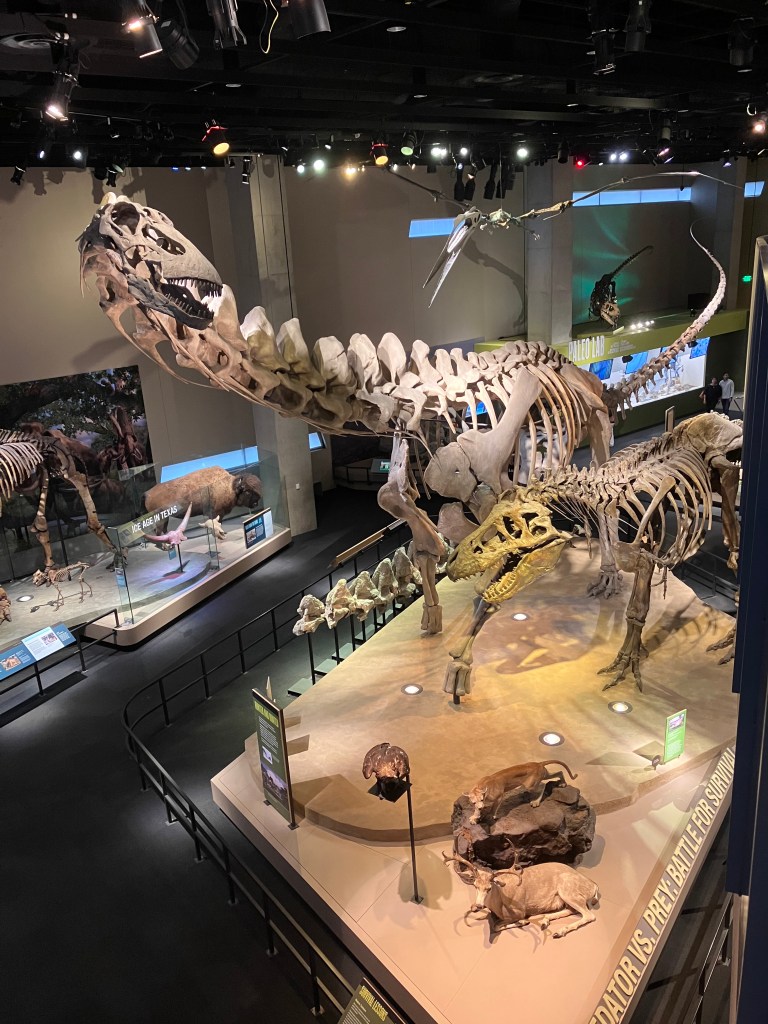
Image Credit: Noelle K. Moser. Saurischian dinosaurs – Alamosaurus and Tyrannosaurus Rex – locked in the battle of predator and prey. Perot Natural History Museum. Dallas, Texas.

Like the nightly T-Rex, chickens are related to saurischians – the line of the dinosaur family tree that contains both the giant sauropods and theropods – possessed skeletal pneumaticity – spaces for air in their bones.

Skeletal pneumaticity produces hollow bones that lighten the skeleton, allowing for a wide range of motion. Without pneumaticity, sauropods would be unable to lift their long necks, and giant theropods would lack the agility and ability to run because their skeletons would be far too heavy.

In birds, air sacks are an ultra-efficient lung oxygen system. This flow-through inhalation and exhalation provide the high-energy birds need during flight. Evolving one hundred million years before birds took flight, this is the true secret to their ability to take to the skies.

While pneumaticity is an incredible anatomical adaption inherited from their ferocious ancestors, it also makes birds vulnerable to dehydration. In warm weather, this ultra-efficient lung oxygen system requires access to water for optimal performance. In backyard chickens, readily available water is crucial to prevent dehydration. In extreme heat, chickens can dehydrate fast, causing compromised health and death.

Image Credit: Noelle K. Moser. Me looking through the fenestrae (Pneumaticity in T-Rex anatomy to make the skull lighter) of MOR 555 – Tyrannosaurus Rex. Natural History Museum. Cincinnati, Ohio.

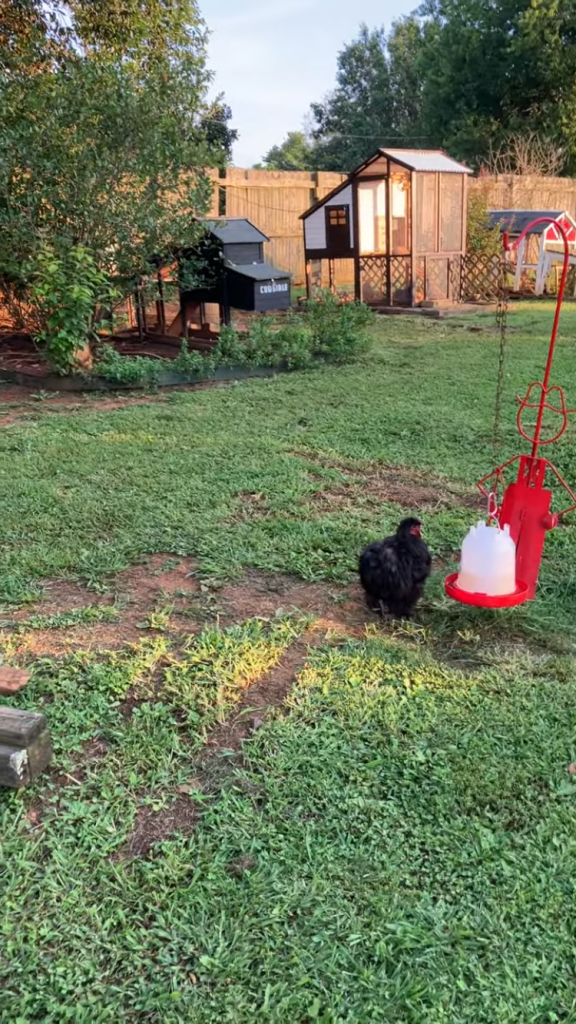
Preventing dehydration in backyard chickens is crucial in hot weather. Water needs to be accessible at all times and if free-ranging in multiple locations. In my backyard, I have multiple waterers suspended from red Shepard hooks.

Image Credit: Noelle K. Moser. My flock free ranging in the backyard with multiple watering locations visible for easy access.

When free ranging a backyard flock, it is necessary to keep water in easy reach from several locations. If the only water source is at a distance chickens can dehydrate before they can access water.

Image Credit: Noelle K. Moser. Mickey Smith (Black Silkie Rooster) drinking from one of the many watering stations placed throughout the backyard.

Electrolytes:

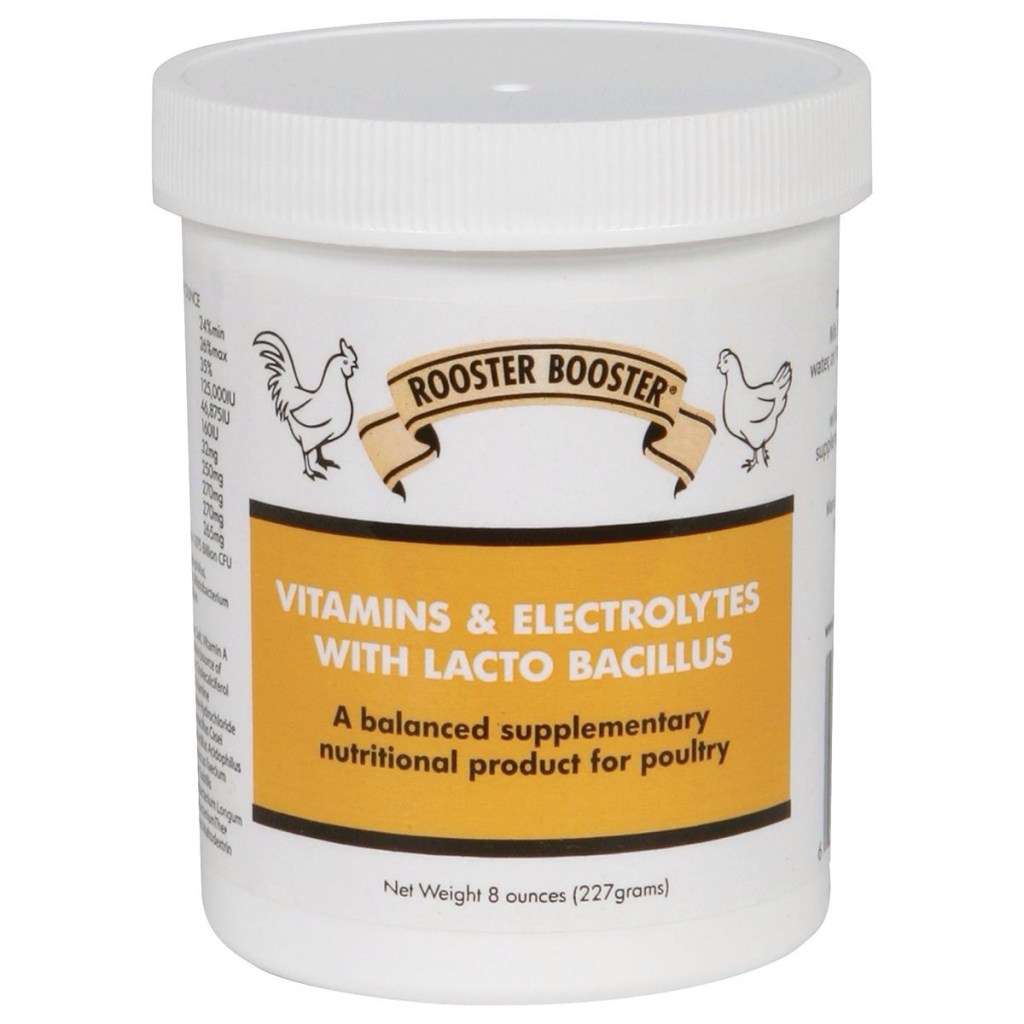
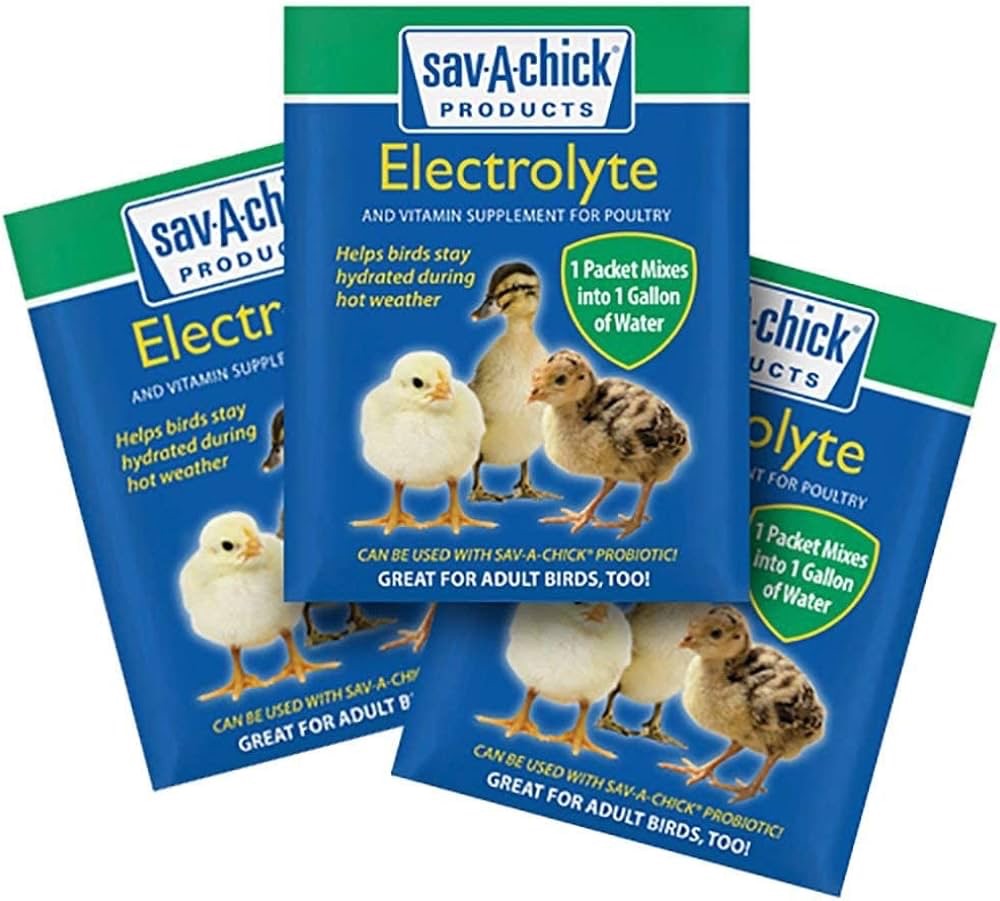
Like Gatorade for humans, electrolytes are necessary for optimal flock health in hot weather. When temperatures soar, I add electrolytes to my flock’s water daily. Following package instructions for administration, electrolytes for poultry will aid in supporting the chicken’s body providing proper hydration.

Shade:

Whether in the coop/pen or free-ranging, shade is key for optimal flock health in hot weather. In allowing the flock to free range in a backyard, plant pushes or trees that provide shade from the hot afternoon sun. If the free ranging area is too small, simple canopy tents are a great alternative.

Image Credit: Noelle K. Moser. The Kuntry Klucker crew seeking shade under a large tree in the corner of the free ranging yard.

In my backyard, I have multiple areas providing shade for the flock. I also post watering stations near these locations to help the flock stay hydrated while they rest in the shade.

Provide Chicken A/C:

Another trick of the trade is to provide your flock chicken A/C. During the hottest part of the day, use a hose to saturate a favorite shaded spot for the flock. The water will cool the ground and the chickens will rest on the cool ground acting as A/C that will help the flock stay cool. If your property allows, placing a misting host on the ground will also provide this cooling effect. The chickens will come and go out of the mist as needed depending on individual comfort levels.

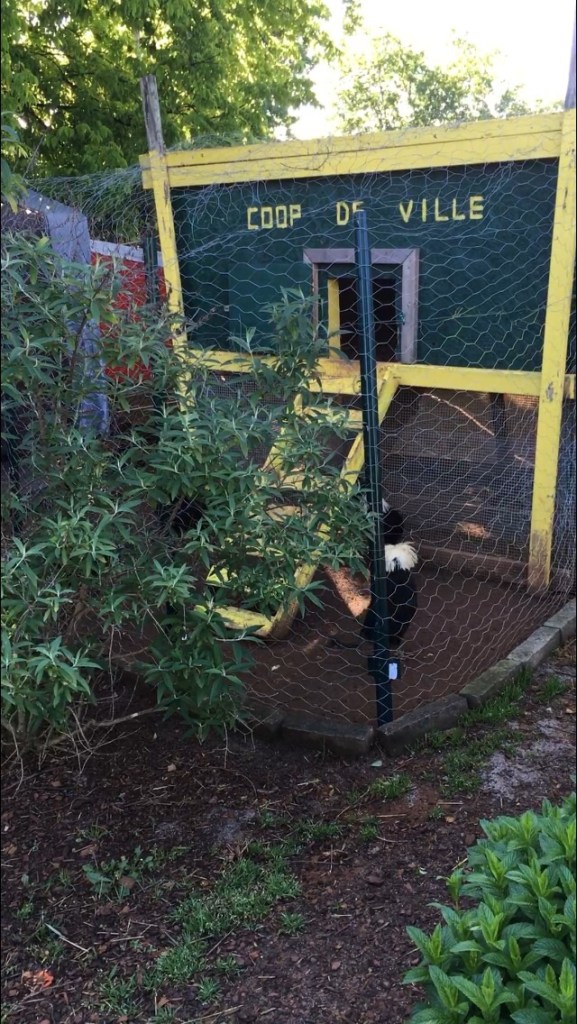
Image Credit: Noelle K. Moser. The Coop De Ville crew taking advantage the freshly moistened ground in a shaded spot on a hot summer day.

Treating Heat Illness in Backyard Flocks:

The signs of heat illness in chickens are much the same in humans. Lifelessness, exhaustion, lack of appetite, pale comb, dry mouth, passing out, and death.

If you notice any of the above symptoms in a flock member, immediate action is required. The first measure is to take the heat-affected individual to water. Many times, the heat-stressed bird needs quick access to water. If the individual is strong enough to drink, this will quickly rectify the situation. Keep the ill individual near the watering source in a pen or shaded location to recover.

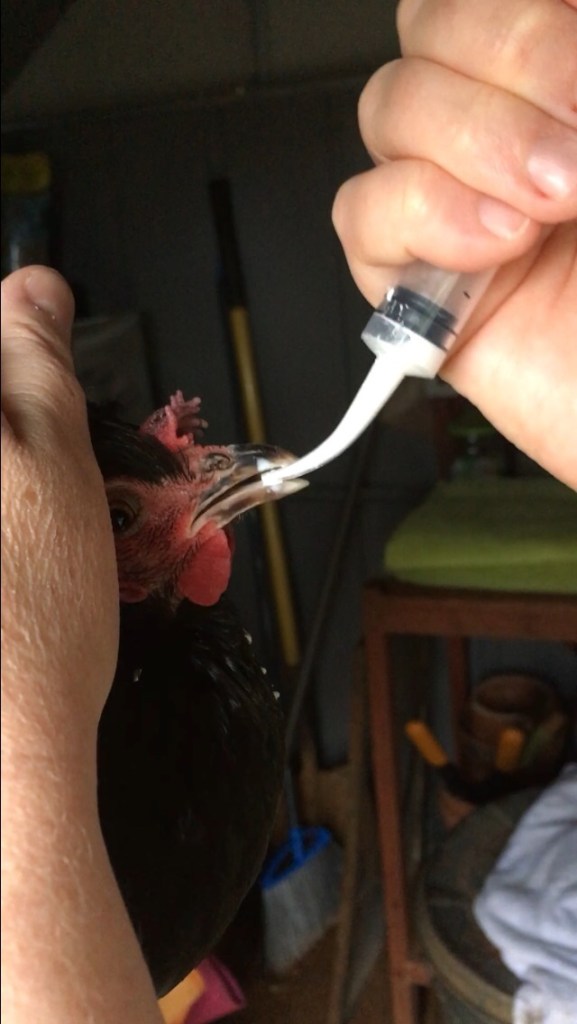
Image Credit: Noelle K. Moser. Me using a syringe to orally administer wormer to a black Cochin bantam hen.

If the heat illness is more severe, direct administration may be necessary. Using a syringe with the needle removed, provide water mixed with electrolytes directly to the affected flock member. When given orally, the patient will drink the water, providing relief.

Note of caution: do NOT force the water down their throat; chickens have a passage in the back of their mouth that leads directly to the lungs. Instead, slowly administer the water and allow the bird to drink the water.

I have a video on my YouTube Channel demonstrating the correct oral administration using Wormer. While this video focuses on worming a backyard flock, the oral methodology is the same. The skills here can be extrapolated and transferred to heat-related illnesses in backyard chickens.

If possible, isolate the heat-stressed member to a cool shaded place such as a laundry room, mud room, or shaded location in the pen, and over several hours, administer water in small doses to help the member recover from the heat-related illness.

Most chickens treated for heat stress in this manner make a full recovery and no ill health is observed.

I hope this post has helped treat a heat-stressed backyard flock. Like cold weather challenges, hot weather has associated risks that need to be addressed to have a happy and healthy backyard flock. If you have any questions feel free to reach out, by leaving a comment or dropping me an email at kuntryklucker@gmail.com

Image Credit: Noelle K. Moser. Daspletosaurus Torous (Jurassic ancestor of Tyrannosaurus Rex), cast of Tyrannosaurus Rex (MOR 555 skull) and I. Cincinnati Natural History Museum. Cincinnati, Ohio.

I am a multi-disciplinary writer, blogger, and online content creator. If you like this post, please visit my online writing portfolio or other sites.

Coffee and Coelophysis – A blog about dinosaurs!

Introvert Cafe – A mental Health blog.

As always, thanks for reading. Till next time, keep on crowing!

~ The Kuntry Klucker Crew ~
Resources:

Brusatte, Steve. The Rise and Fall of the Dinosaurs: A History of Their Lost World. William Marrow of Harper Collins Publishers. New York, NY. 2018. Pts. 270.

Horner, Jack. How to Build a Dinosaur. Plume, Published by Penguin Group. London, England. 2009. Pts. 8,9.

Backyard Chicken Health Inspection Guide: Preventing Illness in Your Flock

Buff, Silver-lace, and Golden lace Polishes gathered for routine health inspections.

Performing routine health inspections on chickens is essential and a prerequisite for a healthy flock. Like a check-up at a physician’s office, health inspections for chickens are much the same. Catching problematic pathologies before they occur requires routine health inspections.

I will discuss the process and procedure for conducting successful health inspections in a backyard flock. Beginning at the head down to the body and tail, I will include all the vital indications to prevent illness in the backyard flock.

Head, Eyes, Comb, and Waddles:

Apollo (White Crested Polish Hen) posing as I inspect her eyes for indications of ill health.

Starting at the crown of the head, inspect for mites and lice on the individual. If mites and lice are present treatment will be required. The eyes should be clear and free of debris. If crusting is present around the eye, gently wipe it away with a paper towel moistened with clean, warm water.

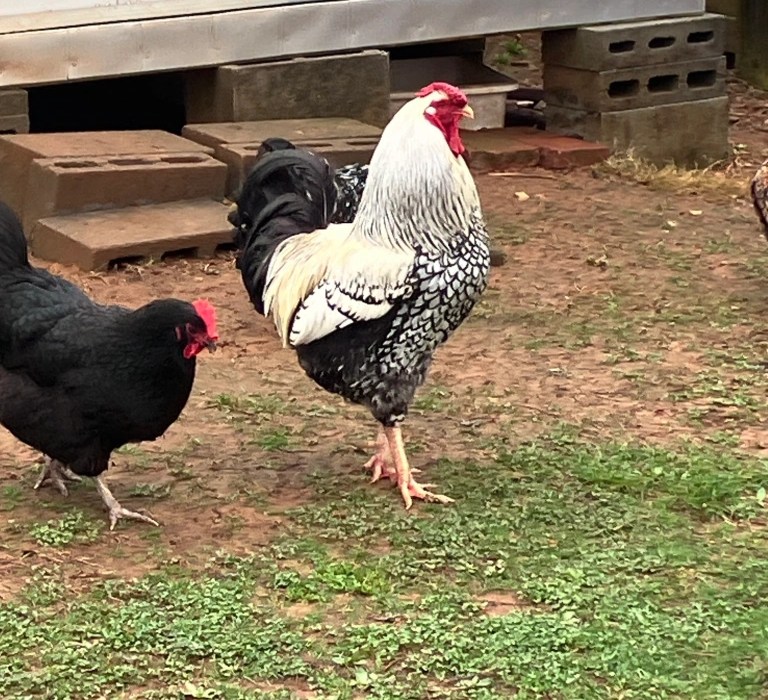
Dracula (Silver Lace Easter Egger) shaking his waddles for the camera.

The comb and waddles should be red and warm to the touch. Dried blood or pecking marks indicate flock disharmony and bullying. Monitor the flock and take appropriate actions to rectify the problem by isolating the bully or establishing a bachelor pen if roosters are sparring.

Legions or sores indicate fowl pocks (a common virus) or parasites such as fleas or ticks. Treatment with Eprinex will clear up external parasite infections. I have a video on my YouTube Channel showing my methodology to treat external parasites in my flock.

Neck:

Buff and Golden Lace Polish hens hunting and pecking as they search for delicious morsels.

Moving down the body, examine the neck of the bird. Feathers should be clean, and the base of the shaft should be visible. If clumps or residue surrounding the base of the quill is noticed, this indicates the presence of lice. Treatment with eprinex is warranted to address these external parasites.

Wings:

Lestat (White Crested Polish Rooster) proudly displaying his feathers to attract his favorite hens.

The wings of birds are among one of the favorite places for external parasites to congregate. Due to the warmth and protection from disruption, mites and lice can live rent-free. Parting the feathers and exposing the skin, tiny moving dark spots indicate red fowl mites. These small parasites feed on the host’s blood and must be addressed. Again, Eprinex works very well to address and abruptly stop a mite and lice infestation on the bird.

Tail and Vent:

Clean and health fluffy bottoms of a Buff Silkie, Black Australorp, and Silver Lace Wyandotte Rooster.

Like the wings, the vent is a favorite place for mites and lice to congregate. Due to the inability of the bird to preen this location, mites and lice will multiply unencumbered. Treatment for external parasites will rectify the infestation.

If the vent area is dirty or caked with dried or wet excrement, this indicates worms. Left untreated, intestinal worms will weaken and eventually cause death in affected individuals. Natural wormers such as Diamateous earth, pumpkin seeds, or apple cider vinegar will not address a high worm load in chickens. Worm infections should be treated with products developed to kill worms and the eggs in the intestinal tract. Another indication of worms is finding roundworms on the poop boards or worms visible in the eggs. See the video on my YouTube Channel using my flock to demonstrate proper dosage and administration.

Shanks, Feet, and Toes:

Bumblefoot in a Buff Orpingtons Hen

The shanks (legs) of the chicken should be neat; the scales should lie uniformly. Uplifted scales are a sign of leg mites and can be addressed by soaking the legs in warm Epsom salt, followed by applying Vaseline to the legs to smother the mites. Treatment with Eprinex is also helpful in advanced infestations.

The pad of the foot should be clean and without puncture wounds or signs of trauma. If a round scab is present on the foot, this is bumblefoot and can be addressed with simple steps to remove the corn (infection) and wrapped in gauze and vet wrap for healing. Bumblefoot is common in backyard flocks and not necessarily a reflection of poor flock management. For instructions on how to treat bumblefoot, please see my blog post on treatment in my flock.

Take care to use proper protection when treating bumblefoot

Use caution when treating bumblefoot as these infections are usually staph infections and zoonotic (passing from one species to another) and can affect humans. Medical gloves and masks for treatment are recommended. Sanitize all instruments with bleach to kill any bacteria before storage.

Routine health inspections are key for proper flock husbandry as problematic illnesses can be caught early and prevented through preventative efforts. For more information on caring for backyard chickens, please visit my YouTube Channel.

Stan (BHI 3303) Tyrannosaurus Rex and I. Perot Natural History Museum. Dallas, Texas.

I am a multi-disciplinary writer, blogger, and web content creator. To see more of my work visit my online writing portfolio and other sites.

Coffee and Coelophysis – A blog about dinosaurs!

Mesozoic plants at the National Botanical Gardens. Washington, D.C.

The Introvert Cafe – A mental health blog

As always, thanks for reading. Till next time, keep on crowing!

Me peering through an orbital fenestra of a Tyrannosaurus Rex. Cincinnati Natural History Museaum.

~ The Kuntry Klucker Crew ~
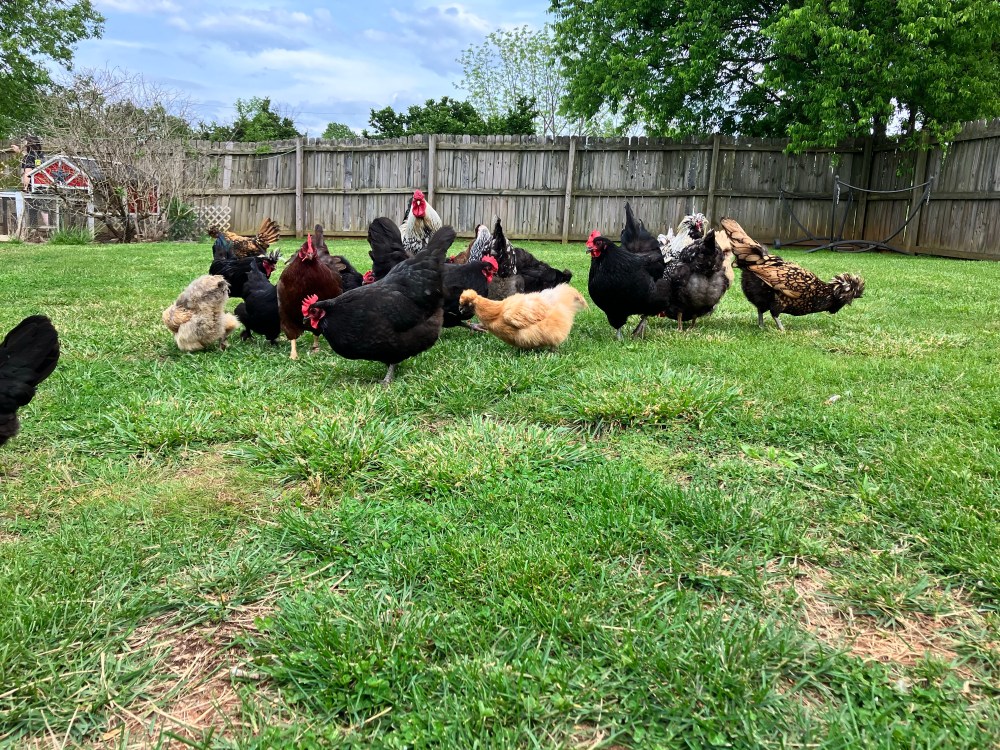
Healthy and happy backyard chicken flock strolling on a freshly cut spring lawn.

Winterize Your Chicken Coop with Feed Bags | Easy and Affordable Tips

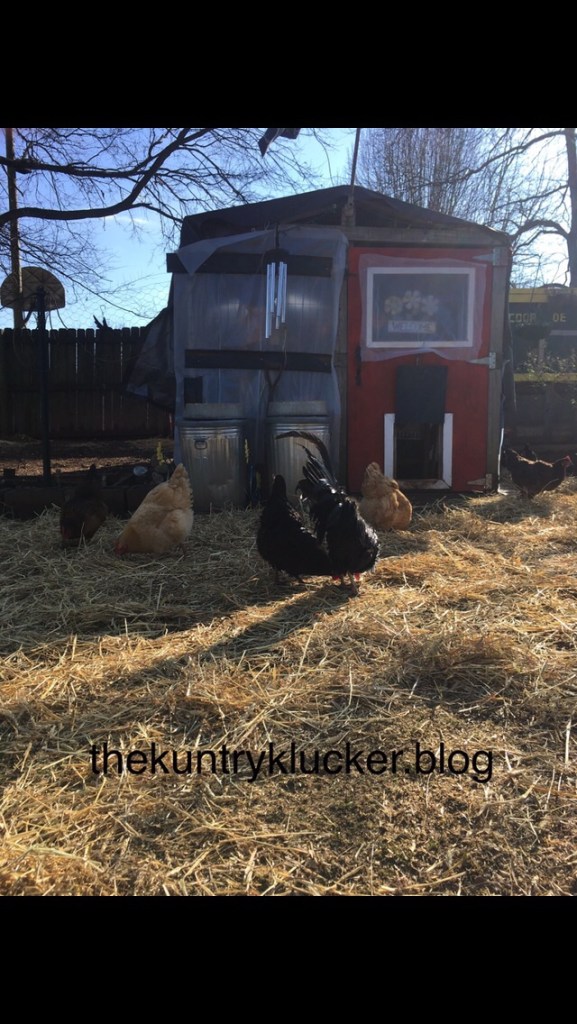
Using feed bags to winterize The Kuntry Klucker.

Daylight is retreating, leaves cover the ground and frost blankets the early morning hours. This is natures way of telling us that a change of season is upon us. As backyard chicken keepers, it’s time to prepare the coop and flock for the coming cold weather and winter precipitation. Old man winter is on his way.

For new keepers, the first winter with chickens can be a time of apprehension and anxiety. I know these feelings all too well I was there 12 years ago with my flock as winter approached. Fortunately, winterizing a chicken coop is simple with minimal cost, no more than the cost of a bag of feed.

The TARDIS wrapped and ready for winter.

Chickens are simple creatures; they need a clean and dry place to call home. Contrary to popular opinion, chickens do not require heaters or other “creature comforts” to weather the worst of old man winter. Chickens come factory installed with down coats; they need a barrier around their coop and pen to buffer the worst winter winds and weather.

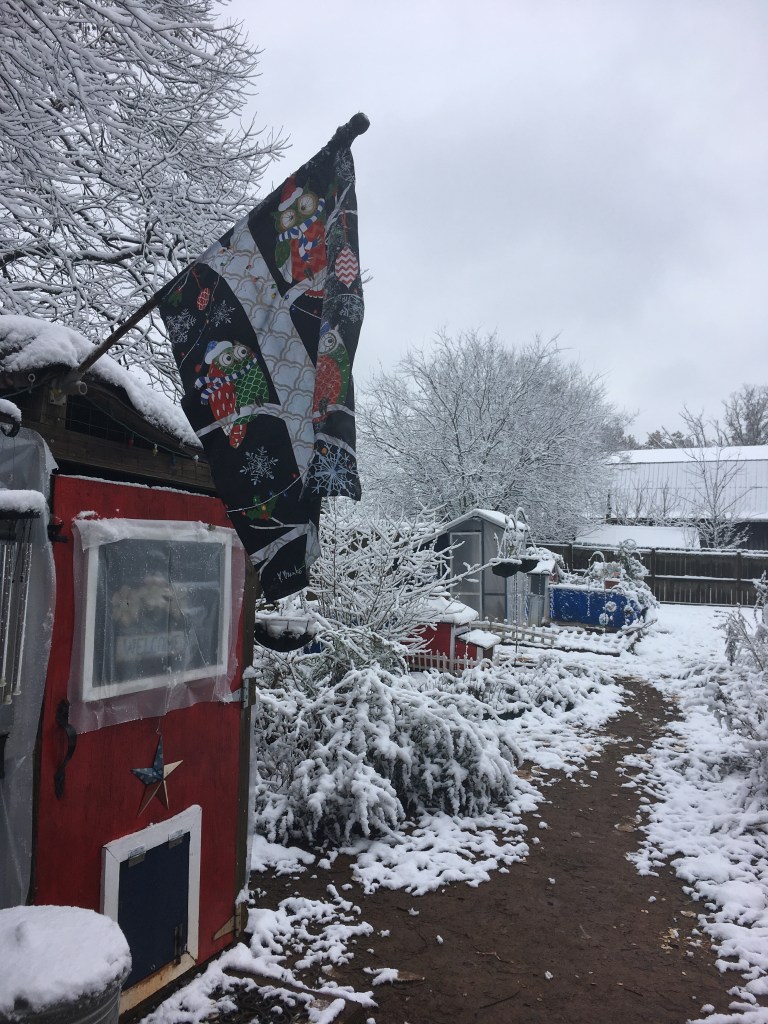
The Kuntry Klucker protected as the snow blankets the ground. The ladies and gents are warm and cozy inside.

Typically, I use construction grade plastic to buffer the worst of old man winter. This year, with rising inflation and supply issues, I decided to wrap my coops with feeds bags.

We are all familiar with these feed bags. They are tough heavy bags sold for 25 or 50 pounds at farm/feed stores. Due to the weight, they have to contain, they are made of tough material. They are water and weather-resistant and make excellent barriers to buffer winter winds and precipitation.

Purina 50 lb feed bags.

The procedure for this project is fairly straight forward. Remove the ends of the bags by cutting away the reinforced seam, then cut the bags down the side to allow them to lay flat. With a staple gun, simply staple the bags to the wood around the coop and pen. This is best done with a few helpers, someone can prepare the bags, another can assist in positioning the bags against the wood. That’s it, it’s that simple to prepare your coop and flock for winter.

Visit my YouTube channel to see a video of me winterizing The Kuntry Klucker. I also have a timelapse video of this process.

Here are more tips on keeping you flock happy, healhty and entertained duirng the long winter season.

I am a published author, multi-disciplinary writer and blog contributor. If you like this blog, please visit some of my other sites.

Knowledge of the Spheres – A journey through the Cosmos!

Coffee and Coelophysis – A blog about Dinosaurs!

Chicken Math University- Adventures in Homeschooling.

If you liked this post, peck the subscribe button. As always, thanks for reading. Till next time, keep on crowing!

~ The KuntryKlucker Crew ~