Autumn Treats: Halloween Fun for Your Flock

The flock scratching in the hay for delectable treats.

Trees display a variety of colors, store shelves brim with the excitement of trick-or-treating, and the weather cools as the days grow shorter. This signifies that a change from Mother Nature is on the horizon.

Halloween isn’t just for humans; the flock can also partake in fall and Halloween festivities. In this article, I will explore various autumn activities that both families and their feathered friends can enjoy together.

Pumpkin Carving Contest:
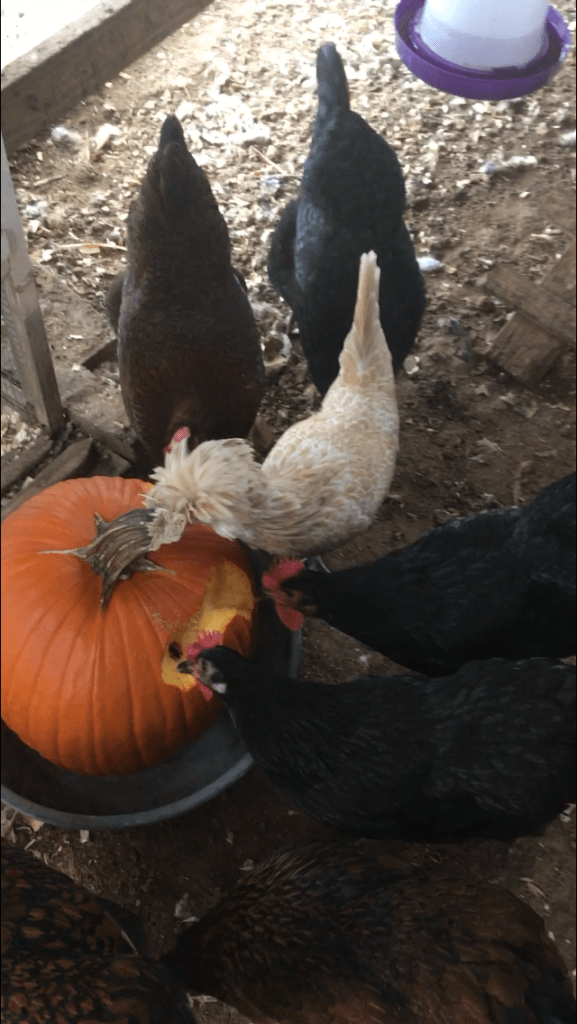
My chickens love pumpkins! Every fall, when pumpkins are discounted after Halloween, I buy several for my flock to enjoy. As they peck at the pumpkins to reach the delicious seeds inside, they carve the pumpkin. I provide each of my coops with a pumpkin, turning it into a fun pumpkin carving contest.

Every flock has its unique approach to pumpkin carving. Pumpkins carved by chickens make for a charming autumnal adornment in the backyard.

Note: To assist the flock in beginning to craft their pumpkin, create small holes to stimulate pecking, which will allow them to access the seeds inside. Contrary to popular belief, pumpkin seeds are not natural dewormers. If you suspect a worm infestation in your flock, proper management is required. For information and instructions on treating worms, please refer to my post for the correct worming dosage and technique or consult a veterinarian.

Mealworm Hay Hunt:

Lestat leads the flock in hunting for mealworms in the hay.

During the fall, when wet, muddy, or snow-covered ground is common, I create a barrier for my flock by scattering several bales of hay around the coops. To encourage activity on the dull days of late fall, I scatter mealworms on the hay.

The flock will spend hours engaged in the stimulating activity of finding mealworms in the hay. Mealworms are excellent for chickens because they provide a good source of protein, which helps with feather regrowth during the fall molt and boosts body energy for warmth on cool nights.

Note: If the hay becomes moldy, it should be promptly removed and replaced with fresh hay. Since moldy hay can cause illness in chickens, it’s important to monitor the quality of the hay, especially during damp conditions. I spread the moldy hay over my garden to decompose, which will serve as fertilizer for next season’s growth.

Haunted Coop:

Silhouettes of the Coop De Ville crew are illuminated by the red LED light inside the coop.

As daylight begins to recede, I place a light in the pen to give the flock extra time to get something to eat and drink before roosting. Additionally, the added light helps assists in egg production and evening chores as the coop is illuminated during long dark night of late fall and winter.

Red lights are ideal for this purpose because the red spectrum is not bright enough to disrupt sleep, yet it provides sufficient light to tend to the flock after dark. Additionally, red lights can give off an ominous glow reminiscent of a haunted house.

Note: LED lights are best because they remain cool to the touch unlike incandescent bulbs, are cost-effective, and have a long lifespan. Also, ensure that all cords are out of reach for the flock.

Sandbox Scratch Hunt:
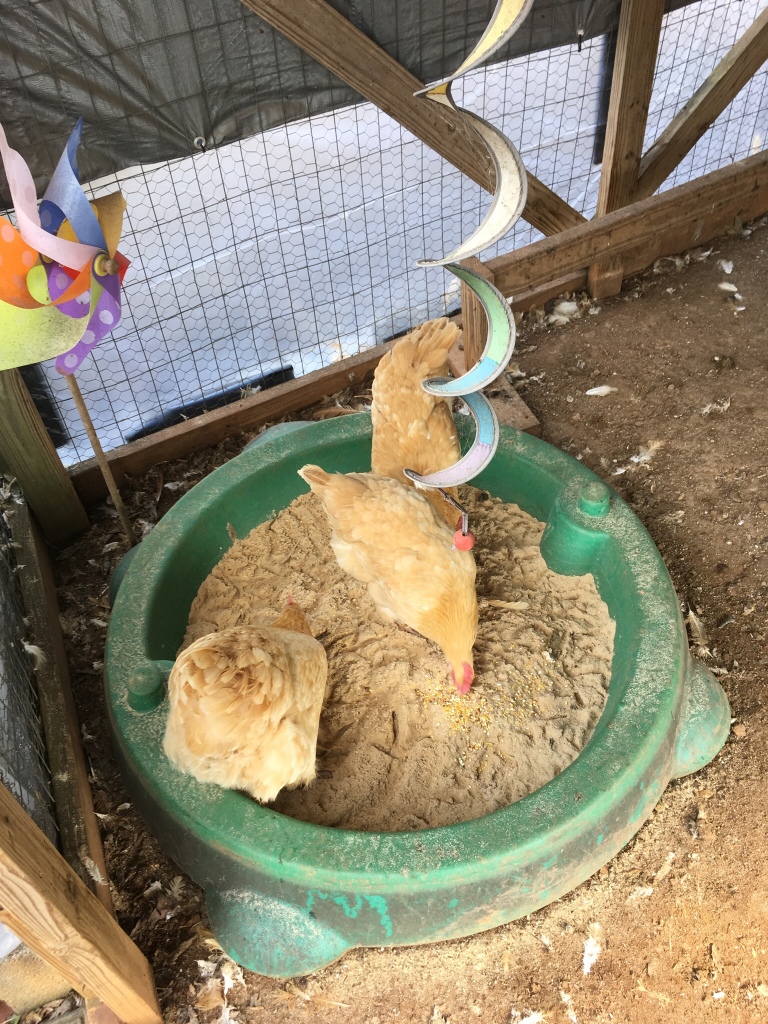
The Kuntry Klucker Crew busily scratching in the sandbox, searching for the seeds I had sprinkled onto the sand.

During the cold days of winter when the ground is frozen or covered with snow, a sandbox placed in the pen provides the flock with a medium to engage in dust bathing and scratching keeping feathers and nails in top condition.

To promote this instinctive behavior, I sprinkle scratch grains over the sand, prompting the flock to eagerly forage through the sand for the grains.

Throughout the years, this ritual has grown to be a favorite among the flock. I spread scratch before roosting, providing a stimulating snack to fuel their internal furnace during the chilly nights of fall and winter.

Note: The ideal medium for a sandbox is play sand. To encourage dust bathing, you may add peat moss and natural wood ash. Avoid using materials that are harmful to chickens, such as cedar shavings, ash from barbecues, or mulch which can contain weed killer, dyes, and other harmful chemicals.

Flock Block Halloween Treat:

The flock enjoying a flock block on a cold winter day.

During cold, snowy days, I prepare a flock block for the girls who are confined due to inclement winter weather.

Flock blocks serve as both a distraction and a productive activity, offering additional nutrition through a stimulating activity that is essential for the flock to endure the harshest winter conditions.

A flock that is actively engaged during winter storms experiences less boredom, which can lead to destructive interactions and potential injuries. Introducing treats like raisins, mealworms, and sunflower seeds can pique their interest, as they will enthusiastically peck at the block to reach these tasty morsels.

Note: Store any leftover flock block in rodent-proof containers overnight to avoid attracting rodents to the coop. After two days, replace the flock block with a fresh one to prevent the flock from consuming mold.

For my flock block recipe, click here.

Halloween and autumn festivities aren’t just for humans—include your backyard flock in this year’s fall plans by decorating your coop and pen with inspiration from your hens.
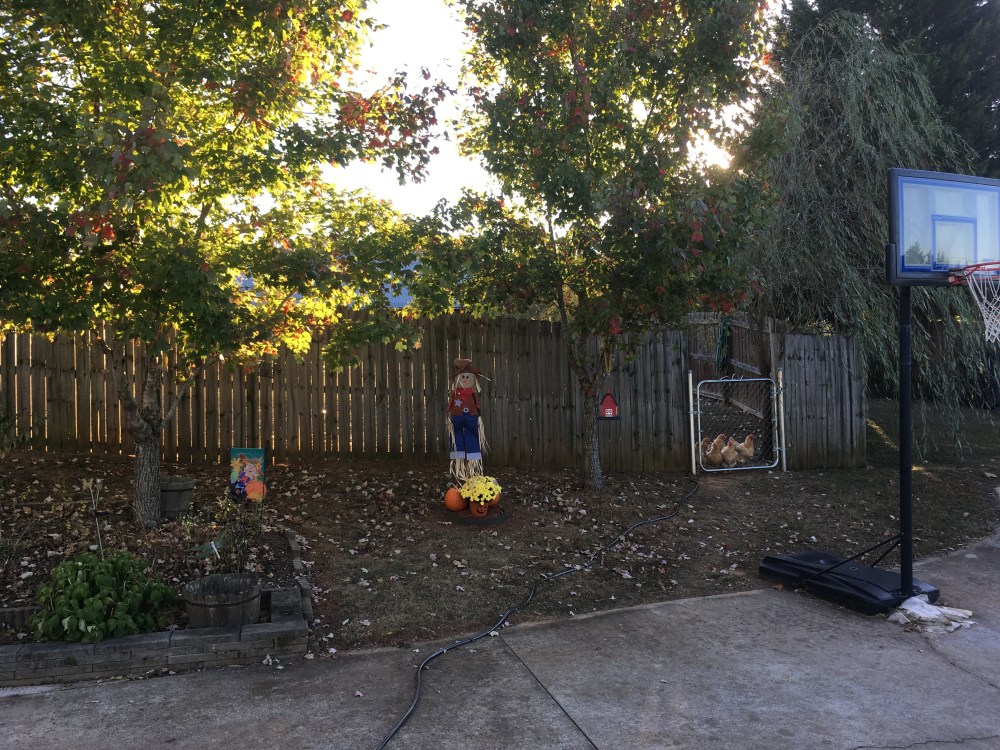
A flock oversees an autumn arrangement adorned with pumpkins, chrysanthemums, and a scarecrow.

I am a multi-disciplinary writer, published author, and web content creator. If you like this post, visit some of my other sites or Online Writing Portfolio.

Coffee and Coelophysis – A blog About Dinosaurs

Coffee and Coelophysis YouTube Channel

Introvert Care- A Mental Health Blog

Till next time, keep in crowing!

~ The Kuntry Klucker Crew ~

Homemade Flock Block

As a dangerous winter storm will soon impact the Northern Hemisphere, people are preparing for impacts of snow, ice, and severe cold temperatures. Store shelves are picked clean, and pet and livestock owners are stocking essentials for their animals till the storm relinquishes its grip.

During this time, many backyard chicken keepers will need to confine the flock to the pen and coop. While the flock is cooped up, providing stimulating activities will assist the flock in weathering the worst of Old Man Winter.

The Kuntry Klucker and Henwarts covered in a blanket of freshly fallen snow.

When winter storms impact our region, I like to prepare my flock a homemade flockblock for my hens and gents. All ingredients are available in most home pantries or easy to obtain in stores. Over the past decade, I have had much success with this recipe, and the girls greatly enjoy the break from the winter blues with this boredom buster.

Ingredients:

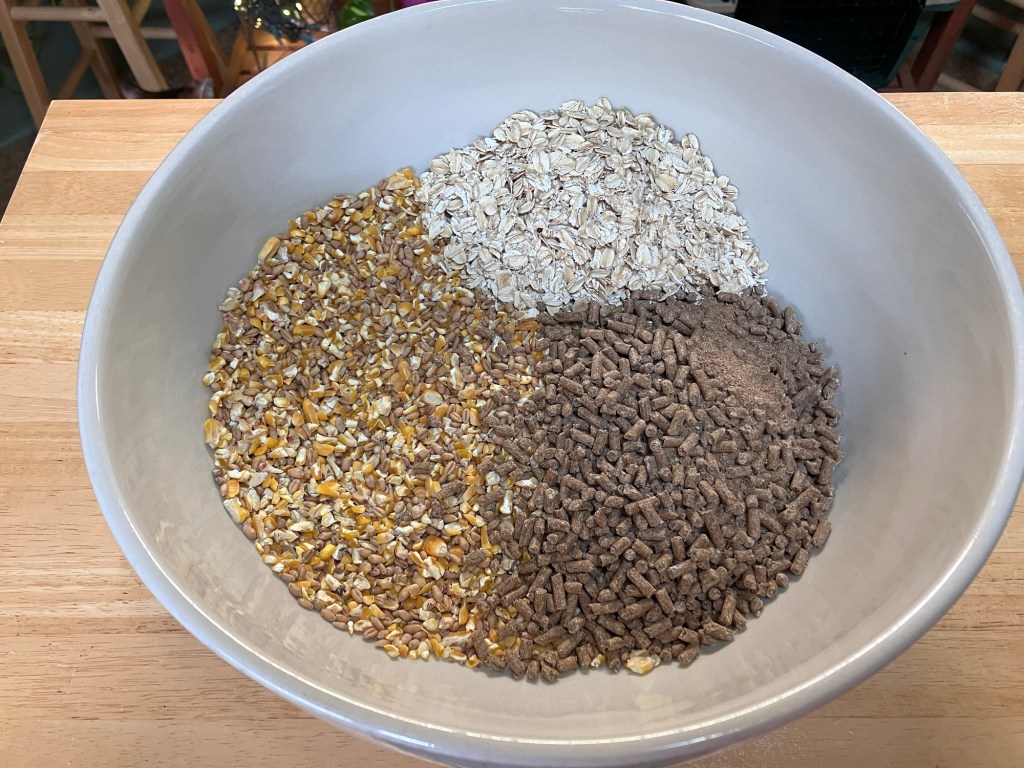
2 cups of scratch grains (cracked corn is also good)

1 cup layer feed (pellets or crumbles)

1 Cup old fashioned oats

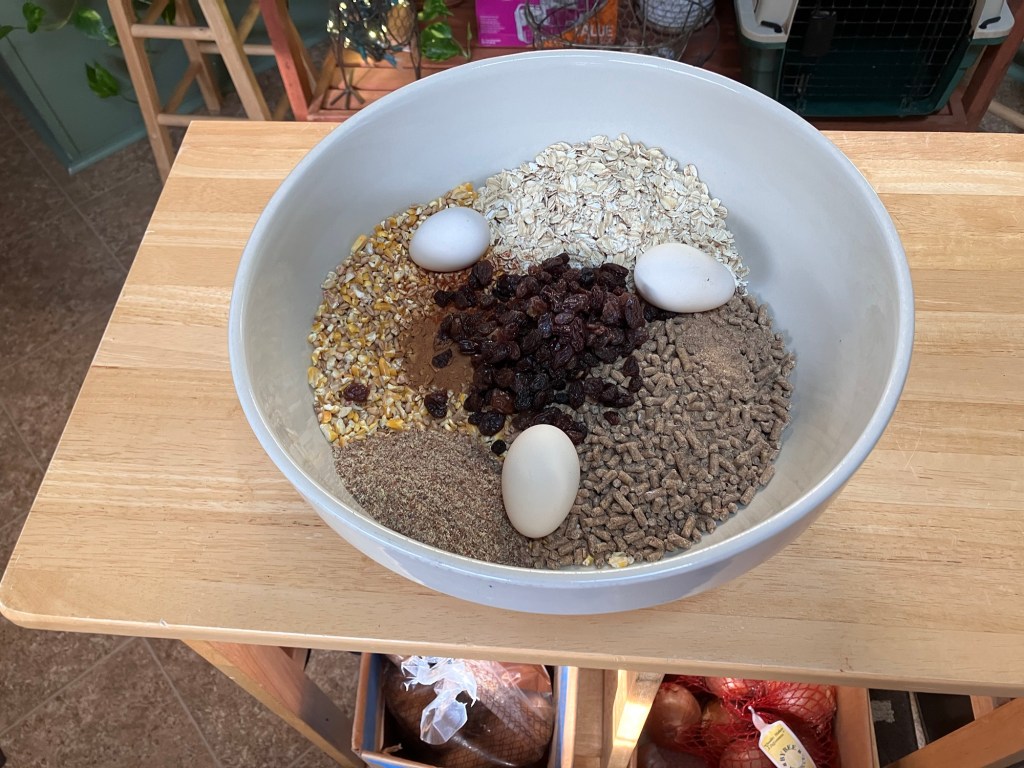
1/2 cup flax seed (ground or whole)

1/4 cup flour (whole wheat is best)

1 teaspoon ground cinnamon

1/2 teaspoon cayenne pepper

3 eggs (shells included)

1/2 cup blackstrap molasses

1/2 coconut oil

1 cup raisins (dried cranberries, blueberries, or bananas will also work)

Begin by placing the scratch and layer feed in a large bowl.

Add the oats.

Next, add the spices. The cinnamon aids in respiratory health in the cold weather and the cayenne pepper helps circulation.

Next, add the raisins. The raisins will promote pecking as they look like tasty bugs, plump after baking.

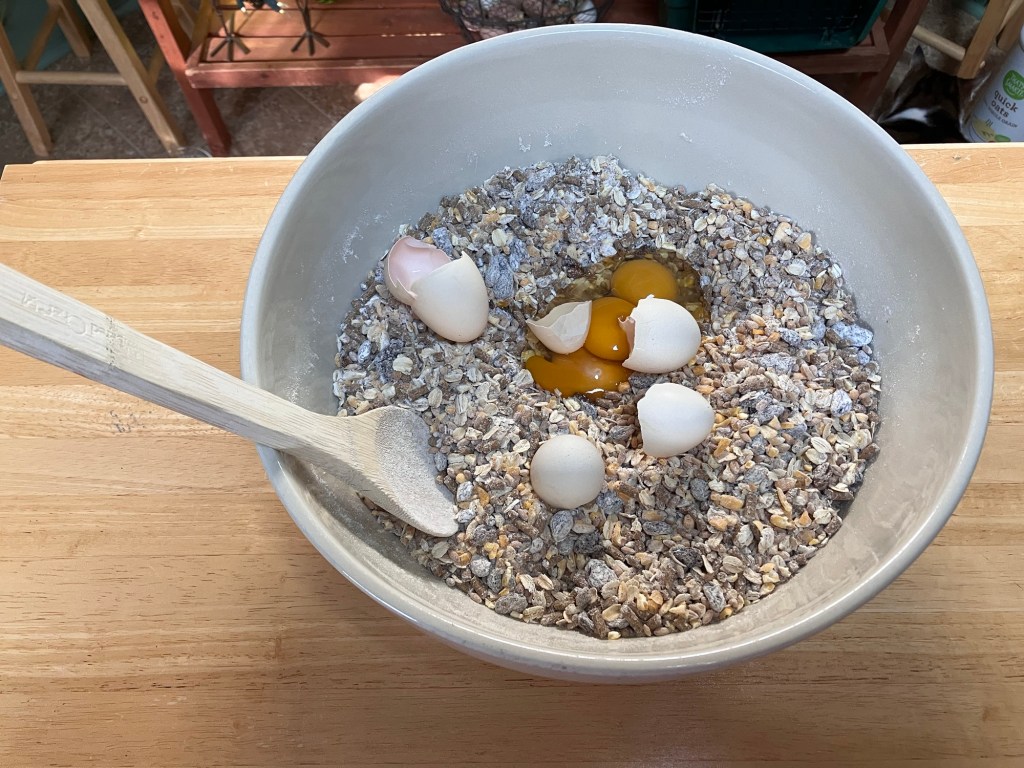
Mix all the dry ingredients together well. After mixing, add the flour and the eggs. Crush up the eggshells into smaller pieces when mixing. The eggshells will dehydrate while baking adding calcium to the final product.

After mixing the eggs in well, add the blackstrap molasses and coconut oil.

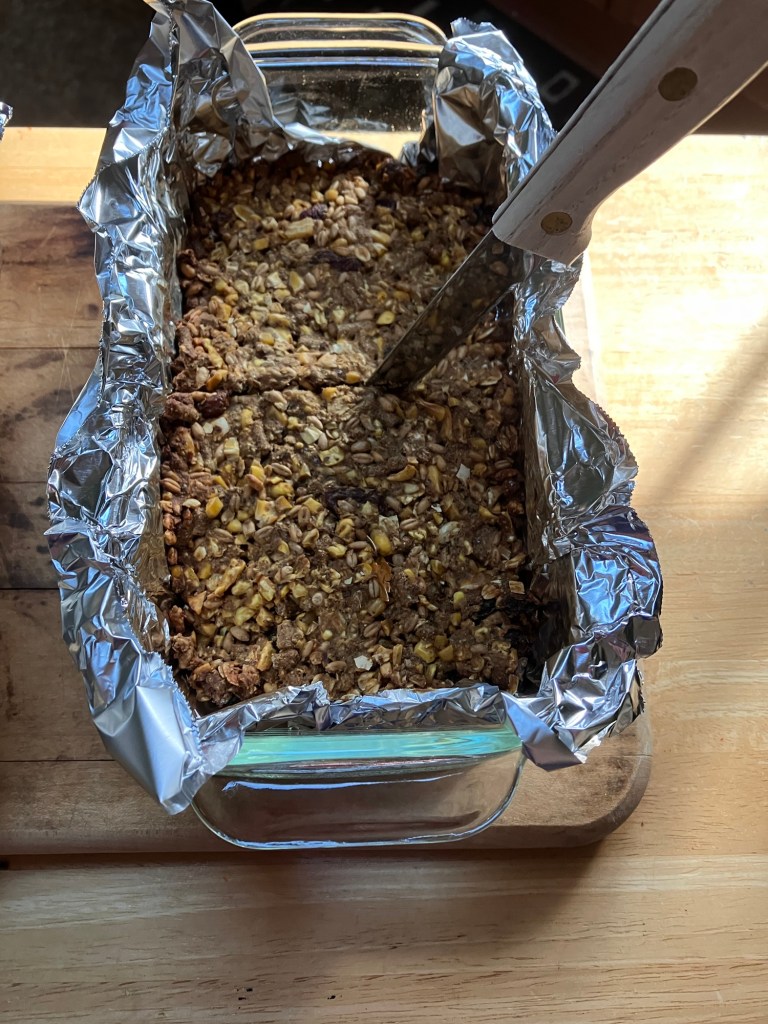
Continue to mix. As the molasses and coconut oil combines, the mixture should be sticky and hold a ball shape when compressed in the hand.

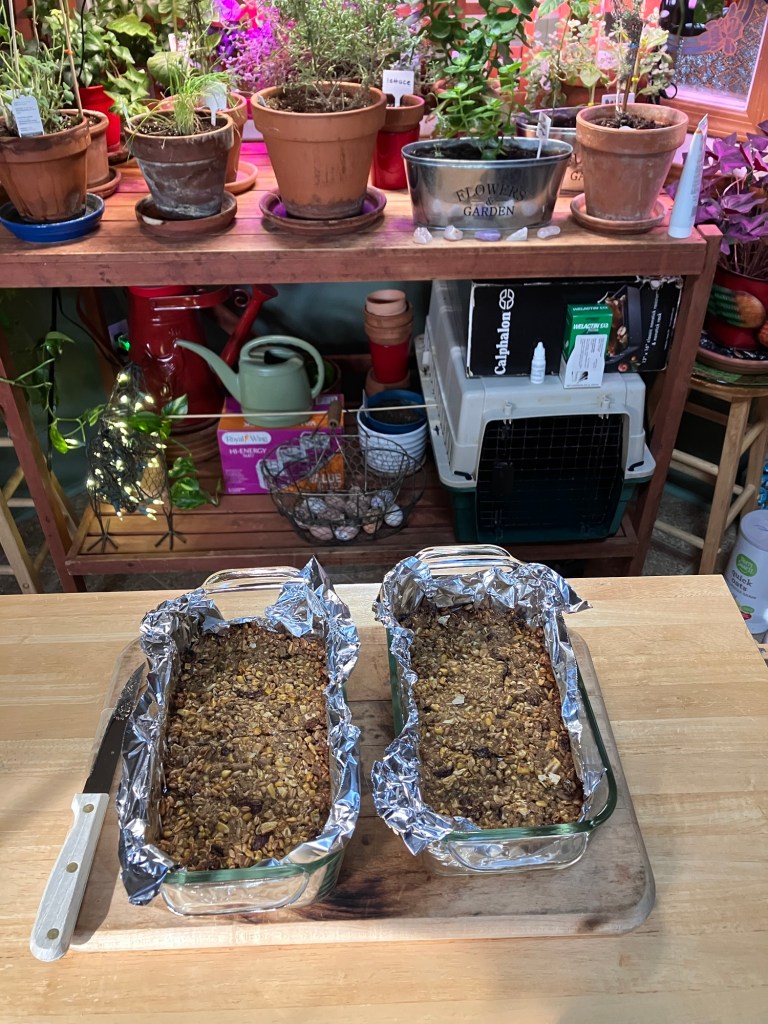
Select an oven baking pan and line with foil. Spray the foil with a cooking spray for easy release after baking.

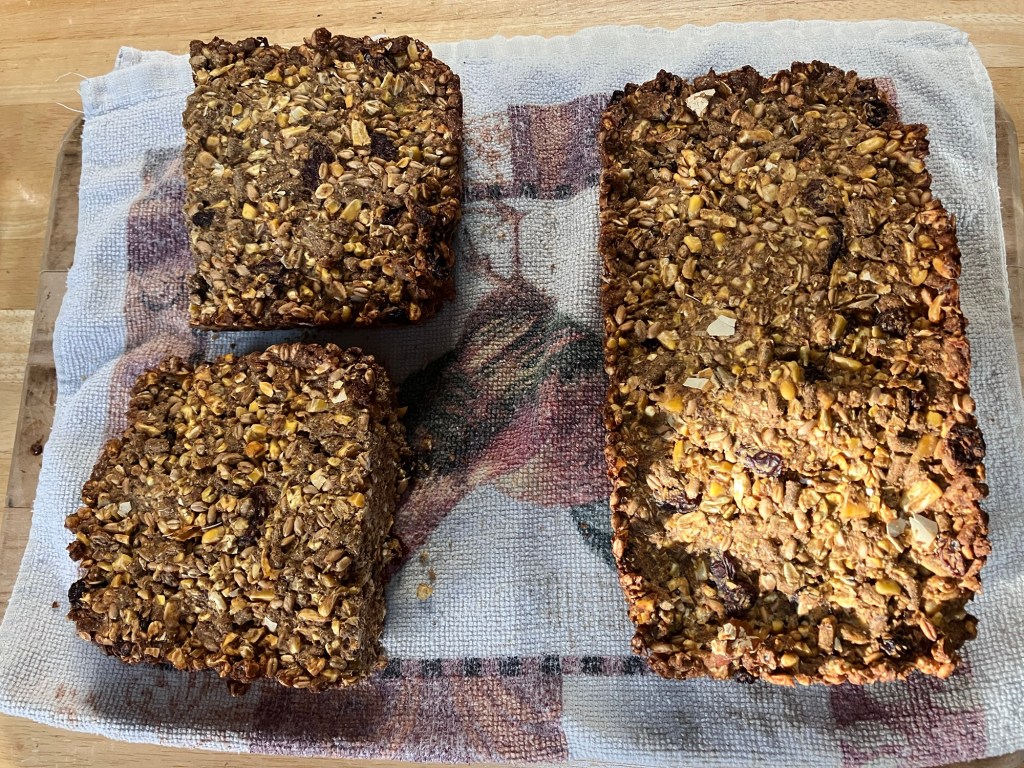
For a large flock block, select a square baking dish. If you prefer to hang the flock block in the pen, bread pans work best because it is roughly the size of a standard suit feeder. For free-hang, a round pie dish works best. Poke a hole in the area where rope or twine be will inserted. You can also double the recipe to create a large flock block to fill a 9 x 13 baking dish.

Press the mixture into the chosen baking dish. Press hard to compact the mixture as much as possible. This will result in a dense flock block that will not fall apart when removing from the pan.

Preheat the oven to 325 degrees. Place the baking dish or dishes into the oven and bake for 35 minutes.

After baking, cut the flock block into the desired size. If you plan to hang the flock block in a suit feeder, a bread pan flock block can be cut in half, into two equal sizes that will fit nicely. If you prefer a larger flock block to free-hang in the pen, cut a hole for the rope of twine.

Flock block cut to fit a suit feeder.

Do not try to remove the flock block from the baking pan till cool. Removing the flock block while warm will increase the chance that it will fall apart. As it cools, the flock block will harden making removal simple.

Once the flock block has cooled, remove by lifting the foil out of the pan and turn over. This recipe will freeze for several months when wrapped in plastic wrap and foil.

Wishing everyone the best. Stay safe during this historic winter storm and cold weather and remember to give your flock boredom busters to help them bide the time while cooped up.

If you enjoyed this post, please peck the subscribe button.

If you like this blog, please consider visiting some of my other sites and online writing portfolio.

Coffee and Coelophysis – A blog about dinosaurs!

Chicken Math University – A blog about homeschooling

As always, thanks or reading. If you have any questions, please leave me a comment or you can email me at kuntryklucker@gmail.com

Till next time, keep on crowing!

~ The Kuntry Klucker Crew ~

Winterizing Your Chicken Coop and Pen: 5 Tips for Free-Ranging in Winter

Snow covers the ground as flurries silently whisp through the air. The flock anxiously waits for me to open the coop door to the outdoors as the sun illuminates the land. Nature has intelligently equipped chickens to live outdoors and embrace the winter season. Winterizing a flock includes preparing the pen and coop for winter while allowing the flock access to fresh air and a few rays from the winter sun. Here are my five tips to free-range a flock in winter.

A Winterized Coop and Pen.

The Kuntry Klucker wrapped in plastic to keep the coop and pen clean and dry.

To successfully free-range a flock in winter, a winterized coop and pen are necessary. In addition to growing in new feathers, chickens will grow in winter down for the coming winter during the annual molt; the coats we put on when the temperature dips are the same coats the flock is wearing factory-installed. A backyard flock does not need artificial heat to survive the winter elements, just a draft-free, dry, and clean. A draft-free winterized coop allows the flock to gauge their comfort level, venturing outside and returning as necessary.

Access to a dust bath.

Buff Orpington Hens taking advantage of a prepared dust bath in The Kuntry Klucker pen.

Dust bathing is a natural instinctive behavior in chickens. Dust baths help to keep feathers clean and in good condition. During the winter, the ground covered with snow or wet limits access to natural dust bathing sites outside the coop. Providing a dust bath in a winterized pen allows the flock to continue their natural behaviors in the bleak winter. A mixture of peat moss, play sand, and wood ash is the perfect medium for a dust bath.

Boredom Busters.

During the winter, when snow covers the ground, the flock will appreciate boredom busters that will keep them entertained and engaged. Throwing some chicken scratch or corn on the ground will keep the flock entertained as they forage for the morsels. A flock block in the free-ranging area will help engage pecking instincts while snow covers the ground. Scratch placed in a plastic jar with holes will engage the flock with game play on cold winter days. Boredom busters keep the flock mentally engaged, promoting position behaviors that ease the winter blues.

Provide paths in deep snow for the flock to follow.

The flock following paths in the deep snow left by a winter storm.

Clearing paths in snow will allow the flock access to the outdoors. Chickens do not like snow and resist going outside if the snow is deep. Paths will encourage the flock to venture outside and natural behaviors. Scattering scratch or cracked corn on the paths will engage the flock in foraging behaviors that will keep the flock happy on the worst snow days.

Install Lighting in the Pen.

The Coop De Ville residents silhouetted by the glow of a red light in the coop.

During the short days of winter, the flock appreciates an illuminated pen. Placing a light in the pen will guide the free-ranging flock toward the coop as the sun sets. An illuminated pen will allow the flock to consume sufficient nutrients before roosting for a cold winter’s night. Laying hens will also produce eggs during winter in a well-light pen. Once the flock is locked up and secured, turn off the light to allow the flock adequate sleep.

I am a multi-disciplinary writer, blogger and web content creator. If you like this post, peck the subscribe button below.

If you like this blog, please visit my Online Writing Portfolio to read a larger body of my work.

As always, thanks for reading. If you have any questions, please post in the comments or drop me an email at kuntryklucker@gmail.com. I will get back to you as soon as possible.

Till next time, keep on crowing!

~ The Kuntry Klucker Crew ~